Building Climate-Resilient Labor Protection Systems
💡Learn how digital monitoring and systemic management can mitigate the impact of climate change on workforce productivity
⚡ 30-Second TL;DR
What Changed
Extreme heat has evolved from an occasional phenomenon to a normalized climate risk.
Why It Matters
Enterprises must shift from reactive compensation to proactive, data-driven health monitoring to ensure organizational stability and worker safety.
What To Do Next
Implement IoT-based environmental sensors in high-risk production areas to trigger automated safety alerts for workers.
Key Points
- •Extreme heat has evolved from an occasional phenomenon to a normalized climate risk.
- •Current labor protection policies are hindered by vague definitions and lack of dynamic adjustment.
- •A resilient system requires the integration of digital monitoring, institutional reform, and human-centric management.
🧠 Deep Insight
AI-generated analysis for this event — not the original article.
🔑 Enhanced Key Takeaways
- •The International Labour Organization (ILO) has identified that heat stress is projected to cause a 2.2% drop in total working hours worldwide by 2030, equivalent to 80 million full-time jobs.
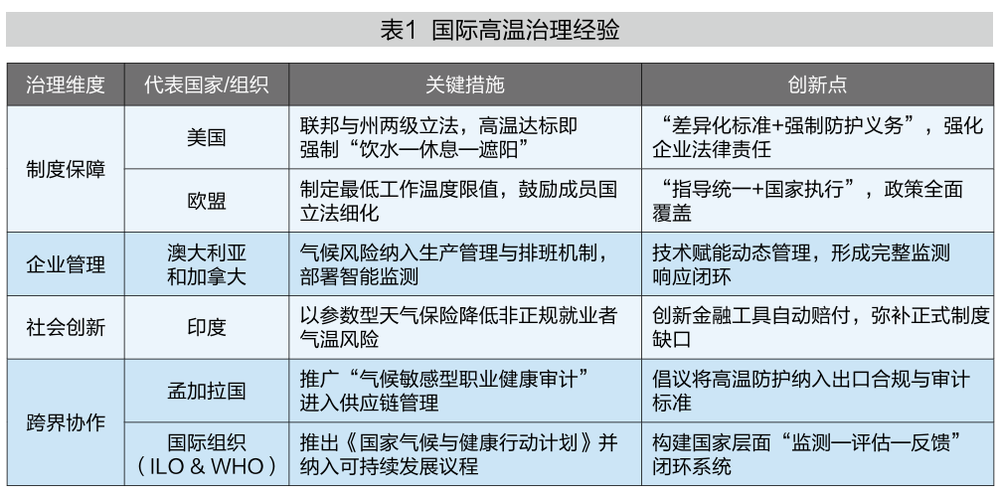
- •Emerging 'Heat-Health Early Warning Systems' (HH-EWS) are now being integrated with localized labor laws to trigger mandatory work stoppages or shift adjustments based on Wet Bulb Globe Temperature (WBGT) thresholds.
- •Insurance-linked labor protection models are gaining traction, where parametric insurance payouts are automatically triggered for employers when local weather stations record sustained extreme heat, funding paid leave for outdoor workers.
- •Wearable IoT devices equipped with core body temperature sensors are being piloted in construction and logistics sectors to provide real-time alerts to both workers and supervisors before heat exhaustion occurs.
- •Regulatory frameworks in several jurisdictions are shifting from 'fixed-date' heat protection (e.g., specific summer months) to 'dynamic-trigger' policies that respond to real-time meteorological data.
🛠️ Technical Deep Dive
- Wet Bulb Globe Temperature (WBGT) Calculation: Integrates ambient temperature, humidity, wind speed, sun angle, and cloud cover to assess heat stress risk more accurately than standard air temperature.
- IoT Sensor Fusion: Utilizes low-power wide-area network (LPWAN) protocols to transmit biometric data (heart rate, skin temperature) from wearable devices to centralized cloud platforms for real-time risk analytics.
- Predictive Modeling: Employs machine learning algorithms trained on historical climate data and occupational health records to forecast heat-related productivity loss at the micro-site level.
- API-Driven Policy Enforcement: Systems utilize automated weather station (AWS) data feeds to trigger smart contracts or compliance alerts when environmental conditions exceed safety thresholds defined by local labor regulations.
🔮 Future ImplicationsAI analysis grounded in cited sources
⏳ Timeline
Weekly AI Recap
Read this week's curated digest of top AI events →
👉Related Updates




AI-curated news aggregator. All content rights belong to original publishers.
Original source: 虎嗅 ↗
This is a summary, not the original. Read the source, or get the weekly briefing.
The weekly digest
One email a week. Unsubscribe anytime.