🐳Docker Blog•Freshcollected in 20m
Building and Running AI Agents Safely in Production
💡Learn the essential security patterns required to move AI agents from prototype to production safely.
⚡ 30-Second TL;DR
What Changed
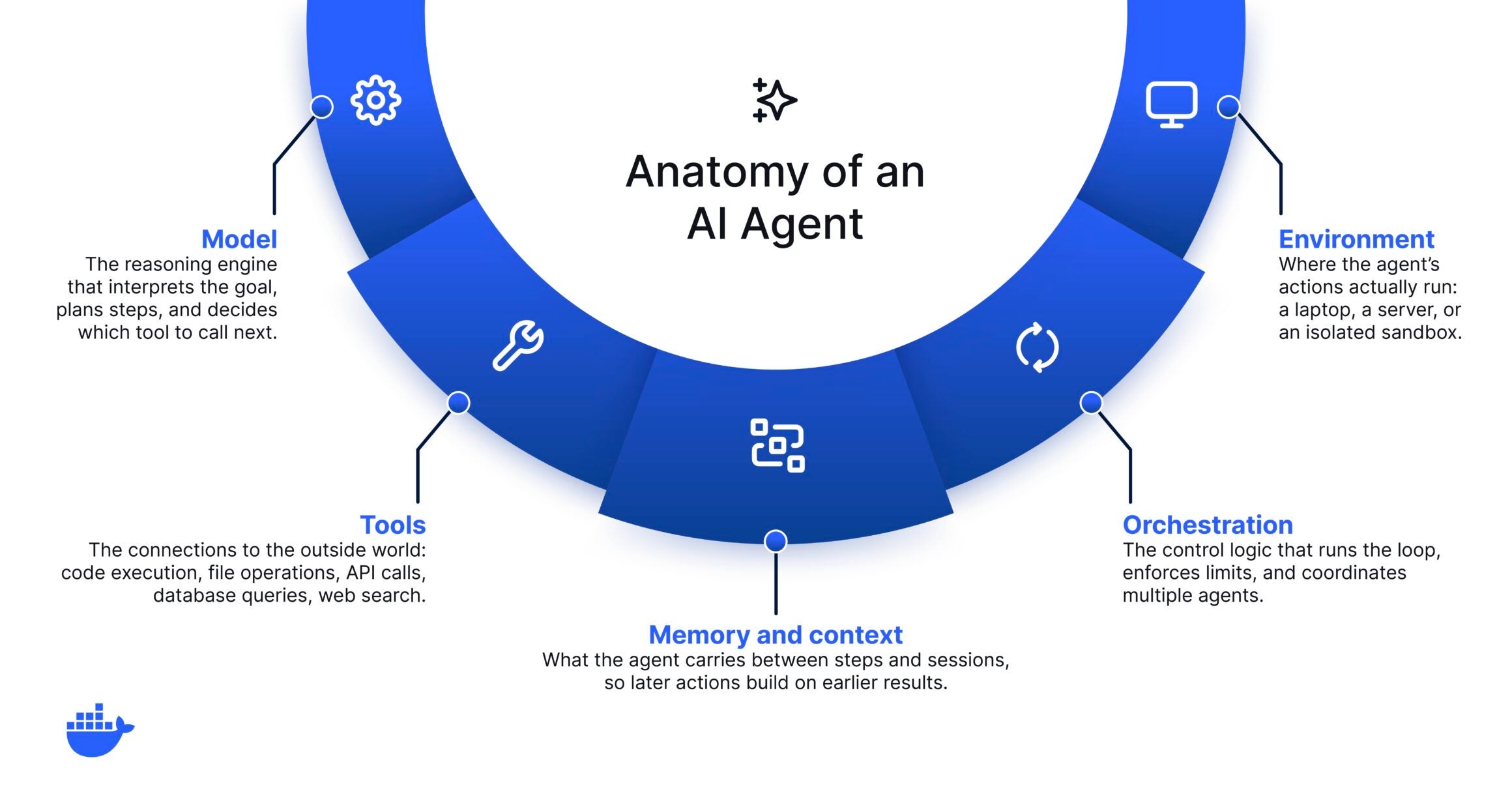
Understanding the core architecture of AI agents
Why It Matters
Helps developers mitigate risks associated with autonomous agents, ensuring more reliable and secure AI-driven workflows.
What To Do Next
Review your agent's sandbox environment configuration to ensure strict isolation from sensitive system resources.
Who should care:Developers & AI Engineers
Key Points
- •Understanding the core architecture of AI agents
- •Operational security best practices for agent deployment
- •Strategies for managing agent behavior in production
🧠 Deep Insight
AI-generated analysis for this event.
🔑 Enhanced Key Takeaways
- •Docker's approach emphasizes the use of 'Agent Sandboxing' via container isolation to prevent unauthorized system access by LLM-driven autonomous processes.
- •The integration of OCI (Open Container Initiative) artifacts allows for versioning and immutable deployment of agentic workflows, ensuring reproducibility in production.
- •Implementation of 'Human-in-the-loop' (HITL) checkpoints is recommended as a mandatory architectural pattern to mitigate hallucination-driven execution errors.
- •Docker's security framework for agents includes ephemeral runtime environments that automatically purge sensitive context windows after task completion.
- •The shift toward 'Agent-as-a-Service' patterns requires specific observability stacks that track token usage, latency, and tool-use success rates at the container level.
📊 Competitor Analysis▸ Show
| Feature | Docker (Agent Ops) | LangSmith (LangChain) | Portkey |
|---|---|---|---|
| Primary Focus | Infrastructure/Isolation | Observability/Tracing | Gateway/LLM Ops |
| Deployment | Container-native | Cloud-agnostic | API-first |
| Security | Kernel-level isolation | Policy-based guardrails | Request filtering |
| Pricing | Per-node/Subscription | Usage-based | Tiered/Enterprise |
🛠️ Technical Deep Dive
- Utilization of Docker Desktop Extensions to provide real-time monitoring of agent tool-calling sequences.
- Implementation of sidecar containers to handle sensitive API key rotation and secret management for LLM providers.
- Integration with eBPF-based security tools to monitor and restrict network egress traffic from agent containers.
- Support for multi-stage Dockerfiles to minimize the attack surface of agent images by excluding unnecessary build-time dependencies.
🔮 Future ImplicationsAI analysis grounded in cited sources
Container-native security will become the industry standard for AI agent deployment.
As agents gain autonomous write-access to systems, traditional application-layer security will prove insufficient compared to kernel-level isolation.
Agent observability will merge with traditional DevOps monitoring tools by 2027.
The need to correlate LLM token costs and latency with infrastructure resource consumption is driving the convergence of AI-specific and general-purpose monitoring stacks.
⏳ Timeline
2023-05
Docker introduces initial support for AI/ML development workflows in Docker Desktop.
2024-02
Docker announces partnerships with major AI model providers to simplify local model testing.
2025-06
Docker launches specialized security scanning for containerized AI applications.
2026-03
Docker releases enhanced orchestration features specifically for multi-agent system deployments.
📰
Weekly AI Recap
Read this week's curated digest of top AI events →
👉Related Updates


AI-curated news aggregator. All content rights belong to original publishers.
Original source: Docker Blog ↗