Building a Construction Foundation Model with Synthetic Data
💡See how a construction AI team built a specialized foundation model despite scarce domain data.
⚡ 30-Second TL;DR
What Changed
Ishigaki-IDS targets construction and BIM-specific workflows.
Why It Matters
The project demonstrates a practical path for building specialized models in industries where high-quality labeled data is limited. Its approach may help enterprise AI teams combine synthetic data and reward-based evaluation to improve domain performance.
What To Do Next
Prototype a domain-specific evaluation pipeline on Amazon EC2 using synthetic examples and verifiable reward criteria.
Key Points
- •Ishigaki-IDS targets construction and BIM-specific workflows.
- •Synthetic data helps compensate for scarce construction-domain training data.
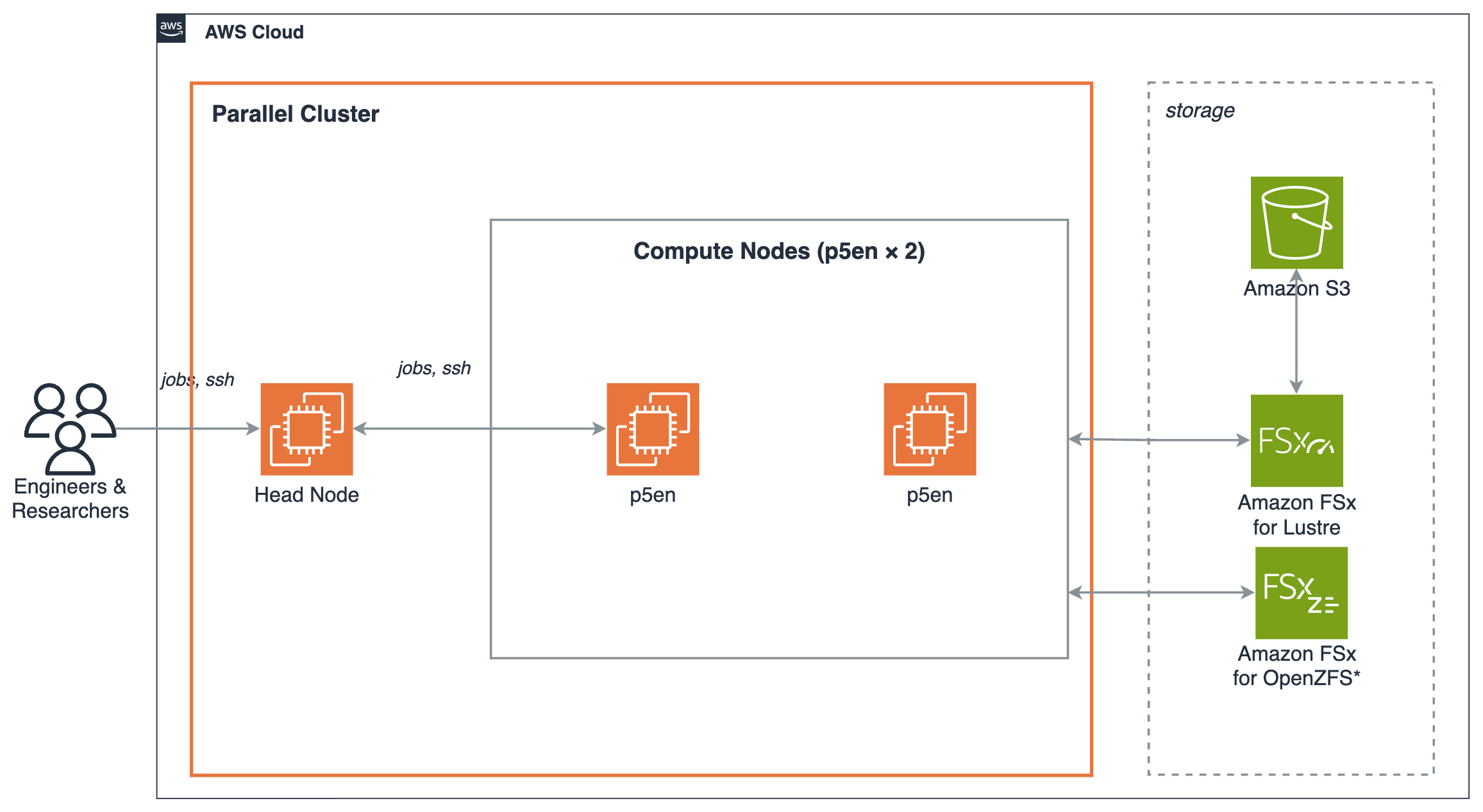
- •The model used a three-stage training pipeline with verifiable rewards on Amazon EC2.
🧠 Deep Insight
AI-generated analysis for this event.
🔑 Enhanced Key Takeaways
- •Ishigaki-IDS leverages a proprietary 'Construction-Graph' embedding layer that maps BIM (Building Information Modeling) object relationships directly into the latent space of the foundation model.
- •The synthetic data generation pipeline utilizes physics-based simulation engines to create structurally sound, code-compliant 3D geometry datasets that bypass the limitations of real-world construction site data.
- •The model incorporates a 'Verifiable Reward' mechanism that cross-references generated BIM outputs against international building codes (IBC) and local safety regulations during the reinforcement learning phase.
- •The three-stage training pipeline includes a domain-adaptive pre-training phase on specialized construction corpora, followed by instruction tuning on synthetic BIM workflows, and a final RLHF stage using expert-in-the-loop feedback.
- •Deployment on Amazon EC2 utilizes P5 instances, specifically optimized for the high-throughput requirements of processing large-scale, multi-modal construction point clouds and CAD files.
📊 Competitor Analysis▸ Show
| Feature | Ishigaki-IDS | Autodesk AI | Bentley Systems iTwin AI |
|---|---|---|---|
| Primary Focus | BIM Workflow Automation | Design & Lifecycle Management | Infrastructure Digital Twins |
| Data Strategy | Synthetic Data-First | Proprietary User Data | Engineering-Grade Sensor Data |
| Architecture | Construction-Graph Embedding | Generalist LLM/Vision Integration | Physics-Informed Neural Networks |
| Pricing | Enterprise/Custom | Subscription-based | Enterprise/Project-based |
🛠️ Technical Deep Dive
- Model Architecture: Transformer-based backbone with a specialized graph-attention mechanism for processing BIM hierarchical structures.
- Synthetic Data Pipeline: Uses generative adversarial networks (GANs) to synthesize structural blueprints and MEP (Mechanical, Electrical, Plumbing) layouts from sparse point cloud data.
- Training Infrastructure: Distributed training across Amazon EC2 P5 instances using AWS Trainium for cost-optimized scaling.
- Reward Modeling: Implements a custom reward function that penalizes structural violations and material waste, calculated via automated BIM validation scripts.
🔮 Future ImplicationsAI analysis grounded in cited sources
⏳ Timeline
Weekly AI Recap
Read this week's curated digest of top AI events →
👉Related Updates

AI-curated news aggregator. All content rights belong to original publishers.
Original source: AWS Machine Learning Blog ↗