Build Multi-Tenant Agentic Chat on Enterprise Data
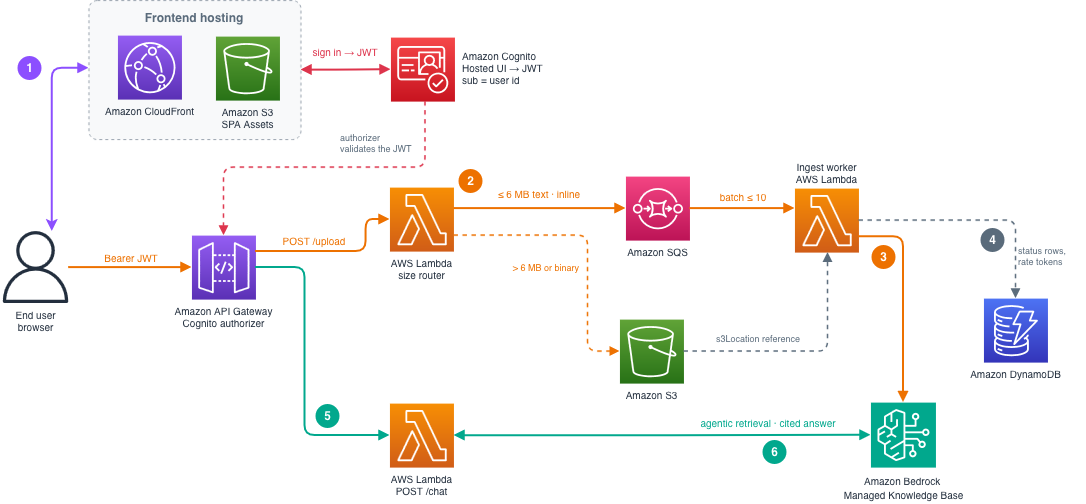
💡Learn a practical AWS architecture for secure, scalable, multi-tenant document chat.
⚡ 30-Second TL;DR
What Changed
Users can upload documents and immediately ask grounded questions about their content.
Why It Matters
This lowers the implementation barrier for enterprises building secure, document-grounded agentic chat experiences. Per-user isolation and asynchronous indexing are especially relevant for SaaS products serving multiple customers or teams.
What To Do Next
Prototype a tenant-isolated document chat workflow with Amazon Bedrock Managed Knowledge Base, then test indexing latency and retrieval isolation for separate users.
Key Points
- •Users can upload documents and immediately ask grounded questions about their content.
- •The architecture explains ingestion, retrieval, and the asynchronous indexing lifecycle.
- •Per-user data isolation is addressed for secure multi-tenant deployments.
- •The post includes operational best practices for scaling the solution.
🧠 Deep Insight
Background and context from public sources — not the original article. 12 sources cited.
🔑 Enhanced Key Takeaways
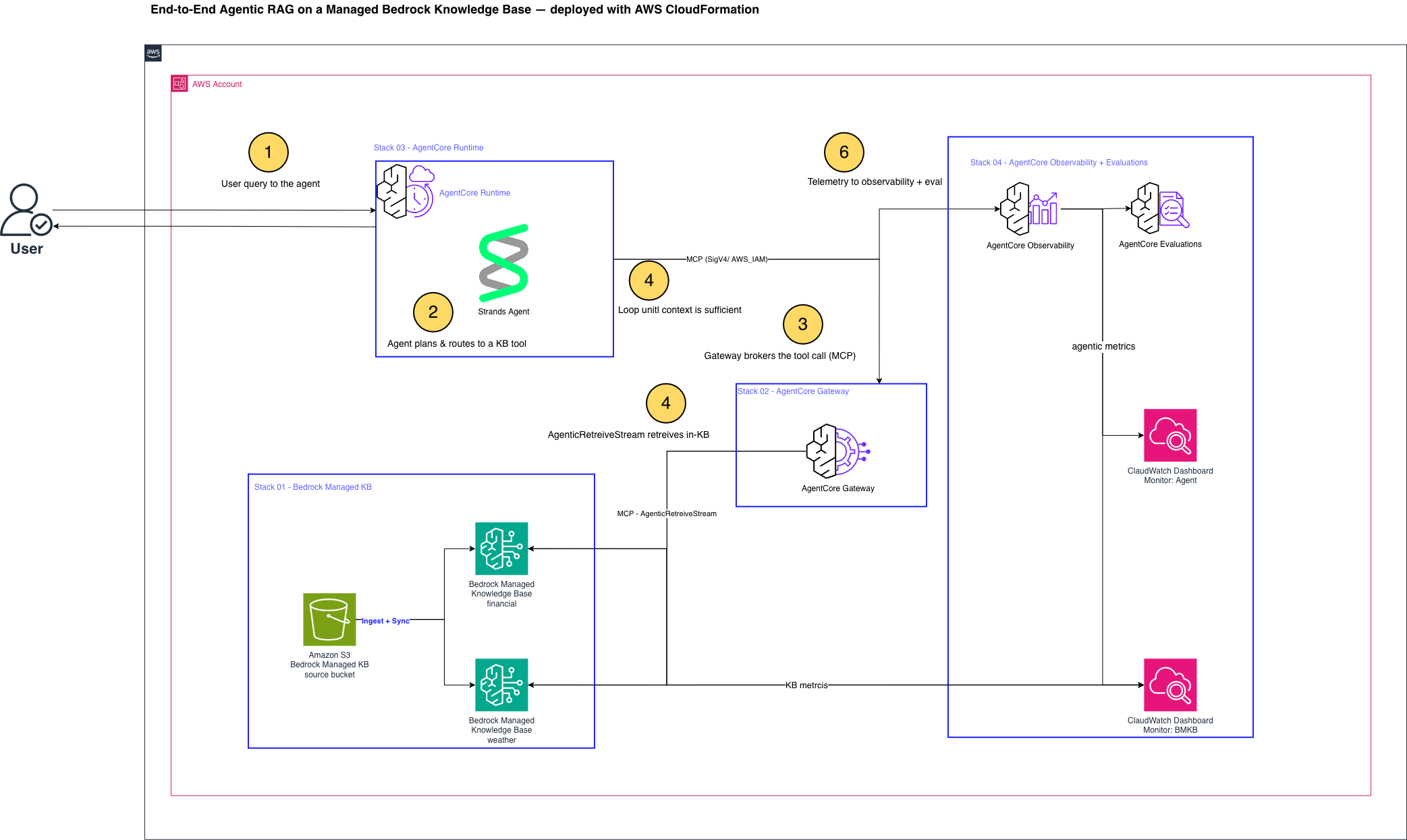
- •Amazon Bedrock AgentCore provides a specialized framework specifically designed to manage identity, memory, and runtime isolation for multi-tenant AI deployments.
- •The architecture employs session-isolated microVMs to achieve strong tenant security without the performance overhead associated with traditional full virtual machine isolation.
- •AWS defines three distinct architectural patterns for multi-tenancy: Silo (dedicated), Pool (shared with context propagation), and Bridge (hybrid), allowing developers to choose based on tiering requirements.
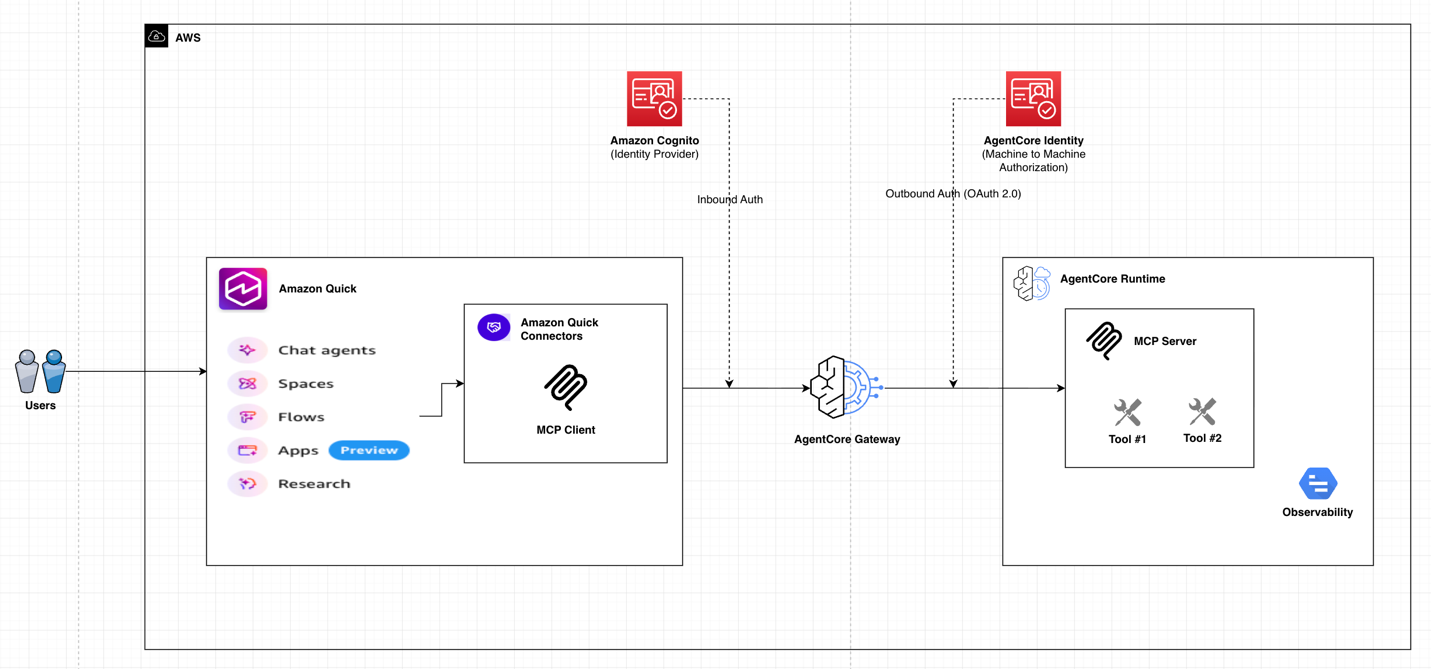
- •Integration with Model Context Protocol (MCP) servers is now a standard practice for maintaining tenant-specific context during agentic interactions with enterprise data.
- •AWS provides native patterns for granular cost attribution, enabling organizations to track AI inference and compute expenses down to the individual tenant level.
📊 Competitor Analysis▸ Show
| Feature | Amazon Bedrock AgentCore | Google Vertex AI Agent Builder | Azure AI Agent Service |
|---|---|---|---|
| Isolation | MicroVM-based | Project/Folder-level IAM | Resource Group/Subscription |
| Multi-tenancy | Native AgentCore patterns | Managed via Vertex AI Search | Managed via Azure AI Search |
| Cost Attribution | Granular per-tenant tagging | Project-level billing | Subscription-level billing |
| MCP Support | Native integration | Limited/Custom | Via Semantic Kernel |
🛠️ Technical Deep Dive
- Runtime Isolation: Utilizes microVMs to ensure memory and compute separation between tenants in a shared pool environment.
- Identity Propagation: Enforces end-to-end identity propagation from the front-end authentication layer through to the Bedrock data retrieval layer.
- Data Governance: Leverages Amazon S3 Tables and Lake Formation to enforce row-level security and RBAC during tool invocation.
- Context Management: Uses AgentCore memory modules to maintain stateful, tenant-isolated conversation history across asynchronous indexing cycles.
- Observability: Implements tenant-aware logging and tracing to monitor agent performance and guardrail compliance per user.
🔮 Future ImplicationsAI analysis grounded in cited sources
⏳ Timeline
📎 Sources (12)
Factual claims are grounded in the sources below. Forward-looking analysis is AI-generated interpretation.
Weekly AI Recap
Read this week's curated digest of top AI events →
👉Related Updates
AI-curated news aggregator. All content rights belong to original publishers.
Original source: AWS Machine Learning Blog ↗
This is a summary, not the original. Read the source, or get the weekly briefing.
Weekly AI briefing
One email a week. Unsubscribe anytime.