Build a Voice-First AI Knowledge System on AWS
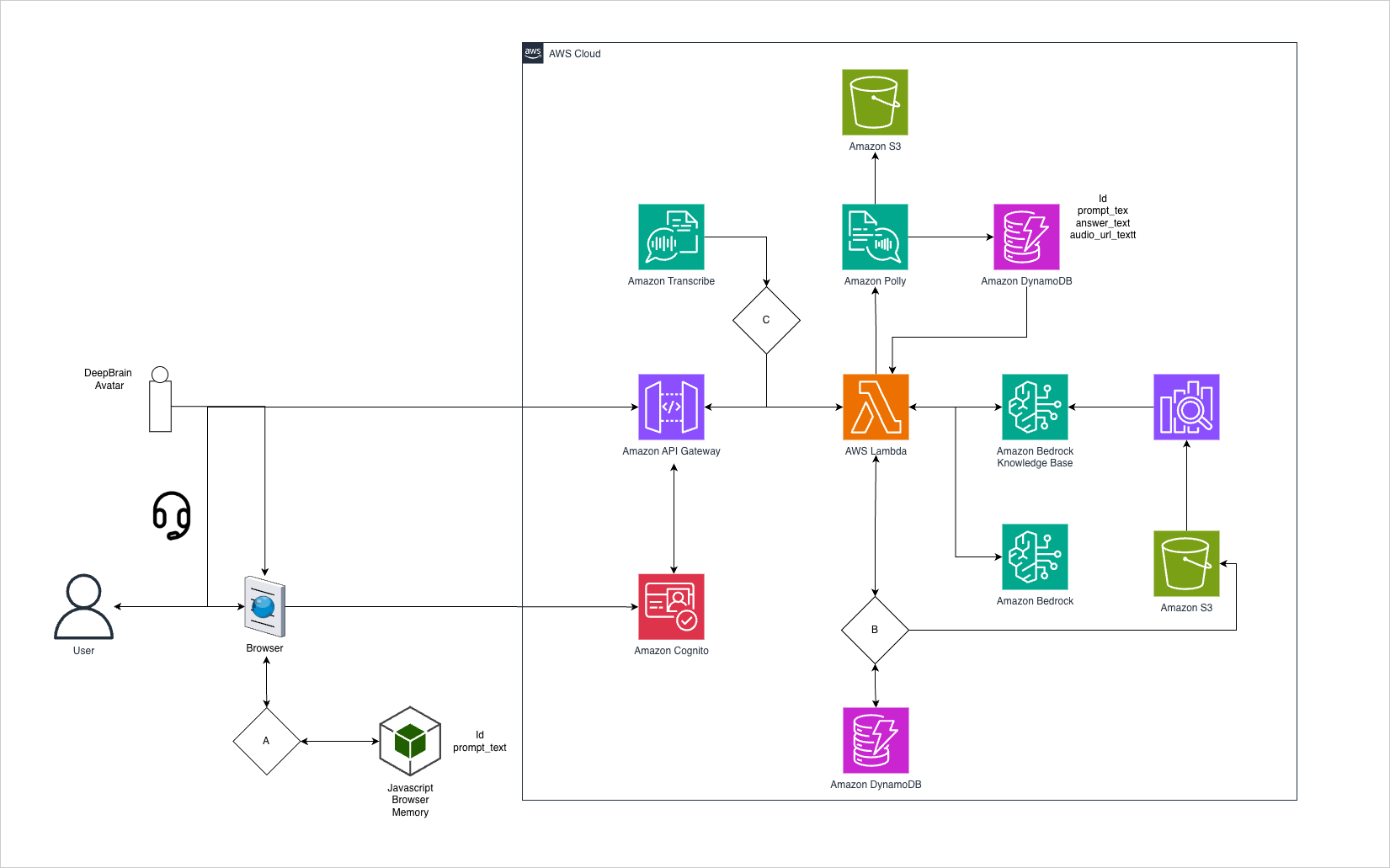
💡See how AWS turns tribal knowledge into a deployable, voice-first RAG assistant in hours.
⚡ 30-Second TL;DR
What Changed
Captures and delivers institutional or tribal knowledge through a voice-first AI avatar.
Why It Matters
The accelerator could reduce the time and engineering effort required to turn fragmented organizational knowledge into an accessible AI assistant. Enterprises may use it to improve onboarding, frontline support, and knowledge retention while keeping the system customizable to their workflows.
What To Do Next
Prototype the accelerator in an AWS sandbox by connecting a small internal knowledge corpus to Amazon Bedrock Knowledge Bases and testing voice-based retrieval quality.
Key Points
- •Captures and delivers institutional or tribal knowledge through a voice-first AI avatar.
- •Uses Amazon Bedrock Knowledge Bases to support retrieval-augmented generation.
- •Includes smart caching and customizable components for enterprise knowledge workflows.
- •Deploys on AWS in hours using an AWS CloudFormation accelerator.
🧠 Deep Insight
Background and context from public sources — not the original article. 8 sources cited.
🔑 Enhanced Key Takeaways
- •The system utilizes the new Amazon Nova Sonic foundation model, which replaces traditional cascaded speech-to-text and text-to-speech pipelines with a unified, end-to-end architecture.
- •The architecture supports 'semantic turn detection' and streaming audio, enabling the AI to process interruptions and adapt tone in under 500 milliseconds.
- •Integration with Amazon Bedrock Guardrails and AgentCore Policy provides mandatory safety and compliance layers for enterprise-grade voice interactions.
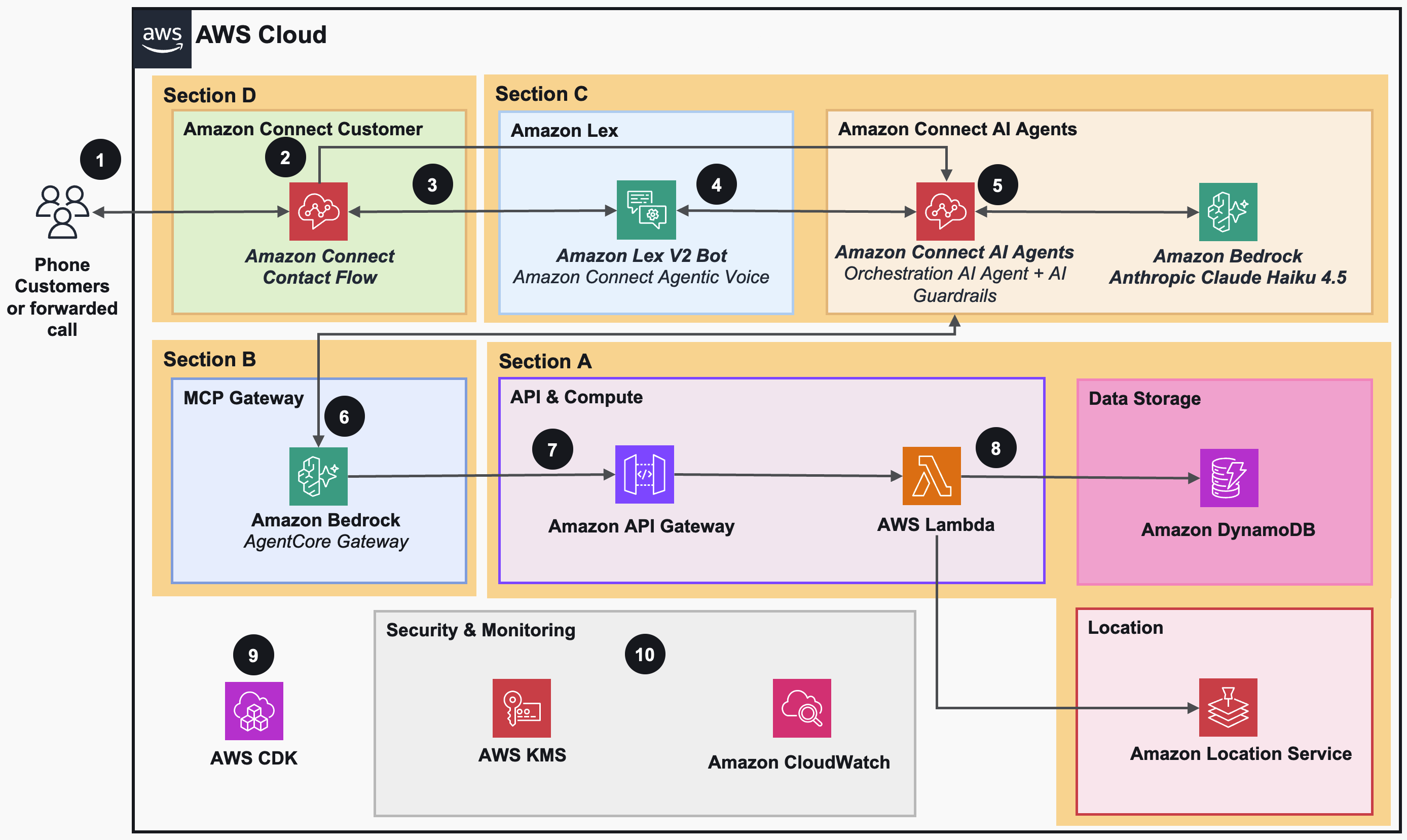
- •The solution leverages Amazon Connect and Amazon Lex V2 'Agentic Voice' capabilities to facilitate bidirectional, real-time telephony interactions without requiring custom containerized code.
- •Organizations deploying these AWS-native voice accelerators report a 62% reduction in time-to-production and a 44% lower total cost of ownership compared to legacy on-premises deployments.
📊 Competitor Analysis▸ Show
| Feature | AWS Voice-First AI | OpenAI (GPT-4o) | Google (Gemini Live) |
|---|---|---|---|
| Primary Focus | Enterprise Compliance & Scalability | Conversational Intelligence | Ecosystem Integration |
| Deployment | AWS CloudFormation / Managed | API / ChatGPT Plus | Google Cloud / Workspace |
| Latency | <500ms (Streaming) | Low (Real-time) | Low (Real-time) |
| Governance | Bedrock Guardrails / AgentCore | OpenAI Safety Layers | Vertex AI Safety Filters |
🛠️ Technical Deep Dive
- Model Architecture: Utilizes Amazon Nova Sonic for unified speech-to-speech processing, bypassing sequential transcription and synthesis steps.
- Latency Optimization: Employs streaming audio protocols to achieve sub-500ms response times for turn-taking and interruption handling.
- Data Grounding: Connects directly to Amazon Bedrock Knowledge Bases to perform RAG on private enterprise data stores.
- Deployment Framework: Uses AWS CloudFormation templates to automate the provisioning of Lex V2, Connect, and Bedrock resources.
- Policy Enforcement: Implements AgentCore Policy to govern agentic behavior and ensure adherence to organizational compliance standards.
🔮 Future ImplicationsAI analysis grounded in cited sources
⏳ Timeline
📎 Sources (8)
Factual claims are grounded in the sources below. Forward-looking analysis is AI-generated interpretation.
Weekly AI Recap
Read this week's curated digest of top AI events →
👉Related Updates


AI-curated news aggregator. All content rights belong to original publishers.
Original source: AWS Machine Learning Blog ↗
This is a summary, not the original. Read the source, or get the weekly briefing.
Weekly AI briefing
One email a week. Unsubscribe anytime.