Breakthrough in PI3Kα inhibitors for rare diseases
See how computational biology and AI are accelerating drug discovery for complex rare diseases.
30-Second TL;DR
What Changed
Advancement in PI3Kα inhibitor efficacy
Why It Matters
This research could lead to new drug discovery pipelines using AI-driven molecular modeling. It highlights the intersection of computational biology and pharmaceutical development.
What To Do Next
If you are in biotech, explore using AlphaFold 3 to simulate the binding affinity of new PI3Kα inhibitor candidates.
Key Points
- •Advancement in PI3Kα inhibitor efficacy
- •Targeting specific rare disease pathways
- •Potential for new therapeutic applications
Deep Insight
Background and context from public sources — not the original article. 30 sources cited.
Enhanced Key Takeaways
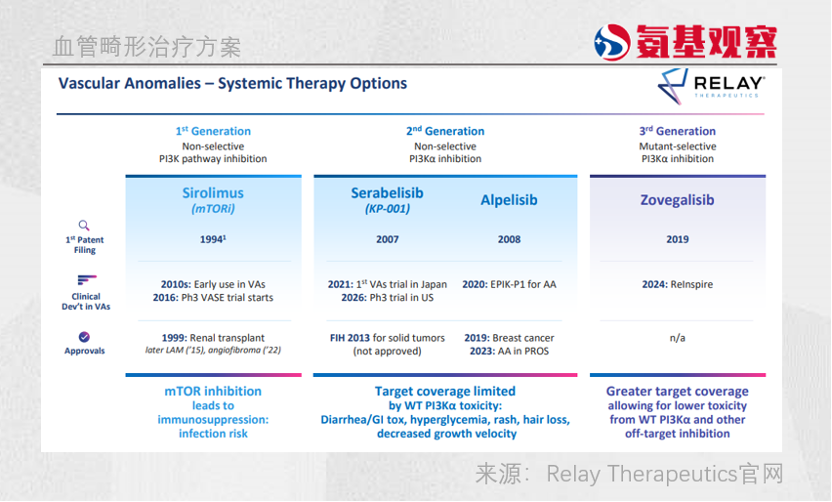
- •The development of PI3Kα inhibitors is increasingly focusing on mutant-selective approaches to mitigate common side effects like hyperglycemia, which has been a significant challenge with earlier, less selective inhibitors.
- •Beyond oncology, PI3Kα inhibitors are demonstrating efficacy in treating rare genetic overgrowth syndromes and vascular anomalies, such as PIK3CA-related overgrowth spectrum (PROS) and Activated PI3K-delta Syndrome (APDS), driven by specific PIK3CA mutations.
- •The PI3K/AKT/mTOR signaling pathway, in which PI3Kα plays a crucial role, is frequently hyperactivated in various cancers and rare diseases due to somatic or germline mutations in genes like PIK3CA, PTEN, PIK3CD, and PIK3R1.
- •Recent clinical trials, such as Relay Therapeutics' Phase 2 ReInspire trial for zovegalisib in PIK3CA-driven vascular anomalies, have shown robust volumetric responses and symptomatic improvements, supporting the potential for mutant-selective PI3Kα inhibition in these underserved populations.
- •The pharmaceutical industry has been actively pursuing PI3K inhibitors since the 1980s, with the first PI3K inhibitor (idelalisib) receiving FDA approval in 2014, highlighting a long-standing effort to therapeutically target this pathway.
Competitor Analysis
- Alpelisib (Novartis)
- Selective PI3Kα inhibitor (mutant + wild-type)
- Inavolisib (Roche/Genentech)
- Highly potent & selective PI3Kα inhibitor
- Zovegalisib (Relay Therapeutics)
- Allosteric, mutant-selective PI3Kα inhibitor
- Tersolisib (Eli Lilly, acquired from Scorpion)
- Mutant-selective PI3Kα inhibitor
- Alpelisib (Novartis)
- HR+/HER2- Breast Cancer (PIK3CA mutation), PROS
- Inavolisib (Roche/Genentech)
- 1L HR+/HER2- MBC, PIK3CA-mutant
- Zovegalisib (Relay Therapeutics)
- Phase 3: HR+/HER2- Breast Cancer; Phase 2: Vascular Anomalies (PIK3CA-driven)
- Tersolisib (Eli Lilly, acquired from Scorpion)
- Phase 3: 1L HR+/HER2- MBC, PIK3CA-mutant
- Alpelisib (Novartis)
- Approved (2019 for breast cancer, 2022 for PROS)
- Inavolisib (Roche/Genentech)
- Approved (2024 for breast cancer)
- Zovegalisib (Relay Therapeutics)
- Phase 3 (Breast Cancer), Phase 2 (Vascular Anomalies)
- Tersolisib (Eli Lilly, acquired from Scorpion)
- Phase 3 (Breast Cancer)
- Alpelisib (Novartis)
- Significant hyperglycemia (~37% Grade 3/4), rash, diarrhea, stomatitis
- Inavolisib (Roche/Genentech)
- Metabolic & GI side effects, neutropenia, stomatitis, hyperglycemia, diarrhea, rash
- Zovegalisib (Relay Therapeutics)
- Aims for reduced toxicity; lower rates of hyperglycemia, stomatitis, rash compared to non-mutant-selective inhibitors
- Tersolisib (Eli Lilly, acquired from Scorpion)
- Designed to spare wild-type PI3Kα to reduce toxicity
- Alpelisib (Novartis)
- PFS +5.3 months vs placebo (SOLAR-1 trial)
- Inavolisib (Roche/Genentech)
- PFS +7.7 months vs placebo (15.0 vs 7.3 months)
- Zovegalisib (Relay Therapeutics)
- 60% volumetric response in vascular anomalies (Phase 2); 11.1 months mPFS in breast cancer (Phase 1)
- Tersolisib (Eli Lilly, acquired from Scorpion)
- No clinical results released yet for Phase 3
| Feature/Drug | Alpelisib (Novartis) | Inavolisib (Roche/Genentech) | Zovegalisib (Relay Therapeutics) | Tersolisib (Eli Lilly, acquired from Scorpion) |
|---|---|---|---|---|
| Mechanism | Selective PI3Kα inhibitor (mutant + wild-type) | Highly potent & selective PI3Kα inhibitor | Allosteric, mutant-selective PI3Kα inhibitor | Mutant-selective PI3Kα inhibitor |
| Key Indications | HR+/HER2- Breast Cancer (PIK3CA mutation), PROS | 1L HR+/HER2- MBC, PIK3CA-mutant | Phase 3: HR+/HER2- Breast Cancer; Phase 2: Vascular Anomalies (PIK3CA-driven) | Phase 3: 1L HR+/HER2- MBC, PIK3CA-mutant |
| Approval/Status | Approved (2019 for breast cancer, 2022 for PROS) | Approved (2024 for breast cancer) | Phase 3 (Breast Cancer), Phase 2 (Vascular Anomalies) | Phase 3 (Breast Cancer) |
| Notable Side Effects | Significant hyperglycemia (~37% Grade 3/4), rash, diarrhea, stomatitis | Metabolic & GI side effects, neutropenia, stomatitis, hyperglycemia, diarrhea, rash | Aims for reduced toxicity; lower rates of hyperglycemia, stomatitis, rash compared to non-mutant-selective inhibitors | Designed to spare wild-type PI3Kα to reduce toxicity |
| Key Benchmarks | PFS +5.3 months vs placebo (SOLAR-1 trial) | PFS +7.7 months vs placebo (15.0 vs 7.3 months) | 60% volumetric response in vascular anomalies (Phase 2); 11.1 months mPFS in breast cancer (Phase 1) | No clinical results released yet for Phase 3 |
Technical Deep Dive
- Mechanism of Action: PI3Kα inhibitors function by binding to the ATP-binding pocket of the PI3Kα enzyme, thereby preventing its interaction with ATP, which is essential for its kinase activity. This inhibition leads to a decrease in phosphatidylinositol (3,4,5)-trisphosphate (PIP3) levels, suppressing Akt activation and subsequently inhibiting downstream signaling pathways like mTOR, ultimately leading to reduced cell proliferation and induction of apoptosis.
- Isoform Selectivity: A critical technical challenge in PI3K inhibitor development is achieving high selectivity for the alpha isoform (PI3Kα) over other Class I PI3K isoforms (β, γ, δ) and wild-type PI3Kα. This selectivity is crucial to minimize off-target effects, particularly hyperglycemia, which is often associated with the inhibition of wild-type PI3Kα involved in insulin signaling.
- Allosteric vs. Catalytic Inhibition: While many PI3Kα inhibitors are catalytic, binding directly to the active site, newer approaches include allosteric inhibitors. Allosteric inhibitors, such as Relay Therapeutics' zovegalisib and Loxo Oncology's LOXO-783, bind to a site distinct from the active site, inducing a conformational change that inactivates the enzyme. This mechanism can offer enhanced selectivity and a potentially improved safety profile.
- Key Genetic Mutations: PI3Kα inhibitors primarily target activating mutations in the PIK3CA gene, which encodes the p110α catalytic subunit of PI3K. Common hotspot mutations include E542K and E545K in the helical domain, and H1047L and H1047R in the kinase domain, which lead to constitutive activation of the PI3K pathway.
- Adverse Event Management: Due to the ubiquitous role of PI3Kα in cellular processes, common side effects include hyperglycemia, rash, diarrhea, nausea, and stomatitis. Strategies to manage hyperglycemia often involve close monitoring of blood glucose levels and, in some cases, co-administration of medications like metformin.
Future ImplicationsAI analysis grounded in cited sources
Timeline
- 1980sIdentification of PI3K and its emergence as a therapeutic target.
- 2004Discovery of *PIK3CA* gene faults in human cancer, linking specific mutations to PI3K pathway activation.
- 2014First FDA approval of a PI3K inhibitor, idelalisib (PI3Kδ-selective), for certain B-cell malignancies.
- 2019FDA approval of alpelisib (Novartis), the first PI3Kα-selective inhibitor, for *PIK3CA*-mutated HR+/HER2- breast cancer.
- 2022-2023Expansion of PI3K inhibitor indications into rare diseases with FDA approvals for alpelisib (Vijoice) in PROS (2022) and leniolisib in APDS (2023).
- 2026-05Relay Therapeutics announces positive Phase 2 data for zovegalisib, a mutant-selective PI3Kα inhibitor, in PIK3CA-driven vascular anomalies.
Sources (30)
Factual claims are grounded in the sources below. Forward-looking analysis is AI-generated interpretation.
Weekly AI Recap
Read this week's curated digest of top AI events →
AI-curated news aggregator. All content rights belong to original publishers.
Original source: 钛媒体 ↗
This is a summary, not the original. Read the source, or get the weekly briefing.
The weekly digest
One email a week. Unsubscribe anytime.