BrainCo BCI Wows with Mind-Controlled Hand
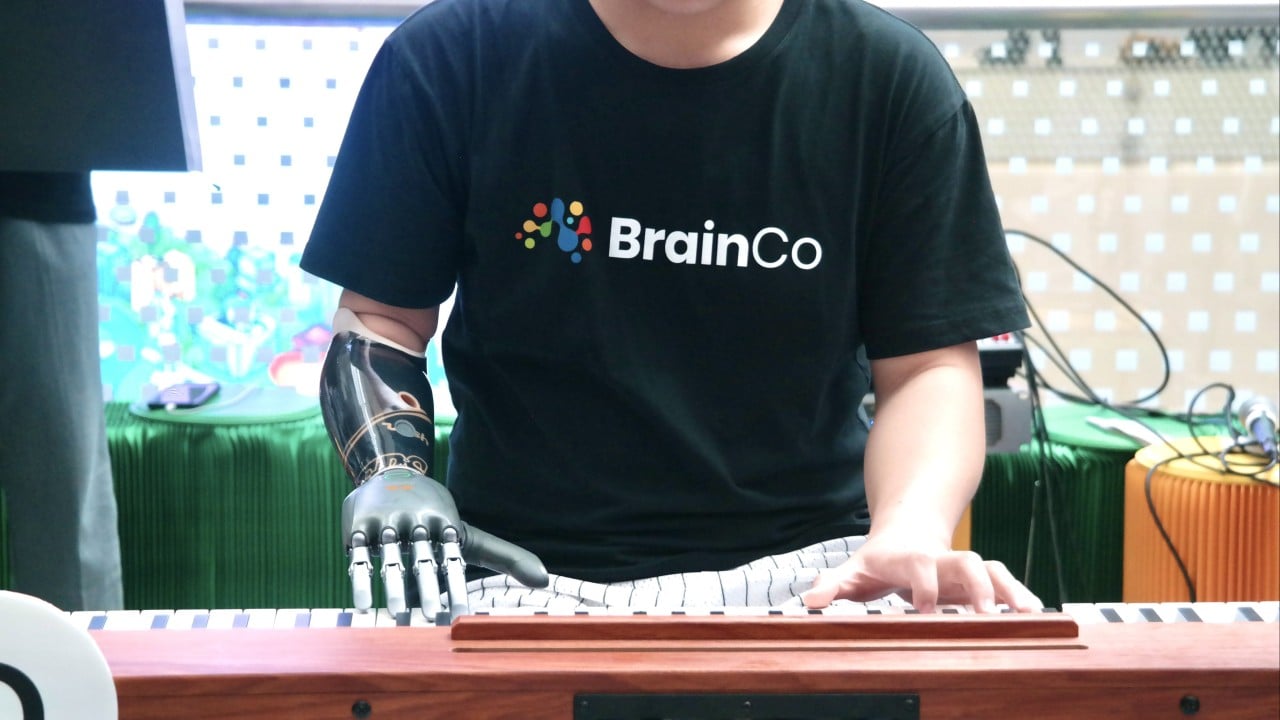
Non-invasive BCI demos thought-controlled hand—pivotal for AI-driven prosthetics & neurotech.
30-Second TL;DR
What Changed
Non-invasive BCI reads neural signals through skin
Why It Matters
Advances accessible neurotech for healthcare AI applications, potentially accelerating prosthetics and rehab tools. Signals investor interest in BCI via HSBC summit demo, boosting startup funding prospects.
What To Do Next
Request BrainCo BCI demo access via their website for neural control integration testing.
Key Points
- •Non-invasive BCI reads neural signals through skin
- •Translates brain signals to control machines like prosthetic hands
- •Demo wowed audience at HSBC Global Investment Summit
- •Harvard-incubated startup targeting brain disease treatment
Deep Insight
AI-generated analysis for this event — not the original article.
Enhanced Key Takeaways
- •BrainCo's BCI technology utilizes proprietary AI-driven signal processing algorithms to filter EEG data in real-time, distinguishing motor intent from background neural noise without requiring surgical implantation.
- •Beyond prosthetics, the company has expanded its product ecosystem to include 'FocusCalm,' a wearable headband designed for neurofeedback training to improve attention and reduce stress in educational and corporate settings.
- •The company leverages a massive proprietary database of EEG data collected from its consumer-grade wearables to train its machine learning models, creating a competitive moat in non-invasive neural decoding.
Competitor Analysis
- BrainCo (Focus/Prosthetics)
- Non-invasive (EEG)
- Neuralink (N1)
- Highly Invasive (Implant)
- Synchron (Stentrode)
- Minimally Invasive (Endovascular)
- BrainCo (Focus/Prosthetics)
- Neurofeedback/Prosthetics
- Neuralink (N1)
- Motor/Cognitive Restoration
- Synchron (Stentrode)
- Motor Restoration
- BrainCo (Focus/Prosthetics)
- Moderate (Surface)
- Neuralink (N1)
- High (Direct Neuron)
- Synchron (Stentrode)
- High (Vascular)
- BrainCo (Focus/Prosthetics)
- Consumer/Clinical (Variable)
- Neuralink (N1)
- N/A (Clinical Trial)
- Synchron (Stentrode)
- N/A (Clinical Trial)
| Feature | BrainCo (Focus/Prosthetics) | Neuralink (N1) | Synchron (Stentrode) |
|---|---|---|---|
| Invasiveness | Non-invasive (EEG) | Highly Invasive (Implant) | Minimally Invasive (Endovascular) |
| Primary Target | Neurofeedback/Prosthetics | Motor/Cognitive Restoration | Motor Restoration |
| Signal Quality | Moderate (Surface) | High (Direct Neuron) | High (Vascular) |
| Pricing | Consumer/Clinical (Variable) | N/A (Clinical Trial) | N/A (Clinical Trial) |
Technical Deep Dive
- Signal Acquisition: Utilizes multi-channel dry electrode EEG sensors integrated into wearable headbands or prosthetic interfaces.
- Processing Architecture: Employs deep learning models (specifically CNNs and RNNs) to classify motor imagery patterns from raw EEG streams.
- Latency: Optimized for low-latency signal translation, typically targeting sub-200ms response times for real-time prosthetic control.
- Signal Processing: Implements advanced artifact removal techniques to mitigate electromyography (EMG) interference and motion artifacts common in non-invasive setups.
Future ImplicationsAI analysis grounded in cited sources
Timeline
- 2015-01BrainCo is founded at the Harvard Innovation Lab.
- 2017-01BrainCo debuts its first focus-tracking headband at CES.
- 2019-01BrainCo unveils the 'BrainRobotics' prosthetic hand at CES, capable of interpreting muscle signals.
- 2020-09BrainCo receives FDA clearance for its focus-training headband as a wellness device.
Weekly AI Recap
Read this week's curated digest of top AI events →
Related Updates



AI-curated news aggregator. All content rights belong to original publishers.
Original source: SCMP Technology ↗
This is a summary, not the original. Read the source, or get the weekly briefing.
The weekly digest
One email a week. Unsubscribe anytime.