Brain Encodes Fear Memories via Timed Neuron Clusters
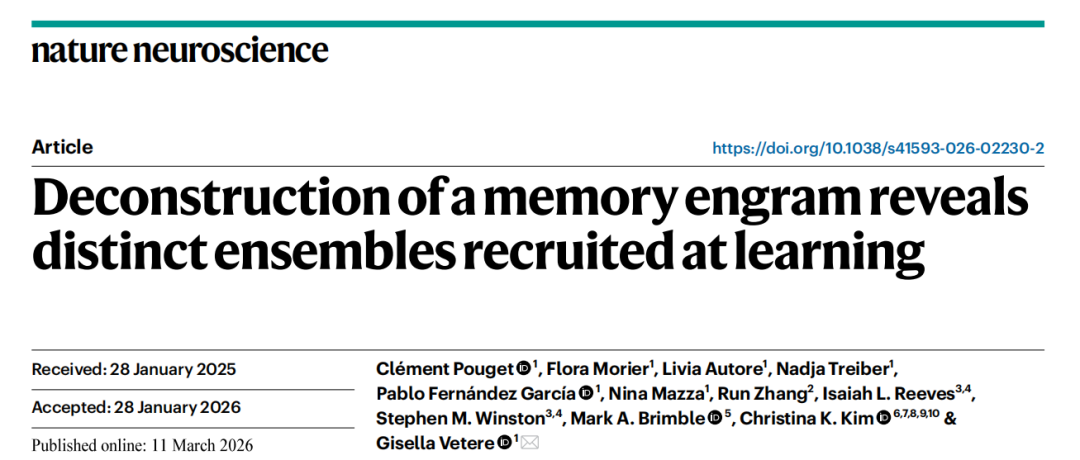
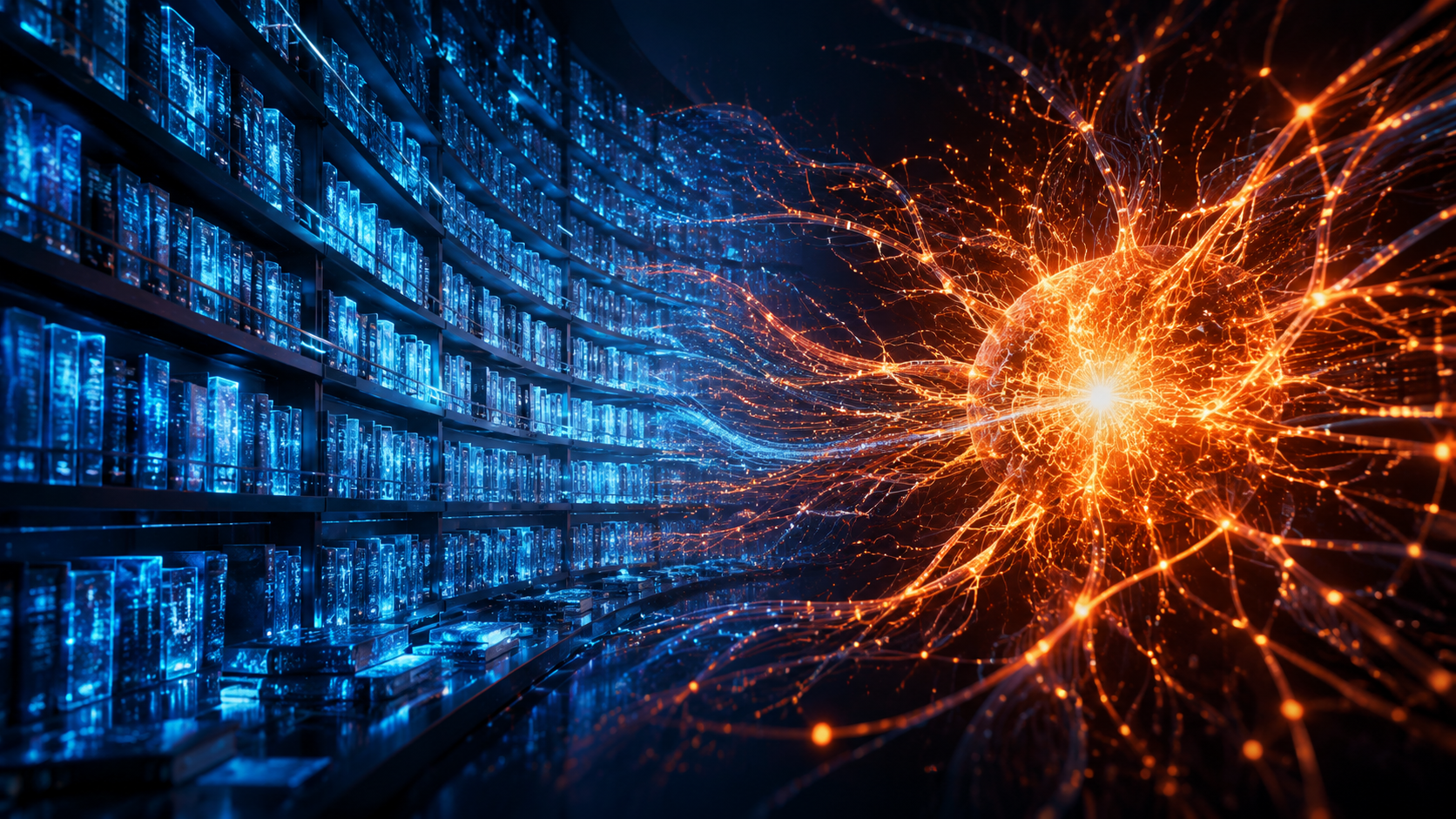
💡Neural memory mechanics decoded—gold for brain-like AI architectures.
⚡ 30-Second TL;DR
What Changed
f-FLiCRE excels at instant neural dynamic capture.
Why It Matters
Advances brain-inspired AI memory models with precise neural ensemble insights.
What To Do Next
Implement f-FLiCRE-inspired spiking networks in your next neuromorphic simulation.
Key Points
- •f-FLiCRE excels at instant neural dynamic capture.
- •Fear memories stored in timed, specific neuron ensembles.
- •Reveals spatiotemporal mechanisms of complex memory.
- •Validates method for memory build-to-recall process.
🧠 Deep Insight
Background and context from public sources — not the original article. 6 sources cited.
🔑 Enhanced Key Takeaways
- •f-FLiCRE is a faster variant of FLiCRE using f-hLOV1 for higher temporal resolution, enabling tagging of dCA1 cells active specifically during fear conditioning shock or freezing in mice[1].
- •Optogenetic activation of f-FLiCRE-tagged dCA1 engram cells from fear conditioning context is sufficient to induce fear memory recall, replicating classic gain-of-function experiments[1].
- •f-FLiCRE tagging efficacy reaches 67% in massively activated neurons during kainic acid-induced seizures, confirming reliability over IEG-based methods[1].
🛠️ Technical Deep Dive
- •f-FLiCRE employs light (blue) and high intracellular calcium for dual-condition tagging via a transmembrane-bound transcription factor that translocates to the nucleus upon protease cleavage[1][3].
- •It is a faster variant of FLiCRE with f-hLOV1, providing temporal resolution on seconds-to-minutes scale, superior to IEG-based reporters[1][3].
- •FLiCRE consists of two molecular chains responding to blue light and calcium, packaged in virus for delivery; expresses fluorescent reporters or actuators like opsins for manipulation[2].
- •cytoFLARE, an improved FLARE variant, shows 2.7-fold better calcium/light signals in HEK293T cells and 1.8-fold improved signal-to-background in neurons via cytosolic TF tethering and sensitive CaM-MK2[3].
🔮 Future ImplicationsAI analysis grounded in cited sources
⏳ Timeline
📎 Sources (6)
Factual claims are grounded in the sources below. Forward-looking analysis is AI-generated interpretation.
Weekly AI Recap
Read this week's curated digest of top AI events →
👉Related Updates


AI-curated news aggregator. All content rights belong to original publishers.
Original source: 钛媒体 ↗
This is a summary, not the original. Read the source, or get the weekly briefing.
Weekly AI briefing
One email a week. Unsubscribe anytime.