Border Fact-Checking Pact Follows Ceuta Tragedy
💡A real-world test case for designing AI moderation systems that can react before viral video causes harm.
⚡ 30-Second TL;DR
What Changed
Meta and TikTok will fact-check content concerning Spain’s border crossings.
Why It Matters
AI teams building content moderation or risk systems may need stronger multilingual fact-checking and crisis-escalation workflows. The agreement also signals growing pressure on major platforms to address viral content before it causes offline harm.
What To Do Next
Add Spanish-language border and migration videos to your moderation evaluation set, then test fact-checking and human-escalation thresholds for rapidly spreading claims.
Key Points
- •Meta and TikTok will fact-check content concerning Spain’s border crossings.
- •The commitment was voluntarily brokered by Brussels rather than imposed as a formal regulation.
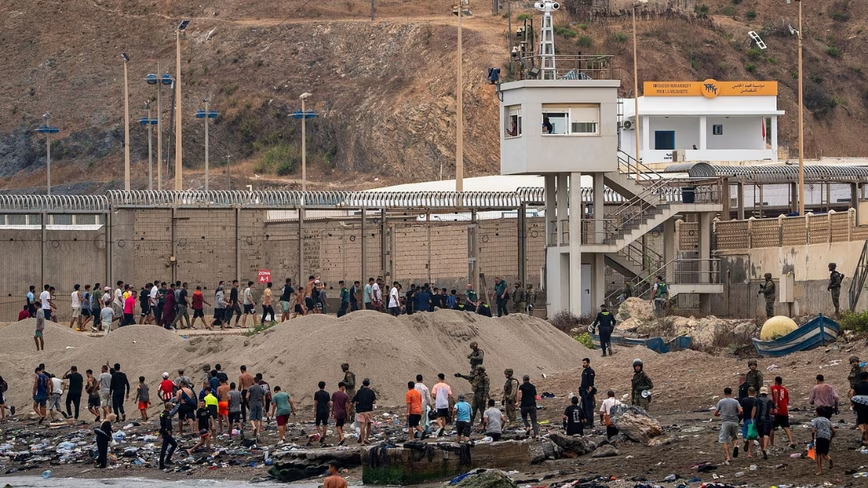
- •The policy response follows a 30 July incident involving more than 70,000 migrants moving toward Ceuta.
- •The case demonstrates the potential real-world consequences of rapidly spreading video misinformation.
🧠 Deep Insight
AI-generated analysis for this event.
🔑 Enhanced Key Takeaways
- •The agreement operates under the framework of the EU's Digital Services Act (DSA), which encourages voluntary cooperation between Very Large Online Platforms (VLOPs) and regulators to mitigate systemic risks.
- •The Ceuta incident involved the use of coordinated inauthentic behavior (CIB) tactics, where bot networks amplified specific videos to incite panic and accelerate migrant movement toward the border.
- •Meta and TikTok have committed to deploying specialized 'crisis response' teams that operate in real-time to review content flagged by Spanish authorities and independent fact-checkers.
- •The European Commission has established a dedicated 'Rapid Response Mechanism' specifically for border-related misinformation, which serves as the primary conduit for information sharing between the platforms and the Spanish government.
- •This voluntary pact includes a transparency requirement where platforms must submit monthly reports to the European Commission detailing the volume of content removed or labeled under this specific border-security initiative.
🛠️ Technical Deep Dive
- Implementation of cross-platform hash-sharing databases to prevent the re-upload of verified misinformation content across Meta (Facebook/Instagram) and TikTok ecosystems.
- Deployment of multimodal AI classifiers trained on historical border-crossing footage to detect and flag synthetic or manipulated media in real-time.
- Integration of automated 'context labels' that append official government data or verified news links to posts containing keywords related to the Ceuta border region.
- Utilization of geolocation-aware content moderation algorithms that prioritize the review of videos metadata-tagged near the Spanish-Moroccan border during periods of high traffic.
🔮 Future ImplicationsAI analysis grounded in cited sources
⏳ Timeline
Weekly AI Recap
Read this week's curated digest of top AI events →
👉Related Updates




AI-curated news aggregator. All content rights belong to original publishers.
Original source: The Next Web (TNW) ↗