Bold satellite rescue mission launched in record time
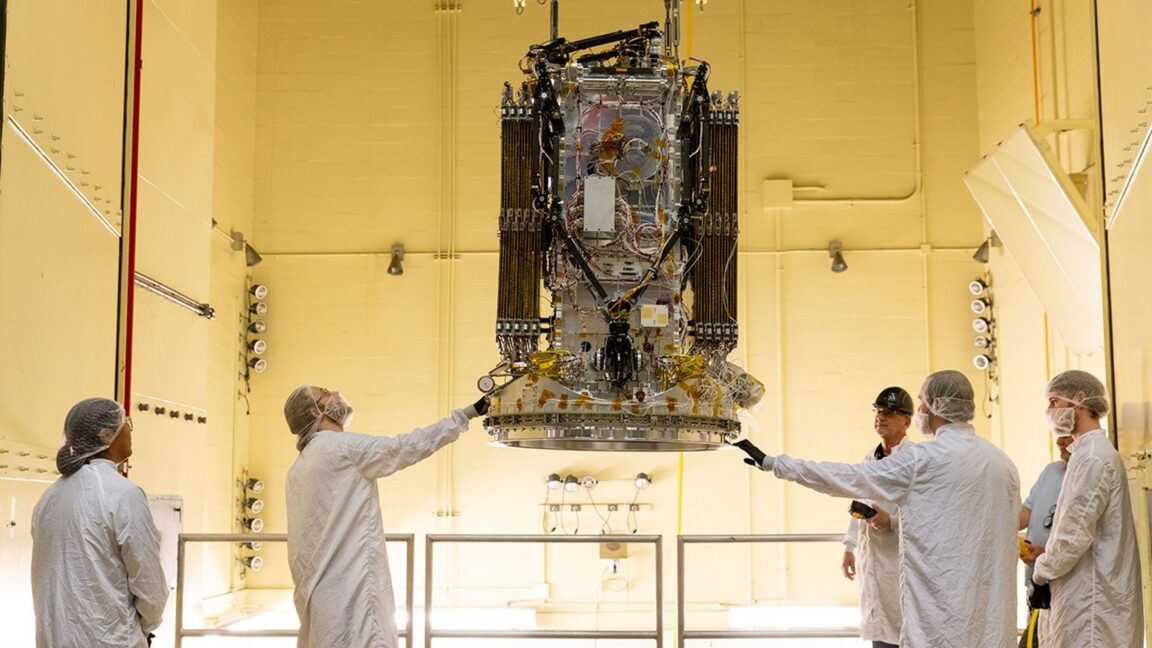
💡Learn how rapid engineering cycles are transforming high-stakes aerospace operations.
⚡ 30-Second TL;DR
What Changed
Mission developed and deployed in record-breaking time
Why It Matters
This mission sets a new benchmark for rapid aerospace engineering and agile hardware deployment. It highlights the potential for quick-turnaround space operations.
What To Do Next
Study the agile project management frameworks used in this mission to optimize your own hardware development cycles.
Key Points
- •Mission developed and deployed in record-breaking time
- •High-stakes operation targeting satellite recovery
- •Demonstrates rapid engineering and agile project management
🧠 Deep Insight
AI-generated analysis for this event — not the original article.
🔑 Enhanced Key Takeaways
- •The mission, identified as the 'Victus Haze' operation, was executed by the U.S. Space Force's Space Systems Command to demonstrate tactical responsiveness in orbit.
- •The operation involved a rapid-response rendezvous with an unidentified or 'non-cooperative' space object, testing the ability to characterize potential threats in near-real-time.
- •The project utilized a 'hot standby' satellite architecture, where the spacecraft was kept in a state of readiness to launch on short notice, significantly reducing the traditional multi-year development cycle.
🛠️ Technical Deep Dive
- Spacecraft Architecture: Utilizes a modular, rapid-integration bus design optimized for quick payload swapping.
- Launch Integration: Employs 'responsive launch' protocols, minimizing the time between payload arrival at the launch site and liftoff.
- Proximity Operations: Features advanced autonomous navigation and sensor suites capable of performing close-approach maneuvers with non-cooperative targets.
- Command and Control: Relies on decentralized, agile mission control software designed to bypass traditional bureaucratic launch approval bottlenecks.
🔮 Future ImplicationsAI analysis grounded in cited sources
⏳ Timeline
Weekly AI Recap
Read this week's curated digest of top AI events →
👉Related Updates
AI-curated news aggregator. All content rights belong to original publishers.
Original source: Ars Technica ↗
This is a summary, not the original. Read the source, or get the weekly briefing.
Weekly AI briefing
One email a week. Unsubscribe anytime.