BMW faces sales slump and backlash over new X5 design
💡Understand how design choices and EV transition strategies impact market share for legacy automotive giants.
⚡ 30-Second TL;DR
What Changed
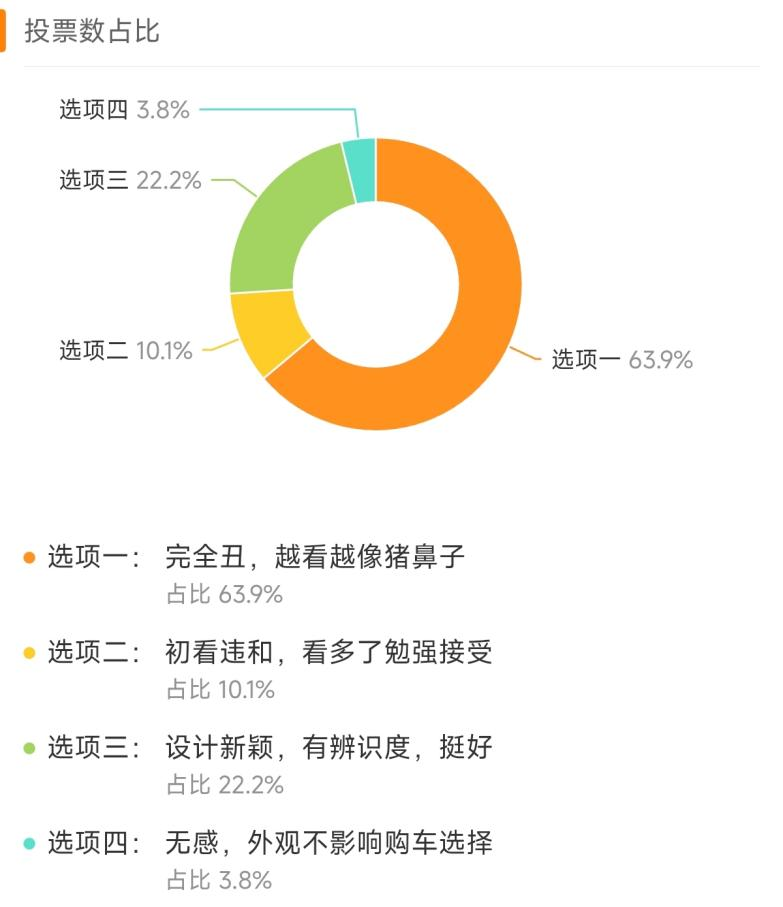
New BMW X5 design criticized for 'pig nose' appearance, impacting brand perception.
Why It Matters
The shift in the Chinese luxury market toward domestic EVs is forcing legacy automakers to rethink their design and pricing strategies. BMW's struggle highlights the difficulty of transitioning to an EV-first market.
What To Do Next
Analyze competitive benchmarking data to understand why legacy automotive platforms are losing market share to native EV architectures.
Key Points
- •New BMW X5 design criticized for 'pig nose' appearance, impacting brand perception.
- •BMW China sales dropped 10% in Q1 2026, the largest decline among major markets.
- •Aggressive price cuts implemented, with some models seeing reductions of over 20%.
🧠 Deep Insight
AI-generated analysis for this event — not the original article.
🔑 Enhanced Key Takeaways
- •The 'pig nose' design criticism specifically targets the enlarged, vertically-oriented kidney grille, which deviates from the traditional horizontal aesthetic favored by BMW's core Chinese demographic.
- •BMW's Q1 2026 sales decline is exacerbated by a broader shift in the Chinese luxury market, where consumers are increasingly prioritizing advanced in-car software and autonomous driving features over traditional brand prestige.
- •To combat the sales slump, BMW has reportedly initiated a 're-localization' strategy, increasing investment in local R&D centers in Shanghai and Beijing to better align future designs with Chinese consumer preferences.
- •The 20% price cuts have triggered significant 'brand dilution' concerns among existing BMW owners in China, leading to secondary market value depreciation and increased customer churn.
- •Domestic EV competitors, particularly Li Auto and Nio, have successfully captured market share from the X5 by offering superior 'living room' cabin experiences and integrated smart-cockpit ecosystems that BMW's current platform struggles to match.
📊 Competitor Analysis▸ Show
| Feature | BMW X5 (2026) | Li Auto L9 | Nio ES8 |
|---|---|---|---|
| Powertrain | ICE/Mild Hybrid | EREV (Range Extender) | BEV (Swappable) |
| Smart Cockpit | iDrive 9.0 | Dual-Screen/AI Assistant | NOMI AI/Advanced HUD |
| Pricing (CNY) | 600k - 850k | 400k - 460k | 500k - 600k |
| Market Positioning | Performance Luxury | Family/Tech Luxury | Premium Tech/Service |
🛠️ Technical Deep Dive
- The 2026 X5 utilizes the CLAR (Cluster Architecture) platform, which is increasingly viewed as a legacy constraint compared to the dedicated EV platforms used by Chinese rivals.
- The criticized grille design is aerodynamically optimized for active air flap control, though the functional benefits are perceived as negligible by consumers compared to the aesthetic cost.
- BMW's current infotainment system relies on a centralized OS that lacks the deep integration with local Chinese third-party apps (e.g., WeChat, Meituan) found in domestic competitors.
- The powertrain lineup continues to rely heavily on the B58 3.0L inline-six engine, which faces increasing regulatory pressure and tax disadvantages compared to New Energy Vehicles (NEVs) in major Chinese cities.
🔮 Future ImplicationsAI analysis grounded in cited sources
⏳ Timeline
Weekly AI Recap
Read this week's curated digest of top AI events →
👉Related Updates



AI-curated news aggregator. All content rights belong to original publishers.
Original source: 虎嗅 ↗
This is a summary, not the original. Read the source, or get the weekly briefing.
The weekly digest
One email a week. Unsubscribe anytime.