๐Ÿ‡จ๐Ÿ‡ณStalecollected in 19h

Blue Origin Faces 6-Month Launch Delay After Explosion
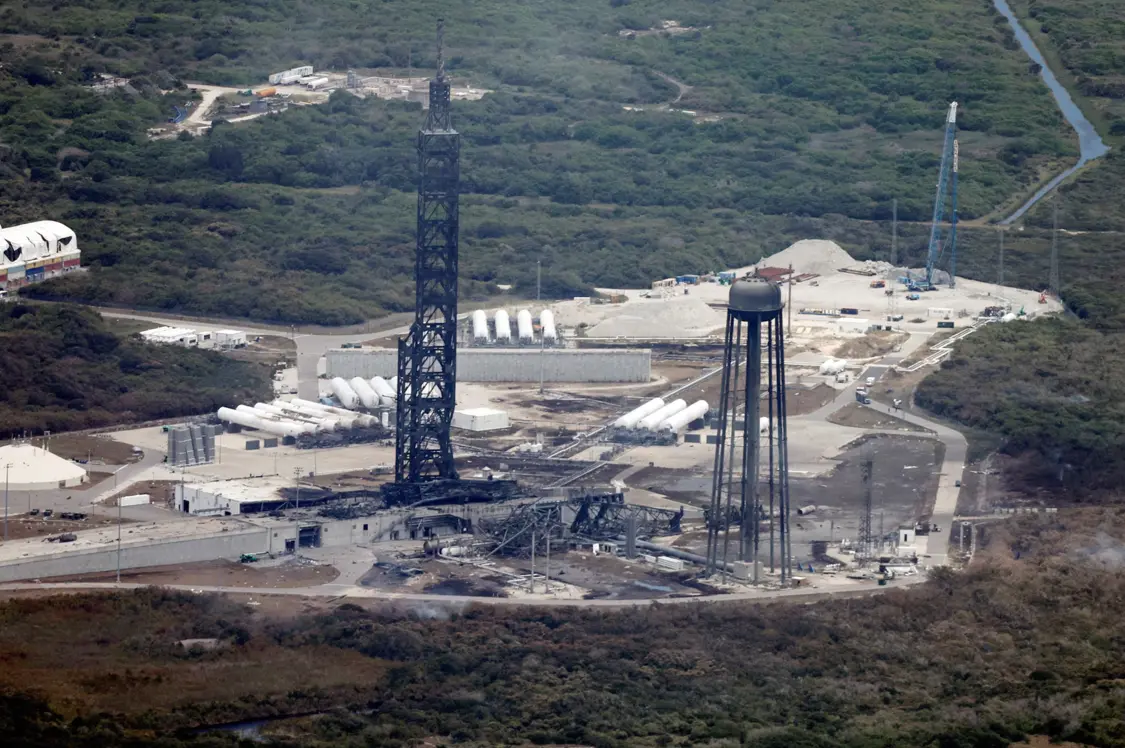
Blue Origin Faces 6-Month Launch Delay After Explosion
PostLinkedIn
๐Ÿ‡จ๐Ÿ‡ณRead original on cnBeta (Full RSS)

๐Ÿ’กMajor launch delay at Blue Origin impacts satellite infrastructure; assess your supply chain risks now.

โšก 30-Second TL;DR

What Changed

Launch pad damage caused by a recent rocket explosion

Why It Matters

The delay provides a strategic advantage to SpaceX in the commercial launch market. It also creates a bottleneck for companies relying on Blue Origin for satellite infrastructure deployment.

What To Do Next

If your infrastructure project relies on Blue Origin's launch capacity, immediately evaluate alternative launch providers like SpaceX to mitigate schedule risks.

Who should care:Founders & Product Leaders

Key Points

  • โ€ขLaunch pad damage caused by a recent rocket explosion
  • โ€ขMinimum 6-month delay for all scheduled launches
  • โ€ขImpacts Amazon's satellite deployment timeline

๐Ÿง  Deep Insight

Web-grounded analysis with 26 cited sources.

๐Ÿ”‘ Enhanced Key Takeaways

  • โ€ขThe explosion occurred during a static fire test of the New Glenn rocket's first stage, specifically the 'No, It's Necessary' booster, which was being prepared for its fourth flight.
  • โ€ขThe incident took place at Launch Complex 36 (LC-36) at Cape Canaveral Space Force Station, which is Blue Origin's sole operational launch pad for the New Glenn rocket.
  • โ€ขThe blast destroyed the New Glenn rocket and caused extensive damage to the launch pad infrastructure, with debris reportedly washing ashore on nearby beaches.
  • โ€ขThis setback follows a previous anomaly in April 2026 during New Glenn's third flight (NG-3), where an upper-stage engine failure resulted in the deployment of the AST SpaceMobile's BlueBird 7 satellite into an incorrect, unsustainable orbit.
  • โ€ขThe upcoming mission, NG-4, which was scheduled for June 4, 2026, and intended to deploy 49 satellites for Amazon's Project Kuiper (now rebranded as Amazon Leo), is directly impacted by this delay.
๐Ÿ“Š Competitor Analysisโ–ธ Show
Feature/ProviderBlue Origin New GlennSpaceX Falcon 9SpaceX Falcon HeavyULA Vulcan CentaurArianespace Ariane 6
ClassificationHeavy-liftMedium-liftSuper Heavy-liftHeavy-liftHeavy-lift
Height98 m (322 ft)70 m (230 ft)70 m (230 ft)~61.6 m (202 ft)~63 m (207 ft)
Payload to LEO45,000 kg (99,000 lb)~22,800 kg (reusable)~63,800 kg (expended)Up to 27,200 kg (with 6 SRBs)Up to 21,600 kg
Payload to GTO13,000-13,600 kg (29,000-30,000 lb)~8,300 kg (reusable)~26,700 kg (expended)Up to 14,500 kg (with 6 SRBs)Up to 11,500 kg
ReusabilityFirst stage (vertical landing on sea platform)First stage & fairings (vertical landing)Boosters & fairings (vertical landing)First stage engines (SMART reuse concept)Expendable
First Stage Engines7x BE-4 (LOX/LNG)9x Merlin 1D (LOX/RP-1)27x Merlin 1D (LOX/RP-1)2x BE-4 (LOX/LNG)4x P120C (solid) or 2x P120C (solid)
Second Stage Engines2x BE-3U (LOX/LH2)1x Merlin Vacuum (LOX/RP-1)1x Merlin Vacuum (LOX/RP-1)1-2x RL10 (LOX/LH2)1x Vinci (LOX/LH2)
Estimated Cost/Launch$68-110 million$67 million$97-150 million~$110-150 million~$75-115 million
StatusInactive (due to explosion)OperationalOperationalOperationalOperational (Maiden flight July 2024)

๐Ÿ› ๏ธ Technical Deep Dive

  • Vehicle Dimensions: New Glenn is a 98-meter (322 ft) tall, 7-meter (23 ft) diameter, two-stage orbital launch vehicle.
  • First Stage: Designed to be reusable for a minimum of 25 flights, it lands vertically on a sea-based platform. It is powered by seven Blue Origin-designed and manufactured BE-4 methane/oxygen engines, each producing 640,000 lbf (2,846 kN) of thrust at sea level.
  • Second Stage: This stage is expendable and is powered by two BE-3U hydrogen/oxygen vacuum-optimized engines, also designed and manufactured by Blue Origin. Each BE-3U engine generates 200,000 lbf (890 kN) of vacuum thrust and features in-space restart capabilities.
  • Propellants: The first stage uses liquid oxygen (LOX) and liquefied natural gas (LNG), while the second stage uses liquid oxygen (LOX) and liquid hydrogen (LH2).
  • Payload Fairing: New Glenn features a 7-meter payload fairing, which provides approximately twice the internal volume of conventional 5-meter-class fairings, allowing for larger spacecraft and constellation deployments.
  • Launch Complex 36 (LC-36): Blue Origin invested over $1 billion to rebuild this launch site at Cape Canaveral Space Force Station, completing it in 2021. It serves as the primary launch pad for New Glenn, as well as housing vehicle integration, first stage refurbishment, and propellant facilities.

๐Ÿ”ฎ Future ImplicationsAI analysis grounded in cited sources

Amazon's Project Kuiper satellite deployment schedule will face significant delays and potential shifts to alternative launch providers.
Blue Origin was contracted for 12 New Glenn launches (with options for 15 more) for Project Kuiper, and the destruction of its sole New Glenn launch pad will halt these missions, forcing Amazon to re-evaluate its launch manifest and potentially rely more heavily on other providers like ULA and Arianespace.
NASA's lunar ambitions, particularly for the Artemis program, could be impacted by the New Glenn setback.
New Glenn was slated to launch Blue Origin's Blue Moon Mark 1 lunar lander with NASA payloads, and the current incident will likely delay these critical missions, potentially increasing NASA's reliance on SpaceX's Starship for lunar delivery.
Competitors like SpaceX and United Launch Alliance (ULA) may gain increased market share in the heavy-lift launch sector.
With Blue Origin's New Glenn grounded for an extended period due to launch pad damage and an ongoing investigation, customers seeking heavy-lift capabilities for commercial and national security missions may turn to operational alternatives, bolstering the positions of SpaceX's Falcon family and ULA's Vulcan Centaur.

โณ Timeline

2015-09
Blue Origin leased Launch Complex 36 (LC-36) in Cape Canaveral, Florida, for New Glenn operations.
2016-09
Blue Origin publicly announced the New Glenn heavy-lift orbital launch vehicle.
2021
Blue Origin completed the rebuilding of Launch Complex 36 (LC-36) after investing over $1 billion.
2024-02
The inaugural New Glenn vehicle was unveiled on the launch pad for the first time for testing.
2025-01-16
New Glenn conducted its first flight (NG-1) from LC-36, successfully reaching orbit and deploying the Blue Ring Pathfinder.
2025-11-13
The first stage of New Glenn achieved its first successful landing during its second flight (NG-2).
2026-04-19
New Glenn's third flight (NG-3) experienced an upper-stage engine anomaly, deploying the BlueBird 7 satellite into an incorrect orbit.
2026-05-28
A New Glenn rocket exploded during a static fire test at LC-36, destroying the vehicle and damaging the launch pad.
๐Ÿ“ฐ

Weekly AI Recap

Read this week's curated digest of top AI events โ†’

๐Ÿ‘‰Related Updates

AI-curated news aggregator. All content rights belong to original publishers.
Original source: cnBeta (Full RSS) โ†—