Blue Origin targets New Glenn launch this year
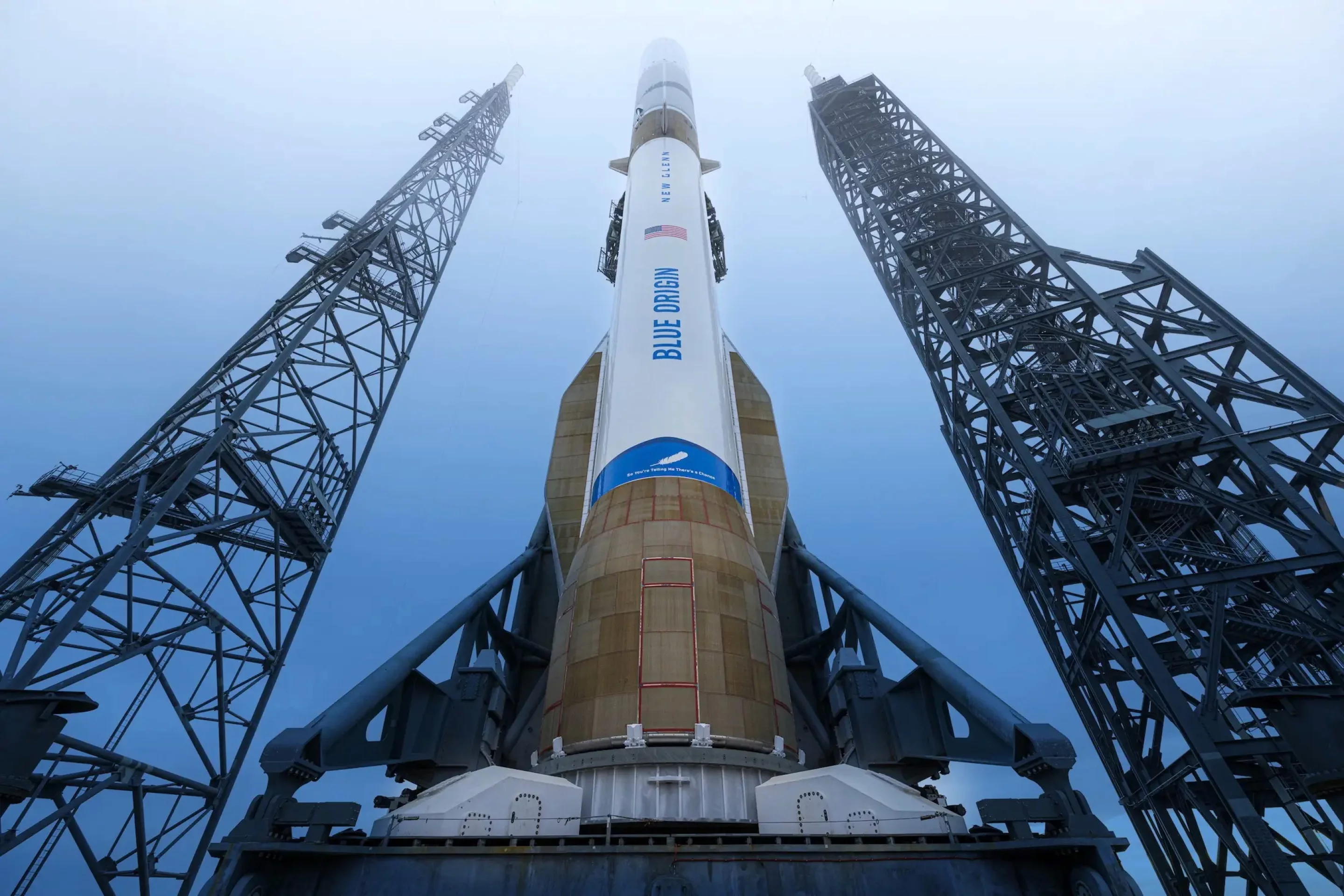
💡Critical update on Blue Origin's heavy-lift launch capabilities following a major setback.
⚡ 30-Second TL;DR
What Changed
Blue Origin is recovering from a May New Glenn explosion.
Why It Matters
Resuming New Glenn flights is critical for Blue Origin's market credibility and competition in the heavy-lift launch sector. Success would alleviate concerns regarding long-term project stagnation.
What To Do Next
Monitor Blue Origin's official press releases for the updated launch manifest to assess potential impacts on your satellite deployment or research payload timelines.
Key Points
- •Blue Origin is recovering from a May New Glenn explosion.
- •A new launch operation concept is being introduced.
- •The company aims for a launch attempt before the end of the year.
🧠 Deep Insight
AI-generated analysis for this event — not the original article.
🔑 Enhanced Key Takeaways
- •The May 2026 incident involved a catastrophic failure of the New Glenn second stage during a static fire test at Cape Canaveral Space Force Station.
- •Blue Origin's new launch concept involves a simplified 'rapid-turnaround' propellant loading sequence designed to mitigate thermal stress issues identified in the post-explosion investigation.
- •The Federal Aviation Administration (FAA) has mandated a comprehensive safety review of Blue Origin's launch infrastructure before granting a new launch license for the vehicle.
- •Industry analysts suggest the delay has impacted Blue Origin's ability to meet its contractual obligations for the NASA ESCAPADE mission, which was originally slated for an earlier launch window.
- •The company has increased its workforce at the Kennedy Space Center's Exploration Park facility to expedite the integration of the replacement second stage.
📊 Competitor Analysis▸ Show
| Feature | Blue Origin New Glenn | SpaceX Falcon Heavy | ULA Vulcan Centaur |
|---|---|---|---|
| Reusability | Reusable First Stage | Partially Reusable | Expendable (w/ SMART reuse planned) |
| Payload to LEO | ~45 Metric Tons | ~64 Metric Tons | ~27 Metric Tons |
| Engine Type | BE-4 (Methalox) | Merlin 1D (Kerolox) | BE-4 (Methalox) |
| Status | Testing/Recovery | Operational | Operational |
🛠️ Technical Deep Dive
- The New Glenn vehicle utilizes seven BE-4 engines on the first stage, producing 3.85 million pounds of thrust at liftoff.
- The second stage is powered by two vacuum-optimized BE-3U engines, which utilize liquid hydrogen and liquid oxygen.
- The vehicle features a 7-meter diameter fairing, significantly larger than the 5-meter fairings used by Falcon 9 or Vulcan, allowing for larger payload volumes.
- The recovery system for the first stage relies on aerodynamic control surfaces (fins) and a landing ship platform, similar to SpaceX's drone ship concept but utilizing a different stabilization algorithm.
🔮 Future ImplicationsAI analysis grounded in cited sources
⏳ Timeline
Weekly AI Recap
Read this week's curated digest of top AI events →
👉Related Updates
AI-curated news aggregator. All content rights belong to original publishers.
Original source: cnBeta (Full RSS) ↗
This is a summary, not the original. Read the source, or get the weekly briefing.
The weekly digest
One email a week. Unsubscribe anytime.