Blindsight的“超人视力”仍遥远
💡Neuralink promises superhuman vision, but retinal signal processing makes the engineering challenge far harder than addi
⚡ 30-Second TL;DR
What Changed
Neuralink 宣称 Blindsight 未来可帮助盲人恢复视力,甚至实现多波段超人视觉,但文章认为这一目标缺乏现阶段证据支持。
Why It Matters
The article is relevant to neurotechnology and embodied AI because it highlights the gap between neural-interface demonstrations and reliable high-bandwidth perception. AI researchers should treat extraordinary prosthetic-vision claims as unvalidated until supported by controlled human trials and measurable task performance.
What To Do Next
When evaluating Blindsight or similar BCIs, require peer-reviewed human-trial data with task-level metrics such as object recognition, navigation, latency, and long-term implant reliability.
Key Points
- •Neuralink 宣称 Blindsight 未来可帮助盲人恢复视力,甚至实现多波段超人视觉,但文章认为这一目标缺乏现阶段证据支持。
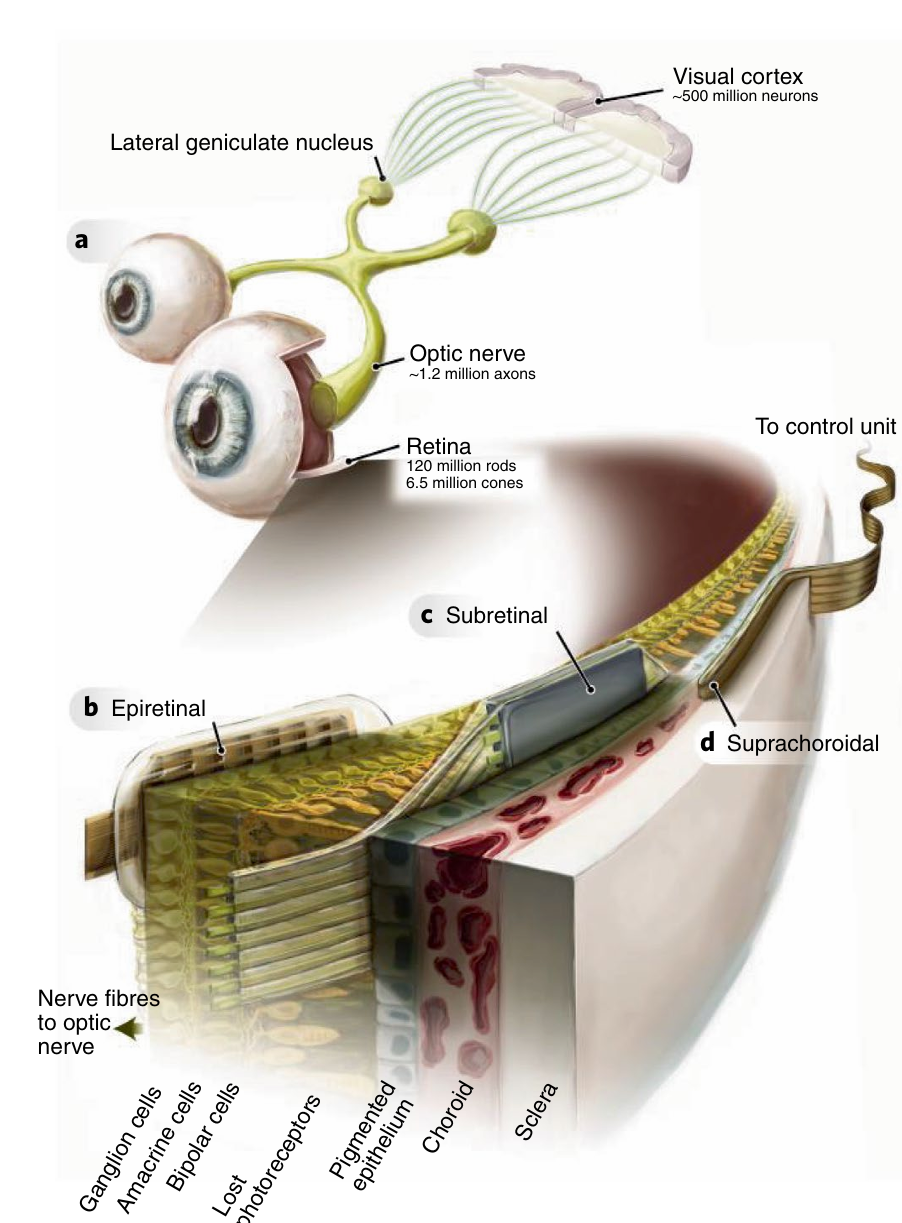
- •视网膜上假体如 Argus II 曾让部分患者区分明暗、简单物体和大型障碍物,但系统已停止生产。
- •直接刺激视网膜神经节细胞会绕过复杂的视网膜信息处理,通常产生光幻视而非自然图像。
- •视网膜下假体试图替代受损感光细胞,在功能输入端刺激双极细胞,代表另一条工程路径。
- •增加电极数量无法单独解决神经编码、个体化校准、空间定位和长期维护等难题。
🧠 Deep Insight
AI-generated analysis for this event.
🔑 Enhanced Key Takeaways
- •Neuralink received FDA 'Breakthrough Device' designation for the Blindsight project in March 2024, which accelerates the review process for technologies treating life-threatening or irreversibly debilitating conditions.
- •The Blindsight device utilizes a high-density electrode array implanted directly into the visual cortex, aiming to bypass the optic nerve entirely, which is a critical distinction from retinal-based implants.
- •Elon Musk has publicly suggested that Blindsight could eventually allow users to see in infrared, ultraviolet, or radar wavelengths, though neuroscientists emphasize that the brain's visual cortex is not natively wired to process these non-visible spectra.
- •Neuralink's approach faces significant biological challenges regarding 'gliosis,' where the brain forms scar tissue around implanted electrodes, potentially degrading signal quality and stimulation efficacy over time.
- •Unlike previous generations of visual prosthetics that relied on external cameras mounted on glasses, Neuralink's long-term vision involves a fully internalized system, though current prototypes still require external data processing units.
📊 Competitor Analysis▸ Show
| Feature | Neuralink (Blindsight) | Second Sight (Argus II) | Cortical/Retinal Research (General) |
|---|---|---|---|
| Target Site | Visual Cortex | Retina | Various (Optic Nerve/Cortex) |
| Status | Clinical/Developmental | Discontinued | Research/Early Clinical |
| Resolution | High-density (Targeted) | Low (60 electrodes) | Variable |
| Primary Limitation | Biocompatibility/Decoding | Hardware Support/Resolution | Signal Processing Complexity |
🛠️ Technical Deep Dive
- Architecture: Utilizes a high-density CMOS-based electrode array designed to interface with the primary visual cortex (V1).
- Stimulation Strategy: Employs micro-stimulation of cortical neurons to induce phosphenes, attempting to map these to spatial visual fields.
- Data Processing: Current iterations rely on external hardware for image capture and signal translation into neural-compatible patterns.
- Biocompatibility: Uses flexible, thin-film polymer substrates to minimize mechanical mismatch with soft brain tissue and reduce chronic inflammatory responses.
🔮 Future ImplicationsAI analysis grounded in cited sources
⏳ Timeline
Weekly AI Recap
Read this week's curated digest of top AI events →
👉Related Updates
AI-curated news aggregator. All content rights belong to original publishers.
Original source: 虎嗅 ↗