Billions Flow Into Embodied AI Despite Deployment Hurdles
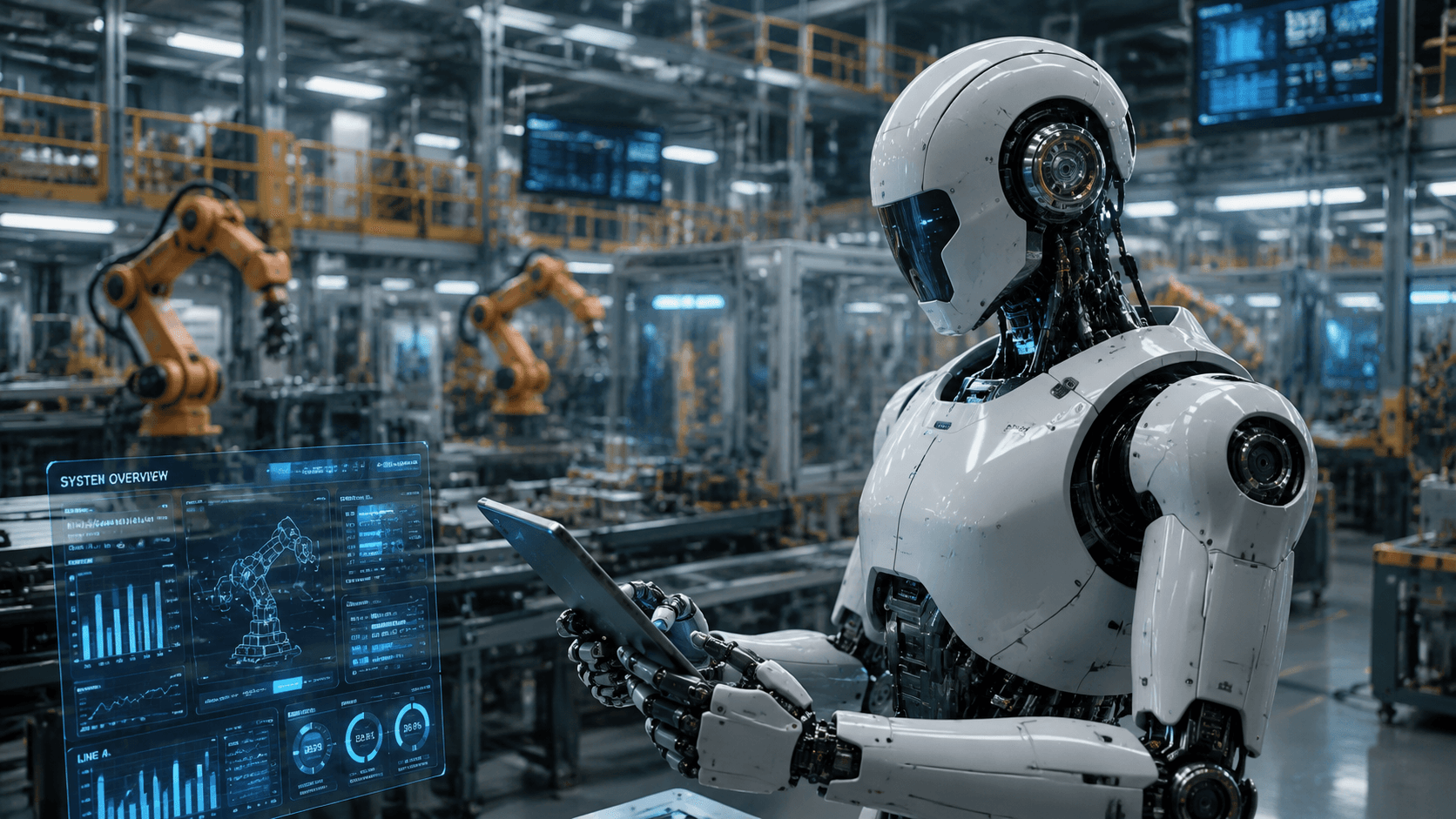
Understand why massive capital in embodied AI isn't translating to factory floors yet.
30-Second TL;DR
What Changed
RMB 46 billion invested in China's embodied AI sector in H1 2026
Why It Matters
The gap between funding and deployment suggests a shift toward synthetic data generation and simulation-to-reality research for robotics developers.
What To Do Next
Investigate synthetic data generation frameworks like NVIDIA Isaac Sim to overcome real-world data scarcity for your robotics models.
Key Points
- •RMB 46 billion invested in China's embodied AI sector in H1 2026
- •Real-world factory deployment is currently lagging behind capital influx
- •Primary bottlenecks identified as data scarcity and technical immaturity
Deep Insight
AI-generated analysis for this event — not the original article.
Enhanced Key Takeaways
- •The Chinese government's 'Robot+ Application Action Plan' has been a primary driver for the recent surge in capital, aiming to double the density of manufacturing robots by the end of 2025.
- •Leading Chinese embodied AI startups are increasingly pivoting toward 'Sim-to-Real' transfer learning techniques to mitigate the lack of high-quality, diverse real-world training data.
- •Major domestic players are forming cross-industry alliances with automotive OEMs to gain exclusive access to proprietary factory floor data, a move intended to bypass the industry-wide data scarcity bottleneck.
- •The 'technical immaturity' cited is specifically linked to the lack of generalized foundation models capable of handling non-repetitive, unstructured tasks in dynamic factory environments.
- •Investment patterns show a shift from pure hardware robotics companies toward 'software-first' embodied AI firms that focus on brain-body decoupling, allowing AI models to be ported across different robotic form factors.
Competitor Analysis
- Chinese Embodied AI (e.g., Agibot, Unitree)
- Industrial/Manufacturing Integration
- Western Embodied AI (e.g., Figure AI, Tesla)
- General Purpose Humanoid/Labor Augmentation
- Chinese Embodied AI (e.g., Agibot, Unitree)
- Government-backed factory partnerships
- Western Embodied AI (e.g., Figure AI, Tesla)
- Large-scale synthetic and teleoperation data
- Chinese Embodied AI (e.g., Agibot, Unitree)
- Aggressive cost-reduction (target <$20k)
- Western Embodied AI (e.g., Figure AI, Tesla)
- Premium/High-end (R&D focused)
- Chinese Embodied AI (e.g., Agibot, Unitree)
- Transformer-based, often localized
- Western Embodied AI (e.g., Figure AI, Tesla)
- End-to-end neural networks (e.g., VLA)
| Feature | Chinese Embodied AI (e.g., Agibot, Unitree) | Western Embodied AI (e.g., Figure AI, Tesla) |
|---|---|---|
| Primary Focus | Industrial/Manufacturing Integration | General Purpose Humanoid/Labor Augmentation |
| Data Strategy | Government-backed factory partnerships | Large-scale synthetic and teleoperation data |
| Hardware Cost | Aggressive cost-reduction (target <$20k) | Premium/High-end (R&D focused) |
| Model Architecture | Transformer-based, often localized | End-to-end neural networks (e.g., VLA) |
Technical Deep Dive
- Implementation of Vision-Language-Action (VLA) models to bridge the gap between high-level semantic understanding and low-level motor control.
- Utilization of NVIDIA Isaac Sim and Omniverse for large-scale synthetic data generation to train policies before physical deployment.
- Development of modular 'robot brains' that utilize transformer architectures to process multi-modal sensor inputs (LiDAR, RGB-D, tactile) in real-time.
- Research into reinforcement learning from human feedback (RLHF) specifically adapted for robotic manipulation tasks to improve edge-case handling.
Future ImplicationsAI analysis grounded in cited sources
Timeline
- 2024-01China's Ministry of Industry and Information Technology releases the 'Robot+ Application Action Plan'.
- 2025-03Initial wave of specialized embodied AI funding begins, focusing on humanoid hardware prototypes.
- 2025-11Industry-wide recognition of the 'Sim-to-Real' gap leads to a pivot toward software-centric development.
- 2026-02Major Chinese tech firms announce strategic partnerships with automotive manufacturers for data access.
Weekly AI Recap
Read this week's curated digest of top AI events →
Related Updates



AI-curated news aggregator. All content rights belong to original publishers.
Original source: Pandaily ↗
This is a summary, not the original. Read the source, or get the weekly briefing.
The weekly digest
One email a week. Unsubscribe anytime.