Big Tech AI Battle for China's Gaokao Season
💡See how top Chinese AI labs are optimizing LLMs for high-accuracy educational tasks during peak demand.
⚡ 30-Second TL;DR
What Changed
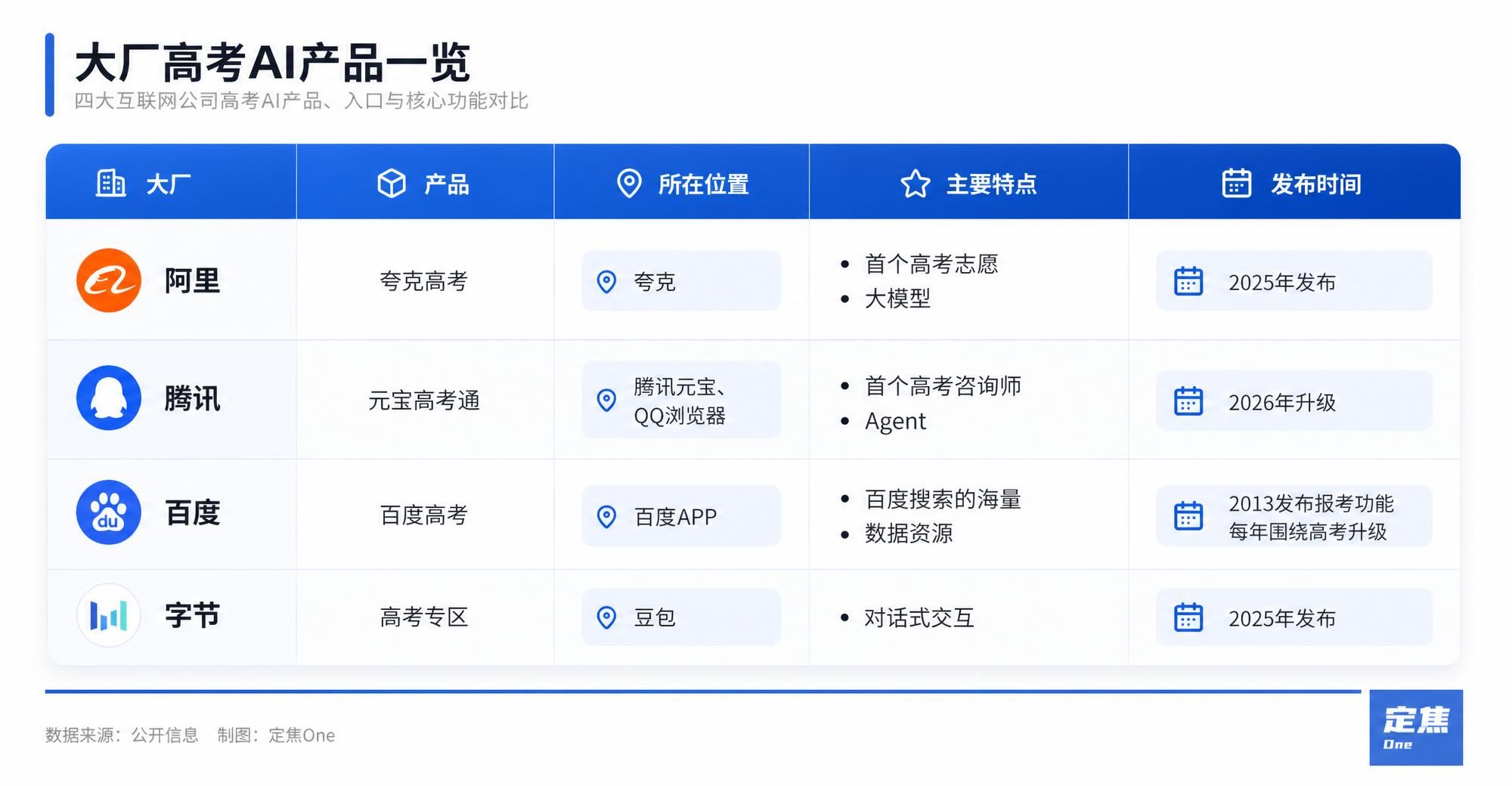
Major Chinese tech firms are deploying AI for Gaokao exam prep
Why It Matters
The integration of LLMs into high-stakes education creates a massive real-world testing ground for AI reasoning and accuracy, influencing future consumer AI adoption.
What To Do Next
Analyze how these companies handle hallucination in educational content to improve your own RAG pipeline reliability.
Key Points
- •Major Chinese tech firms are deploying AI for Gaokao exam prep
- •Focus on personalized tutoring and automated study assistance
- •High-stakes competition for user acquisition during exam season
🧠 Deep Insight
Background and context from public sources — not the original article. 20 sources cited.
🔑 Enhanced Key Takeaways
- •Chinese tech firms are implementing safety restrictions on their AI platforms, such as disabling photo-based question answering, during the Gaokao exam period to prevent cheating and ensure fairness.
- •Beyond exam preparation, AI is increasingly utilized for post-Gaokao services, including personalized university and major application assistance, leveraging student scores and regional admission data.
- •The China AI in education technology market is experiencing significant growth, valued at USD 846.1 million in 2025 and projected to reach USD 16,252.10 million by 2034, with a compound annual growth rate of 38.87%.
- •AI is being integrated into Gaokao security and monitoring, with AI-assisted invigilation systems deployed in exam sites to detect suspicious behaviors like unusual eye movements or prohibited device usage.
- •AI tools have evolved from simple Q&A bots to more sophisticated multi-turn, agent-style deep search systems capable of maintaining context and conducting iterative research for comprehensive support.
🛠️ Technical Deep Dive
- AI tools have evolved from basic single-round Q&A bots to advanced multi-turn Agent-style deep search systems that can maintain context across extended conversations, ask clarifying questions, and perform iterative research.
- Alibaba's multilingual large language model, Qwen2-72B, demonstrated strong performance in a 2024 Gaokao simulation for Chinese literature and English language, achieving an average accuracy rate of about 72%.
- Baidu's Wenxin 4.0 also performed well in a 2024 Gaokao simulation, notably scoring highest in mathematics, physics, and biology among tested AI models.
- AI-assisted invigilation systems deployed in Gaokao exam sites utilize machine-learning algorithms to analyze video feeds in real-time, identifying suspicious behaviors such as unusual eye movements, handwriting inconsistencies, or the use of forbidden electronic devices.
- Adaptive learning systems, such as those developed by Squirrel AI, break down subjects into thousands of granular 'knowledge points' to precisely diagnose student understanding gaps and dynamically tailor personalized lesson plans.
🔮 Future ImplicationsAI analysis grounded in cited sources
⏳ Timeline
📎 Sources (20)
Factual claims are grounded in the sources below. Forward-looking analysis is AI-generated interpretation.
Weekly AI Recap
Read this week's curated digest of top AI events →
👉Related Updates


AI-curated news aggregator. All content rights belong to original publishers.
Original source: Pandaily ↗
This is a summary, not the original. Read the source, or get the weekly briefing.
The weekly digest
One email a week. Unsubscribe anytime.