Big Sonnet Upgrade, Comms Downgrade
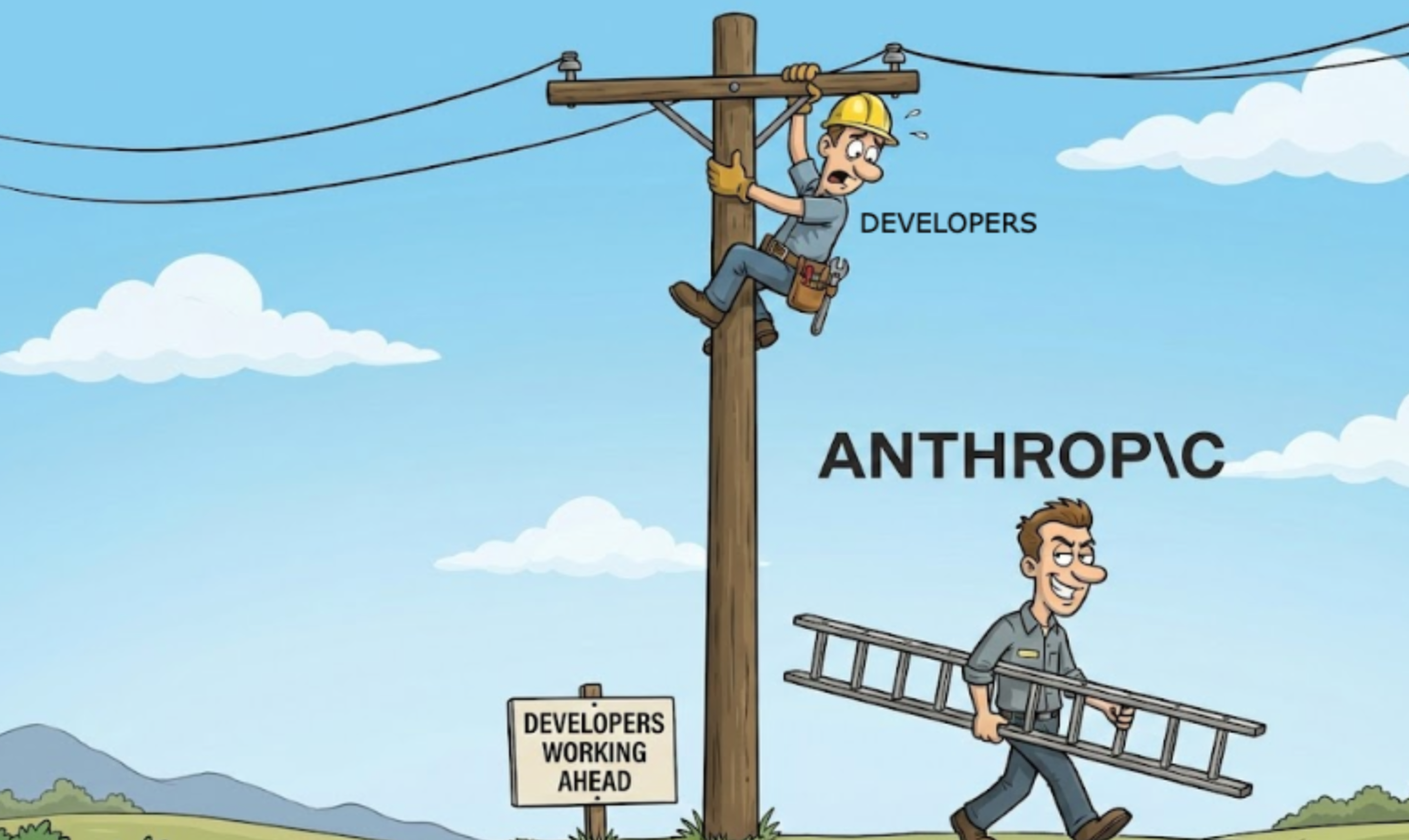
💡Sonnet upgrade boosts AI capabilities but comms woes hit devs—check impact on your workflow.
⚡ 30-Second TL;DR
What Changed
Significant performance upgrade for Sonnet model
Why It Matters
The upgrade enhances Sonnet's competitiveness in LLMs, benefiting builders with better tools. Poor comms may hinder adoption and trust among developers.
What To Do Next
Test latest Claude Sonnet on Anthropic API to benchmark upgrade performance gains.
Key Points
- •Significant performance upgrade for Sonnet model
- •Massive decline in developer communication quality
- •Highlighted in Ben's Bites AI newsletter
🧠 Deep Insight
Background and context from public sources — not the original article. 6 sources cited.
🔑 Enhanced Key Takeaways
- •Claude Sonnet 4.6 represents a major capability jump over Sonnet 4.5, with Anthropic employees describing it as 'approaching Opus-class' performance and an 'insane jump'[4]
- •Sonnet 4.6 achieved a 72.5 score on OSWorld-Verified benchmark for computer use, up dramatically from Sonnet 3.7's 28.0 score on the precursor benchmark approximately one year ago[1]
- •The model now features a 1 million token context window in beta, double the previous largest Sonnet context window, enabling processing of entire codebases, lengthy contracts, or dozens of research papers in a single request[3]
- •Pricing remains unchanged at $3/$15 per million tokens despite significant performance improvements, making Sonnet 4.6 the default model for Free and Pro plan users[5]
- •Early users report human-level capability in complex tasks like navigating spreadsheets and filling out multi-step web forms, with developers often preferring Sonnet 4.6 to the premium Opus 4.5 model for certain assignments[5]
📊 Competitor Analysis▸ Show
| Aspect | Claude Sonnet 4.6 | Claude Opus 4.6 | Claude Haiku | Gemini 3 Deep Think | GPT 5.2 |
|---|---|---|---|---|---|
| Primary Use Case | Daily workhorse, coding, computer use | Maximum capability, complex reasoning | Fastest, most cost-effective | Advanced reasoning | High-end performance |
| Context Window | 1M tokens (beta) | 1M tokens (beta) | Not specified | Not specified | Not specified |
| ARC-AGI-2 Score | 60.4% | Higher than Sonnet 4.6 | Not specified | Higher than Sonnet 4.6 | Higher than Sonnet 4.6 |
| OSWorld-Verified Score | 72.5 | Not specified | Not specified | Not specified | Not specified |
| Pricing | $3/$15 per M tokens | Premium tier | Most affordable | Not specified | Not specified |
| Key Strength | Coding + computer use at mid-tier price | Reasoning + planning | Speed + cost | Deep reasoning | Advanced capabilities |
🛠️ Technical Deep Dive
• Computer Use Capability: Sonnet 4.6 can operate software similarly to humans by clicking, typing, and navigating interfaces, with OSWorld-Verified benchmark score of 72.5 demonstrating substantial improvement in automation capabilities[1][2] • Context Window Architecture: 1 million token context window (beta) with context compaction feature that automatically summarizes older context as conversations approach limits, increasing effective context length[5] • Extended Thinking Support: Model supports both adaptive thinking and extended thinking modes, with independent evaluations showing Sonnet 4.6 used 280M tokens in 'adaptive thinking/max effort' configurations[4] • Code Analysis Improvements: Enhanced ability to analyze longer code segments, understand context before making edits, refine logic rather than duplicating it, and deliver faster, more intelligent responses[2] • Safety Enhancements: Improved resistance to prompt injections with safety evaluations showing Sonnet 4.6 as major improvement over Sonnet 4.5, performing similarly to Opus 4.6[1] • Information Retrieval: Web search and fetch tools now automatically write and execute code to filter and process search results, keeping only relevant content in context for improved token efficiency[5] • Behavioral Characteristics: Model demonstrates strong 'emotional stability' with slightly more negative affect than Opus 4.6 in behavioral audits; when prompted about fears, expressed potential concern about its own impermanence[1]
🔮 Future ImplicationsAI analysis grounded in cited sources
Anthropic's strategy of progressively narrowing the divide between high-end and standard AI products establishes sophisticated features as the norm for free and pro users, potentially reshaping market expectations for AI accessibility[2]. The substantial performance gains in Sonnet 4.6 without price increases may pressure competitors to accelerate capability improvements or adjust pricing strategies. The 1M token context window and improved computer use abilities position Sonnet models as viable alternatives to premium tiers for many enterprise tasks, potentially reducing demand for higher-tier subscriptions. However, the silent token consumption in long-context and long-think configurations (280M tokens observed in testing) suggests users will need sophisticated routing, summarization, and context management patterns to optimize costs. The four-month update cycle demonstrated by Anthropic indicates rapid iteration will continue, requiring developers to frequently reassess model selection for their applications.
⏳ Timeline
📎 Sources (6)
Factual claims are grounded in the sources below. Forward-looking analysis is AI-generated interpretation.
Weekly AI Recap
Read this week's curated digest of top AI events →
👉Related Updates
AI-curated news aggregator. All content rights belong to original publishers.
Original source: Ben's Bites ↗
This is a summary, not the original. Read the source, or get the weekly briefing.
Weekly AI briefing
One email a week. Unsubscribe anytime.