Beyond VLA: The Future of Autonomous Driving
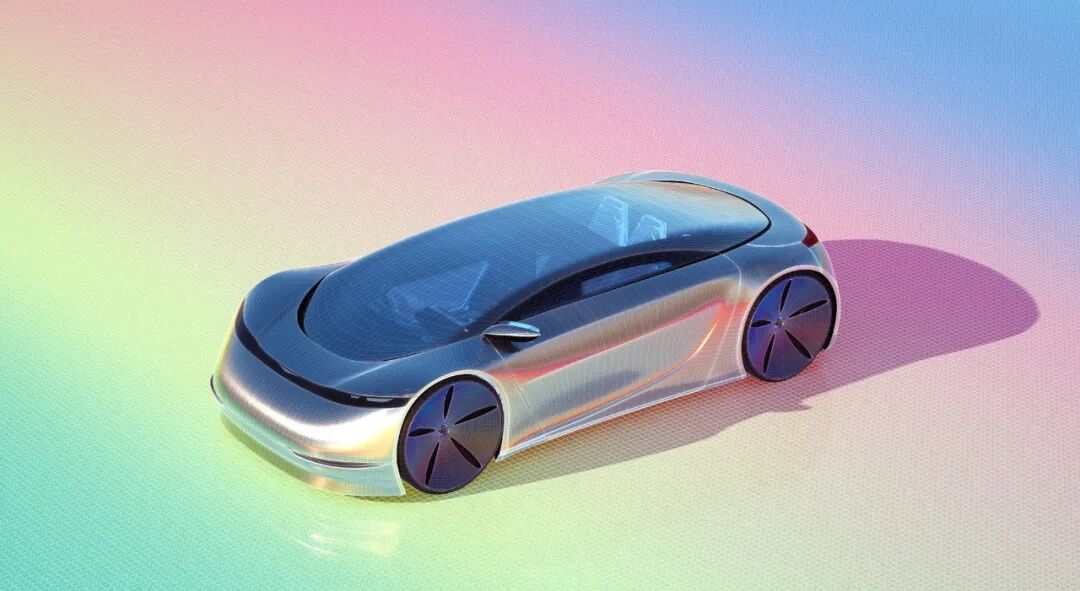
Understand the next technical frontier in autonomous driving beyond current VLA limitations.
30-Second TL;DR
What Changed
VLA models are shifting towards deeper human-machine integration
Why It Matters
This signals a strategic shift for developers to focus on long-term human-AI interaction patterns rather than just perception tasks.
What To Do Next
Review current VLA implementation pipelines and incorporate human-in-the-loop feedback mechanisms for safer navigation.
Key Points
- •VLA models are shifting towards deeper human-machine integration
- •Autonomous driving is evolving from utility-focused to symbiotic systems
- •The industry is seeking the next technical breakthrough beyond current VLA architectures
Deep Insight
Background and context from public sources — not the original article. 20 sources cited.
Enhanced Key Takeaways
- •Current Vision-Language-Action (VLA) models in autonomous driving face limitations such as generating physically infeasible actions, having overly complex structures, and struggling to generalize effectively to rare and unexpected 'long-tail' scenarios.
- •Embodied AI is emerging as a critical advancement, moving beyond traditional cognitive AI by integrating AI into physical systems that can directly interact with and learn from the real world, which is essential for navigating dynamic and unpredictable driving environments.
- •The concept of human-machine symbiosis in autonomous driving is evolving towards viewing the intelligent vehicle as a 'partner' rather than merely a tool, emphasizing bidirectional trust, shared situational awareness, and cooperative control to achieve intelligent complementarity between human and machine intelligence.
- •Next-generation autonomous driving architectures, such as Li Auto's MindVLA and NVIDIA's Alpamayo family, are integrating end-to-end learning with Vision-Language Models (VLM) or chain-of-thought reasoning to significantly enhance 3D spatial comprehension, logical reasoning, and behavior generation, specifically targeting the challenges of long-tail problems and enabling human-like judgment.
- •Embodied AI aims to address the 'long-tail problem' in autonomous driving by offering superior generalization capabilities and learning from raw, unlabeled data through self-supervised learning, potentially reducing the reliance on extensive and costly labeled datasets.
Technical Deep Dive
- VLA models integrate perception with language-grounded decision-making, processing multimodal inputs (sensor data, language instructions) to generate actions.
- Limitations of existing VLA models include physically infeasible action outputs, complex model structures, and prolonged reasoning processes.
- Solutions proposed for VLA limitations include integrating physical action tokens directly into VLM backbones for autoregressive planning (e.g., AutoVLA) or employing dual-system VLAs where a VLM handles high-level reasoning while a specialized module manages fast action execution.
- Embodied AI systems learn through direct interaction with the physical world, utilizing sensors (LiDAR, radar, cameras), motors, machine learning, and Natural Language Processing (NLP).
- These systems often replace traditional modular 'sense-plan-act' architectures with a single neural network trained on diverse, raw, and unlabeled data.
- Li Auto's MindVLA employs a dual-system architecture combining end-to-end learning and VLM. It features a 3D spatial encoder that integrates language models and logical reasoning to produce action tokens, which are then optimized by a diffusion model for real-time trajectory determination. It also uses a self-developed unified cloud-based world model for large-scale closed-loop reinforcement learning.
- NVIDIA's Alpamayo family introduces chain-of-thought, reasoning-based VLA models with a 10-billion-parameter architecture. These models use video input to generate trajectories along with reasoning traces, serving as large-scale teacher models for developers.
- UniDriveVLA utilizes a Mixture-of-Transformers (MoT) backbone with three specialized experts for understanding, perception, and action planning. These experts are coordinated via masked joint attention and trained with a unified objective that combines autoregressive language modeling, structured perception supervision, and flow-matching-based trajectory generation.
Future ImplicationsAI analysis grounded in cited sources
Timeline
- 1960AI community begins conceptualizing self-driving cars capable of navigating ordinary streets.
- 1977Japan's Tsukuba Mechanical Engineering Laboratory develops the first semi-autonomous car.
- 2004The DARPA Grand Challenge highlights the significant complexity of autonomous driving, yet catalyzes rapid advancements in the field.
- 2015Google's autonomous vehicles and Tesla's semi-autonomous cars begin operating on city streets.
- 2024-05Wayve announces $1.05 billion Series C funding to advance Embodied AI for autonomous vehicles.
- 2025-03Li Auto unveils MindVLA, a new autonomous driving architecture integrating end-to-end learning and Vision-Language Models.
- 2026-01NVIDIA introduces the Alpamayo family of open AI models, including reasoning-based VLA models, to accelerate autonomous vehicle development.
Sources (20)
Factual claims are grounded in the sources below. Forward-looking analysis is AI-generated interpretation.
Weekly AI Recap
Read this week's curated digest of top AI events →
Related Updates

AI-curated news aggregator. All content rights belong to original publishers.
Original source: 钛媒体 ↗
This is a summary, not the original. Read the source, or get the weekly briefing.
The weekly digest
One email a week. Unsubscribe anytime.