Beyond PD-1: The New Frontier in Oncology
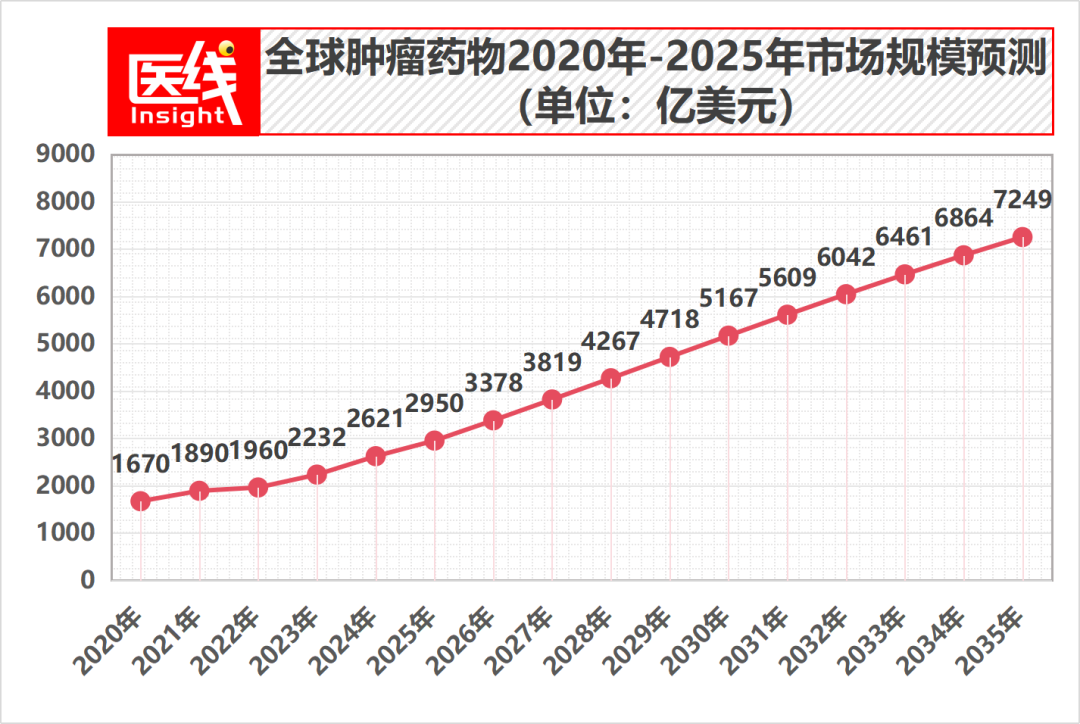
💡Understand the $400B market shift in oncology as drug discovery moves toward complex multi-specific antibodies.
⚡ 30-Second TL;DR
What Changed
PD-1 therapy dominance is declining in the oncology market.
Why It Matters
Pharmaceutical companies must pivot R&D resources toward multi-specific antibody platforms to remain competitive. This shift will likely accelerate the development of more precise, targeted cancer therapies.
What To Do Next
Analyze the current clinical trial pipeline for bispecific antibody platforms to identify potential partnership or investment opportunities.
Key Points
- •PD-1 therapy dominance is declining in the oncology market.
- •Bispecific and trispecific antibodies are emerging as the next decade's focus.
- •The oncology market represents a $400 billion opportunity for new drug modalities.
🧠 Deep Insight
Background and context from public sources — not the original article. 32 sources cited.
🔑 Enhanced Key Takeaways
- •While PD-1 inhibitors revolutionized cancer treatment, their market faces challenges such as primary and acquired resistance, market saturation, and high costs, driving the shift towards next-generation therapies.
- •Bispecific antibodies (BsAbs) enhance therapeutic potential by simultaneously targeting two distinct antigens, enabling mechanisms like immune cell redirection (e.g., T-cell engagers), dual signaling pathway blockade, and improved drug specificity and efficacy.
- •Trispecific antibodies (TsAbs) represent a further advancement, binding three distinct targets to achieve enhanced immune cell engagement (e.g., T-cells and NK cells), simultaneous targeting of multiple tumor antigens to overcome resistance, and co-stimulation of immune cells for more robust anti-tumor responses.
- •The bispecific and trispecific antibody market is projected for substantial growth, with the bispecific antibody market alone estimated to reach $34.7 billion by 2034 at a compound annual growth rate (CAGR) of 15.6% from 2026-2034, and potentially $661.13 billion by 2035 with a CAGR of 44.05% from 2026-2035.
- •Several bispecific antibodies have already received FDA approval for various cancers, including multiple myeloma, non-small cell lung cancer, and diffuse large B-cell lymphoma, with many more in late-stage clinical trials, and the first trispecific antibodies are entering early-phase clinical trials and receiving fast-track designations.
🛠️ Technical Deep Dive
- Bispecific Antibodies (BsAbs):
- Simultaneously bind two distinct antigens or epitopes.
- Mechanisms of Action:
- Immune Cell Engagers (e.g., BiTEs): Redirect immune effector cells (like T cells via CD3 or NK cells via CD16a) to tumor cells by binding a tumor-associated antigen (TAA) and an immune cell receptor, leading to tumor cell killing.
- Dual Immune Checkpoint Modulation: Block two immune checkpoints (e.g., PD-1 and CTLA-4) simultaneously to enhance immune activation and potentially overcome resistance to single checkpoint inhibitors.
- Signaling Pathway Blockade: Inhibit two distinct molecular pathways critical for tumor growth and progression, thereby reducing tumor cell escape and enhancing therapeutic efficacy (e.g., amivantamab targets EGFR and MET).
- Advantages: Enhanced specificity, reduced off-target toxicity, and potential to overcome drug resistance by targeting multiple pathways.
- Formats: Include Bispecific T-cell engager (BiTE), Dual-affinity re-targeting proteins (DARTs), and Tandem diabodies (TandAbs).
- Trispecific Antibodies (TsAbs):
- Designed to simultaneously bind three distinct antigens or epitopes.
- Mechanisms of Action:
- Enhanced Immune Cell Engagement: Can bind a tumor antigen and concurrently engage receptors on T cells (e.g., CD3) and NK cells (e.g., CD16), recruiting and activating multiple effector cell types for more robust cytotoxic responses.
- Multiple Tumor Antigen Targeting: Simultaneously target two tumor-associated antigens to enhance cancer cell selectivity and reduce immune escape, particularly in heterogeneous tumors.
- Co-stimulation: Can co-engage CD3 with agonists of co-stimulatory molecules (e.g., CD28) or antagonists of co-inhibitory immune checkpoint receptors in a single molecule to revert T cell exhaustion and improve effector functions.
- Microenvironment Modulation: Capable of modulating the tumor microenvironment.
- Advantages: Potential to overcome resistance mechanisms seen with monoclonal and bispecific antibodies, as well as adoptive cellular therapies like CAR-T and TIL.
- Challenges: Face hurdles in manufacturing, potential immunogenicity, and managing mild safety issues.
🔮 Future ImplicationsAI analysis grounded in cited sources
⏳ Timeline
📎 Sources (32)
Factual claims are grounded in the sources below. Forward-looking analysis is AI-generated interpretation.
- nih.gov
- globenewswire.com
- biospace.com
- iqvia.com
- coherentmarketinsights.com
- genscript.com
- mayoclinic.org
- biointron.com
- revvity.com
- abcam.com
- mdpi.com
- ascopubs.org
- nih.gov
- patsnap.com
- thno.org
- nih.gov
- patsnap.com
- nih.gov
- datahorizzonresearch.com
- dataintelo.com
- snsinsider.com
- evitria.com
- delveinsight.com
- ascopost.com
- rootsanalysis.com
- jnj.com
- cancernetwork.com
- tandfonline.com
- onclive.com
- prnewswire.com
- evitria.com
- delveinsight.com
Weekly AI Recap
Read this week's curated digest of top AI events →
👉Related Updates



AI-curated news aggregator. All content rights belong to original publishers.
Original source: 钛媒体 ↗
This is a summary, not the original. Read the source, or get the weekly briefing.
The weekly digest
One email a week. Unsubscribe anytime.