Bedrock Multimodal Models Scale Video Insights
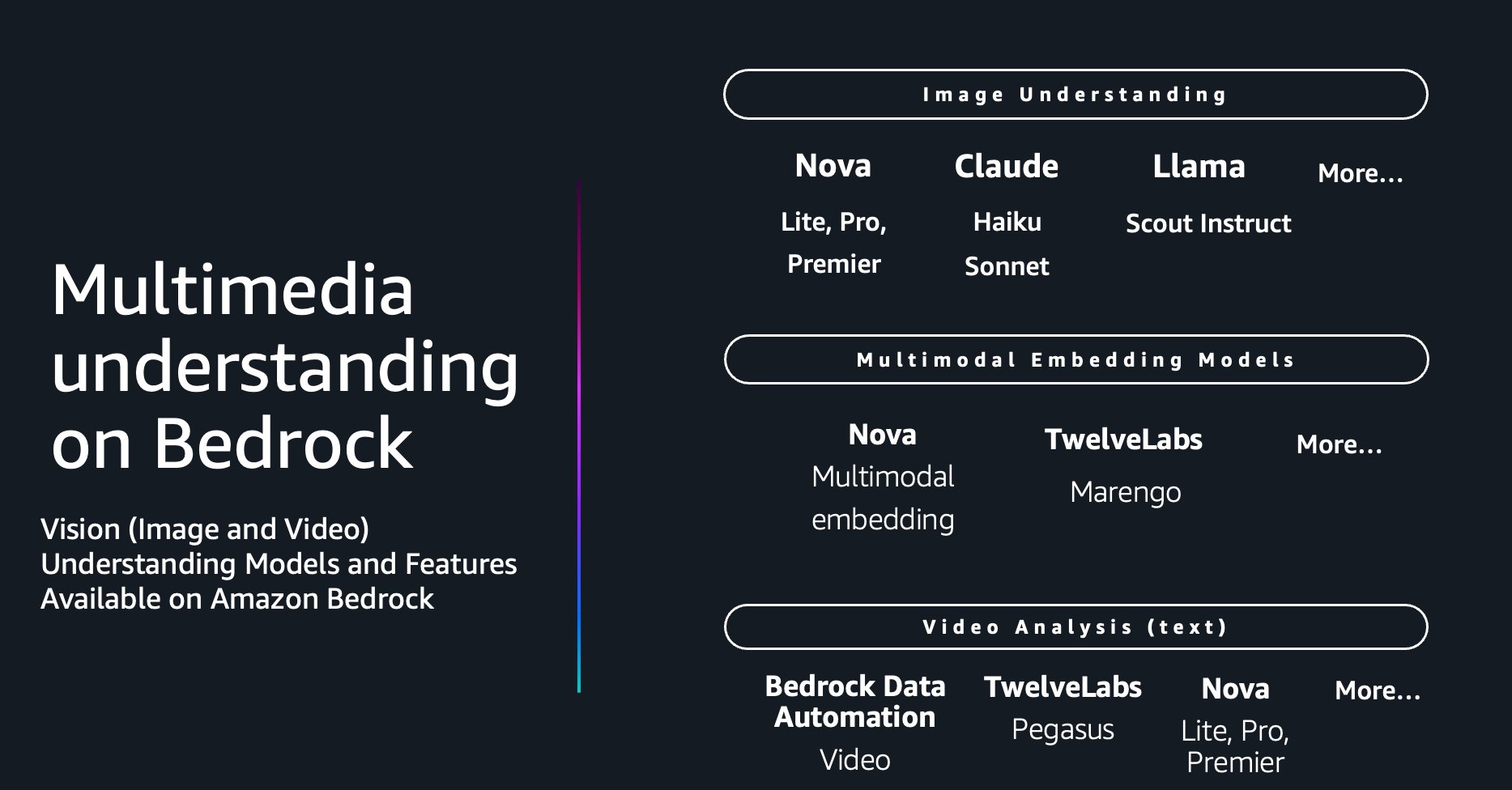
💡Master 3 architectures to scale video AI with Bedrock multimodal FMs – optimize cost/performance now.
⚡ 30-Second TL;DR
What Changed
Multimodal FMs in Amazon Bedrock for scalable video analysis
Why It Matters
Empowers developers to analyze large video datasets without custom training, accelerating AI applications in surveillance, content moderation, and media analytics via managed Bedrock services.
What To Do Next
Implement one of the three Bedrock architectural approaches for your video pipeline as detailed in the AWS ML Blog.
Key Points
- •Multimodal FMs in Amazon Bedrock for scalable video analysis
- •Three distinct architectural approaches highlighted
- •Tailored for varying use cases and cost-performance balances
- •Designed to unlock video insights efficiently
🧠 Deep Insight
AI-generated analysis for this event — not the original article.
🔑 Enhanced Key Takeaways
- •The three architectural approaches typically involve frame sampling strategies (sparse vs. dense), temporal feature aggregation (using temporal encoders or pooling), and the integration of specialized video-language models (VLMs) versus standard image-based multimodal models adapted for video.
- •Amazon Bedrock's implementation leverages the 'Model Invocation' API to handle asynchronous video processing, allowing developers to offload long-running video analysis tasks without blocking the main application thread.
- •Cost optimization is achieved by utilizing 'Video-to-Text' metadata extraction before full-scale inference, allowing users to filter relevant video segments and reduce the number of tokens processed by high-cost multimodal models.
📊 Competitor Analysis▸ Show
| Feature | Amazon Bedrock (Video) | Google Vertex AI (Gemini) | Azure AI Vision (Video) |
|---|---|---|---|
| Primary Model | Titan Multimodal / Claude 3.5 | Gemini 1.5 Pro | GPT-4o / Custom Vision |
| Context Window | High (via RAG/Chunking) | Massive (up to 2M tokens) | Moderate |
| Pricing Model | Per-token/Per-frame | Per-token/Per-minute | Per-minute/Per-API call |
| Key Strength | Enterprise Security/Governance | Native Long-Context Video | Deep Integration with M365 |
🛠️ Technical Deep Dive
- Frame Sampling Strategy: Implementation utilizes adaptive frame rate sampling to balance temporal resolution with token consumption, often defaulting to 1-2 frames per second for standard analysis.
- Temporal Encoding: Models utilize cross-attention mechanisms where frame embeddings are concatenated with temporal positional encodings to maintain sequence order.
- Asynchronous Processing: Integration with Amazon S3 event notifications allows for event-driven video analysis pipelines, where video uploads trigger Lambda functions that invoke Bedrock models.
- Metadata Injection: Support for sidecar metadata (e.g., timestamps, camera IDs) is injected into the prompt context to provide spatial-temporal grounding for the model.
🔮 Future ImplicationsAI analysis grounded in cited sources
⏳ Timeline
Weekly AI Recap
Read this week's curated digest of top AI events →
👉Related Updates
AI-curated news aggregator. All content rights belong to original publishers.
Original source: AWS Machine Learning Blog ↗
This is a summary, not the original. Read the source, or get the weekly briefing.
The weekly digest
One email a week. Unsubscribe anytime.