💰钛媒体•Stalecollected in 7h
Battle for 15M: Smart Driving Goes Affordable
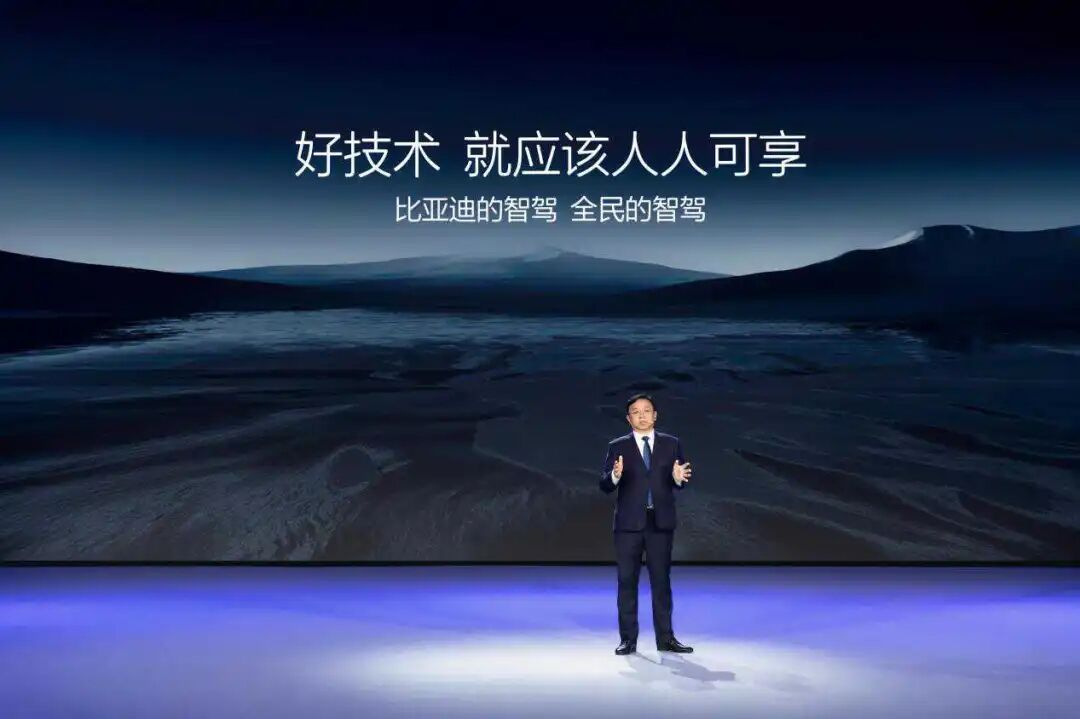
💡Mass-market smart driving affordability in 2026 boosts embodied AI opportunities
⚡ 30-Second TL;DR
What Changed
Targeting 15 million vehicle segment for mass-market smart driving
Why It Matters
Accelerates AI adoption in consumer vehicles, lowering entry barriers for embodied AI developers.
What To Do Next
Benchmark XPeng or NIO ADAS kits for cost-optimized autonomous prototypes.
Who should care:Developers & AI Engineers
Key Points
- •Targeting 15 million vehicle segment for mass-market smart driving
- •Evolving from minimally functional to reliable and inexpensive
- •2026 positioned as launch of unmanned driving boom era
🧠 Deep Insight
AI-generated analysis for this event — not the original article.
🔑 Enhanced Key Takeaways
- •The 150,000 RMB price point has become the critical threshold for mass-market adoption, forcing OEMs to adopt 'BEV + Transformer' architectures that eliminate expensive LiDAR sensors in favor of vision-only or lightweight sensor fusion.
- •Tier-1 suppliers and automakers are increasingly utilizing end-to-end large model training to reduce the cost of data labeling and simulation, which previously accounted for the bulk of R&D expenditure in autonomous driving.
- •Government policy in China has shifted toward 'Vehicle-Road-Cloud Integration' (V2X) pilots, which allows lower-cost vehicles to offload complex computational tasks to edge-computing infrastructure, further lowering the hardware requirements for individual cars.
📊 Competitor Analysis▸ Show
| Feature | Leading Budget Smart-Driving Solution | Traditional Premium ADAS | Entry-Level Vision-Only System |
|---|---|---|---|
| Sensor Suite | 5-8 Cameras + 1-2 mmWave Radar | LiDAR + 10+ Cameras + High-Res Radar | 1-3 Cameras (Basic ADAS) |
| Pricing Impact | < 5,000 RMB added cost | > 20,000 RMB added cost | < 1,500 RMB added cost |
| Capability | Urban NOA (Navigation on Autopilot) | Full L3/L4 Capability | L2 (ACC/LKA only) |
🛠️ Technical Deep Dive
- Architecture Shift: Transition from modular pipelines (Perception -> Planning -> Control) to end-to-end neural networks that map sensor input directly to control outputs.
- Compute Hardware: Widespread adoption of cost-effective SoCs (e.g., Horizon Robotics Journey series or NVIDIA Orin-N) replacing high-power, high-cost computing platforms.
- Data Efficiency: Implementation of 'World Models' to simulate edge cases, significantly reducing the need for millions of miles of physical road testing.
- Sensor Fusion: Shift toward 'Lightweight Mapping' (HD-map-free) solutions that rely on real-time semantic understanding of the environment.
🔮 Future ImplicationsAI analysis grounded in cited sources
Hardware-agnostic software will become the primary differentiator for OEMs.
As sensor hardware commoditizes, the ability to deploy sophisticated AI models across varying vehicle architectures will determine market share.
Profit margins on entry-level vehicles will face severe compression.
The necessity of integrating advanced smart-driving features to remain competitive will increase bill-of-materials (BOM) costs for vehicles priced under 150,000 RMB.
⏳ Timeline
2023-09
Initial industry-wide push for 'HD-map-free' urban navigation solutions.
2024-06
Major Chinese OEMs announce mass-production plans for sub-200k RMB vehicles with urban NOA.
2025-03
Standardization of end-to-end large model training frameworks for autonomous driving in China.
📰
Weekly AI Recap
Read this week's curated digest of top AI events →
👉Related Updates

AI-curated news aggregator. All content rights belong to original publishers.
Original source: 钛媒体 ↗
This is a summary, not the original. Read the source, or get the weekly briefing.
Weekly AI briefing
One email a week. Unsubscribe anytime.