Baker's Review: AI Revolutionizes Protein Design
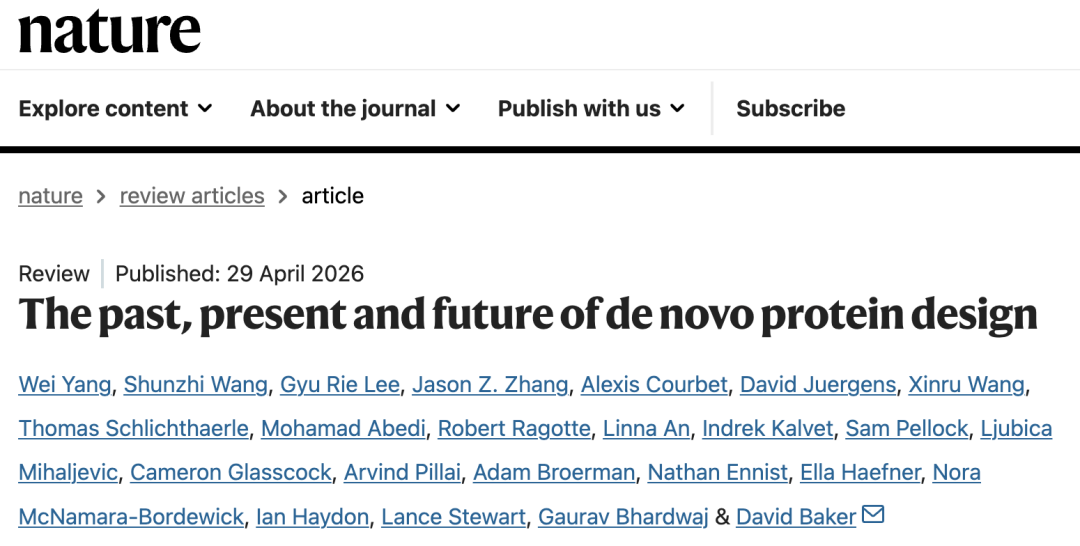
Baker forecasts AI protein nanomachines solving cancer/climate in 5-10 years
30-Second TL;DR
What Changed
AI shift: RFdiffusion generates novel scaffolds from noise; ProteinMPNN fills sequences.
Why It Matters
AI tools democratize protein design, enabling custom solutions for cancer, climate, and biotech beyond natural evolution.
What To Do Next
Try RFdiffusion on Colab for custom protein scaffold generation.
Key Points
- •AI shift: RFdiffusion generates novel scaffolds from noise; ProteinMPNN fills sequences.
- •Milestones: de novo structures, symmetric assemblies like SKYCovione vaccine, binders, enzymes.
- •Challenges: high-barrier catalysts, multifunctional nanomachines integrating binding/catalysis.
Deep Insight
AI-generated analysis for this event — not the original article.
Enhanced Key Takeaways
- •The transition from physics-based methods like Rosetta to AI-generative models has reduced the time required for de novo protein design from years to weeks, significantly lowering the barrier for experimental validation.
- •The integration of ProteinMPNN with RFdiffusion allows for 'inverse folding'—the ability to design amino acid sequences that reliably fold into the specific, non-natural 3D structures generated by the diffusion model.
- •Beyond therapeutic applications, the Baker lab is increasingly focusing on 'smart' proteins that can act as molecular sensors or logic gates, potentially enabling real-time intracellular diagnostics.
Technical Deep Dive
- •RFdiffusion: A generative model based on denoising diffusion probabilistic models (DDPMs) that operates on the protein backbone, iteratively refining coordinates from Gaussian noise to stable, physically plausible structures.
- •ProteinMPNN: A graph neural network (GNN) architecture designed for sequence design, which treats the protein structure as a graph where nodes are residues and edges represent spatial proximity, outperforming traditional energy-based methods in sequence recovery.
- •Integration Pipeline: The workflow typically involves generating a backbone with RFdiffusion, followed by sequence design with ProteinMPNN, and finally validating the stability of the designed sequence using AlphaFold2 or similar structure prediction tools.
Future ImplicationsAI analysis grounded in cited sources
Timeline
- 2003-01David Baker's lab publishes the first successful de novo protein design using the Rosetta software suite.
- 2021-07AlphaFold2 is released, providing the structural prediction foundation necessary for advanced generative design.
- 2022-04ProteinMPNN is introduced, significantly improving the speed and accuracy of sequence design for protein structures.
- 2022-12RFdiffusion is published, enabling the generation of complex, functional protein scaffolds from scratch.
- 2024-10David Baker is awarded the Nobel Prize in Chemistry for his work on computational protein design.
Weekly AI Recap
Read this week's curated digest of top AI events →
AI-curated news aggregator. All content rights belong to original publishers.
Original source: 虎嗅 ↗
This is a summary, not the original. Read the source, or get the weekly briefing.
The weekly digest
One email a week. Unsubscribe anytime.