Baidu Robotaxis Stall in China
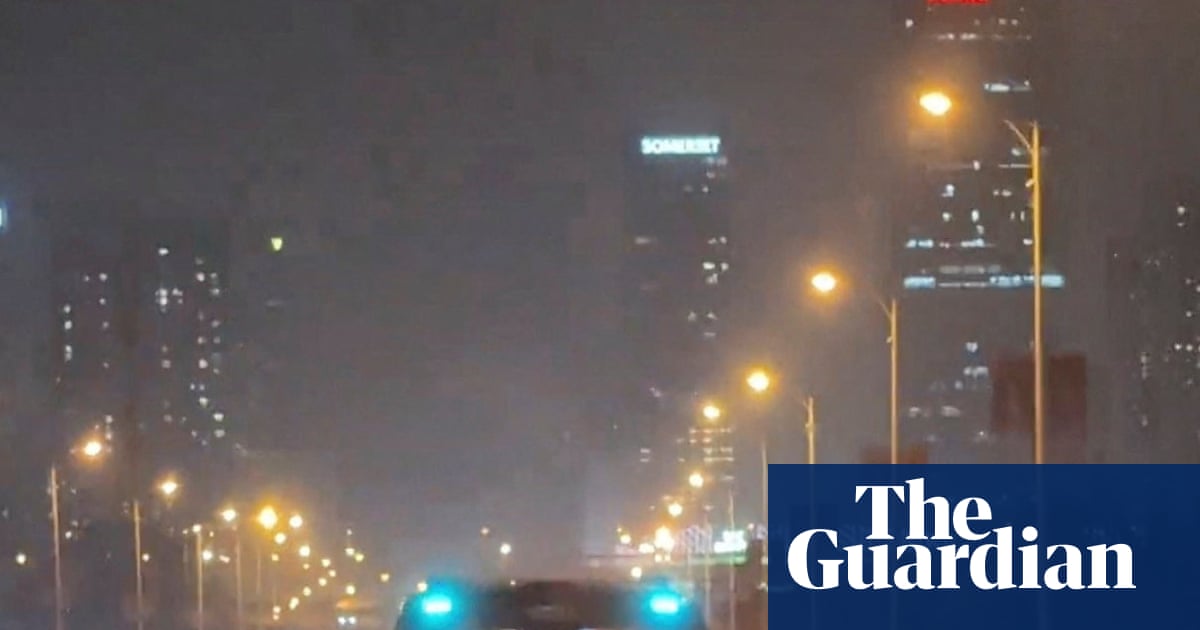
💡Real-world robotaxi failure reveals critical AV deployment risks.
⚡ 30-Second TL;DR
What Changed
System malfunction froze Baidu Apollo Go robotaxis in Wuhan
Why It Matters
Exposes reliability challenges in scaling robotaxi services, potentially slowing adoption and inviting stricter regulations in China's AV market. Raises questions on failover mechanisms for production AV fleets.
What To Do Next
Audit your AV system's redundancy protocols using Baidu Apollo docs.
Key Points
- •System malfunction froze Baidu Apollo Go robotaxis in Wuhan
- •Riders stranded for hours, prompting police calls
- •Local authorities received reports one after another
- •Customer service offered only platitudes to distressed users
🧠 Deep Insight
AI-generated analysis for this event — not the original article.
🔑 Enhanced Key Takeaways
- •The incident occurred amid a broader public backlash in Wuhan regarding Apollo Go's rapid expansion, with residents expressing concerns over traffic congestion and the displacement of human taxi drivers.
- •Baidu's internal investigation attributed the widespread stalling to a localized network synchronization error that affected the vehicle-to-everything (V2X) communication layer in specific high-density zones.
- •Following the incident, the Wuhan municipal transport bureau mandated a temporary suspension of autonomous operations in the affected districts to conduct a comprehensive safety audit of the Apollo Go fleet.
📊 Competitor Analysis▸ Show
| Feature | Baidu Apollo Go | Pony.ai | WeRide |
|---|---|---|---|
| Primary Market | China (Mass Scale) | China/US (Tiered) | China/Global (Mixed) |
| Fleet Strategy | High-volume Robotaxi | Premium/Partnership | Commercial/Logistics |
| V2X Integration | High (Deeply embedded) | Moderate | Moderate |
🛠️ Technical Deep Dive
- •Apollo Go utilizes the Apollo Open Platform, which employs a multi-sensor fusion architecture combining LiDAR, radar, and high-definition cameras.
- •The system relies heavily on V2X (Vehicle-to-Everything) infrastructure to augment perception in complex urban environments, allowing vehicles to receive traffic signal and road condition data directly from smart city sensors.
- •The core decision-making engine is powered by a deep reinforcement learning model trained on massive datasets of urban driving scenarios, designed to handle edge cases through predictive modeling.
- •The vehicle's 'Safety Redundancy System' is designed to trigger a 'minimal risk maneuver' (MRM) to pull over safely if the primary compute unit detects a critical system fault or loss of connectivity.
🔮 Future ImplicationsAI analysis grounded in cited sources
⏳ Timeline
Weekly AI Recap
Read this week's curated digest of top AI events →
👉Related Updates
AI-curated news aggregator. All content rights belong to original publishers.
Original source: The Guardian Technology ↗
This is a summary, not the original. Read the source, or get the weekly briefing.
Weekly AI briefing
One email a week. Unsubscribe anytime.