Baidu Kunlunxin Plans Dual IPOs
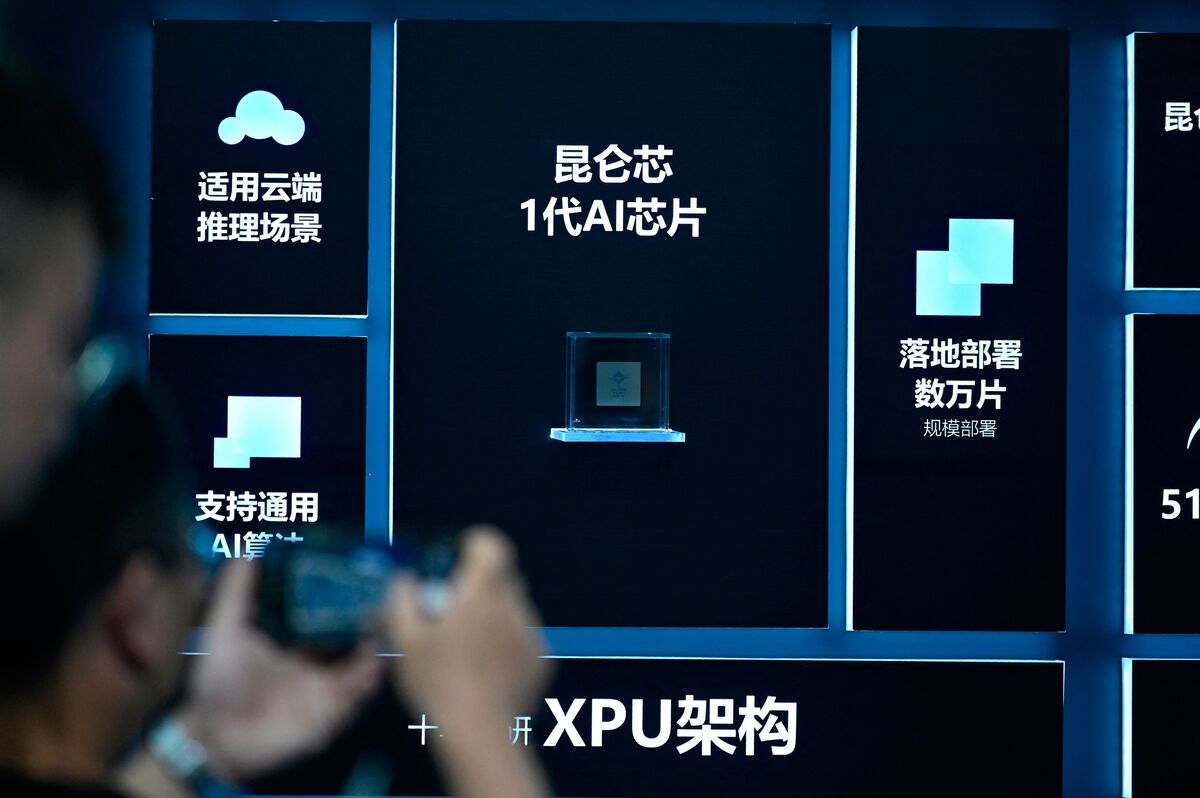
Baidu AI chip unit's dual IPO eyes funding to rival Nvidia GPUs.
30-Second TL;DR
What Changed
Kunlunxin targeting Shanghai STAR Market IPO
Why It Matters
Dual IPOs could inject major capital into Kunlunxin, boosting Baidu's AI chip R&D and offering China-made alternatives to Nvidia. This may lower hardware costs for AI practitioners long-term.
What To Do Next
Monitor Kunlunxin's IPO prospectus for AI chip performance benchmarks.
Key Points
- •Kunlunxin targeting Shanghai STAR Market IPO
- •Separate Hong Kong listing planned
- •Baidu capitalizing on semiconductor investor appetite
Deep Insight
AI-generated analysis for this event — not the original article.
Enhanced Key Takeaways
- •Kunlunxin, formerly known as Baidu's Intelligent Chip Unit, was spun off as an independent entity in 2021 to accelerate the commercialization of its AI accelerator chips.
- •The dual-listing strategy is designed to navigate complex geopolitical restrictions on high-end AI chip exports to China by securing capital to bolster domestic R&D and supply chain resilience.
- •Kunlunxin's chips, specifically the Kunlun series, are primarily optimized for Baidu's Ernie Bot and other large language model (LLM) workloads within its cloud infrastructure.
Competitor Analysis
- Kunlunxin (Baidu)
- Cloud AI/LLM Training
- Huawei (Ascend)
- Edge/Cloud AI/Training
- NVIDIA (China-specific)
- High-Performance AI/HPC
- Kunlunxin (Baidu)
- PaddlePaddle
- Huawei (Ascend)
- MindSpore
- NVIDIA (China-specific)
- CUDA
- Kunlunxin (Baidu)
- Domestic Cloud-Native
- Huawei (Ascend)
- Domestic State-Backed
- NVIDIA (China-specific)
- Global Standard (Restricted)
| Feature | Kunlunxin (Baidu) | Huawei (Ascend) | NVIDIA (China-specific) |
|---|---|---|---|
| Primary Focus | Cloud AI/LLM Training | Edge/Cloud AI/Training | High-Performance AI/HPC |
| Ecosystem | PaddlePaddle | MindSpore | CUDA |
| Market Position | Domestic Cloud-Native | Domestic State-Backed | Global Standard (Restricted) |
Technical Deep Dive
- Architecture: Utilizes the XPU architecture, a proprietary design optimized for high-throughput AI inference and training tasks.
- Interconnect: Supports high-bandwidth, low-latency interconnects designed to scale across multi-chip clusters for large model training.
- Software Stack: Deeply integrated with PaddlePaddle, Baidu's open-source deep learning platform, to ensure hardware-software co-optimization.
- Process Node: Leverages advanced packaging and domestic foundry partnerships to mitigate reliance on restricted sub-7nm lithography.
Future ImplicationsAI analysis grounded in cited sources
Timeline
- 2018-07Baidu officially announces the development of the Kunlun AI chip.
- 2021-03Kunlunxin completes a funding round, valuing the independent entity at approximately $2 billion.
- 2022-08Kunlunxin launches the second-generation Kunlun 2 chip, targeting high-performance AI scenarios.
- 2024-01Kunlunxin announces mass production of the third-generation chip, optimized for generative AI.
Weekly AI Recap
Read this week's curated digest of top AI events →
AI-curated news aggregator. All content rights belong to original publishers.
Original source: Bloomberg Technology ↗
This is a summary, not the original. Read the source, or get the weekly briefing.
The weekly digest
One email a week. Unsubscribe anytime.