AI Book Destruction Is More Complicated
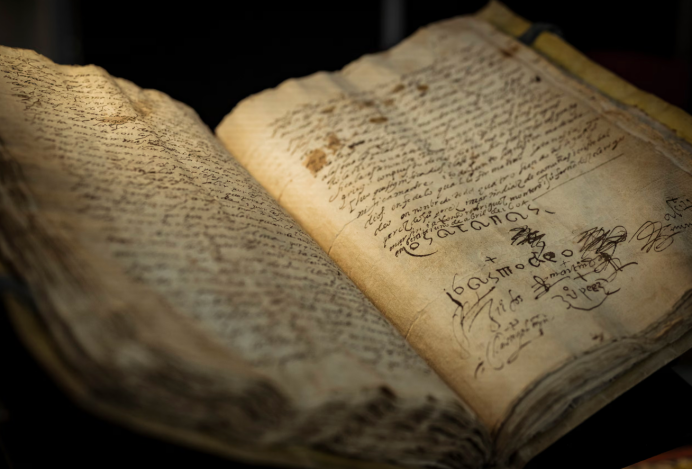
💡AI training may preserve a book’s text while destroying the artifact—revealing a hidden data-governance dilemma.
⚡ 30-Second TL;DR
What Changed
Anthropic reportedly spent tens of millions of dollars acquiring and destructively scanning millions of physical books through its Panama Plan.
Why It Matters
For AI builders, the controversy underscores that training-data acquisition is not only a copyright issue but also a provenance, cultural-preservation, and reputational-risk issue. Large-scale physical digitization may be legally permissible in some cases while still creating serious ethical concerns.
What To Do Next
Run a provenance audit on your OCR ingestion pipeline, recording each source’s ISBN, acquisition license, scan status, and retention policy before adding it to model-training data.
Key Points
- •Anthropic reportedly spent tens of millions of dollars acquiring and destructively scanning millions of physical books through its Panama Plan.
- •Amazon’s VGT3 project allegedly performs high-speed book disassembly and scanning, highlighting that the practice extends beyond a single AI company.
- •Scanned books become PDFs containing page images and machine-readable text, so destroying the physical copy does not necessarily destroy the underlying knowledge.
- •The greatest concern is the purchase and destruction of rare, out-of-print, annotated, or historically valuable editions whose physical form is irreplaceable.
🧠 Deep Insight
AI-generated analysis for this event.
🔑 Enhanced Key Takeaways
- •The 'Panama Plan' is reportedly part of a broader industry trend where AI labs prioritize high-quality, long-form text data to mitigate the 'data wall' caused by the exhaustion of high-quality public internet text.
- •Legal experts note that while the destruction of physical books is legal under property rights, the subsequent use of copyrighted content for model training without licensing remains a central point of contention in ongoing class-action lawsuits.
- •The scanning process often utilizes industrial-grade robotic book scanners capable of handling thousands of pages per hour, which significantly reduces the cost per book compared to manual digitization.
- •Archivists and library associations have raised concerns that this 'destructive digitization' creates a 'digital monoculture' where only the text is preserved, stripping away metadata such as marginalia, binding history, and physical provenance.
- •Some AI companies are reportedly partnering with third-party data brokers who specialize in bulk acquisition and processing of physical media to distance themselves from the physical destruction process.
🛠️ Technical Deep Dive
- Scanning Pipeline: Utilizes high-speed industrial book scanners equipped with overhead cameras and automated page-turning mechanisms to minimize damage during the initial capture phase.
- OCR and Post-Processing: Scanned images are processed through advanced Optical Character Recognition (OCR) pipelines, often utilizing proprietary vision-language models to correct skew, handle complex layouts, and convert multi-column text into structured JSON or Markdown formats.
- Data Cleaning: Post-OCR text undergoes rigorous deduplication and filtering to remove non-textual elements, advertisements, and metadata, ensuring the resulting dataset is optimized for Large Language Model (LLM) pre-training.
- Storage and Indexing: Digitized content is stored in vector databases or high-performance object storage, indexed with metadata that links the text to the original book's ISBN, publication date, and genre for traceability.
🔮 Future ImplicationsAI analysis grounded in cited sources
⏳ Timeline
Weekly AI Recap
Read this week's curated digest of top AI events →
👉Related Updates



AI-curated news aggregator. All content rights belong to original publishers.
Original source: 虎嗅 ↗