AWS Kiro 0.9 Assigns FE/BE Roles to Sub-Agents
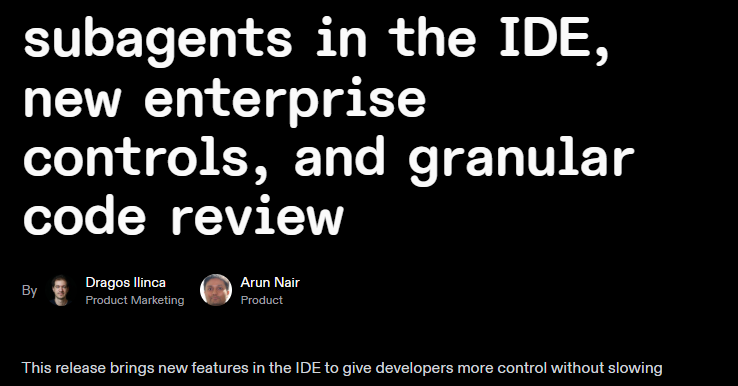
💡AWS Kiro 0.9 enables sub-agent FE/BE specialization—supercharge multi-agent coding!
⚡ 30-Second TL;DR
What Changed
AWS launches Kiro 0.9 AI code editor
Why It Matters
Developers can now leverage specialized AI sub-agents for efficient full-stack development, potentially accelerating project timelines and reducing manual oversight.
What To Do Next
Test Kiro 0.9 in AWS console by assigning sub-agents to front-end and back-end tasks in a sample project.
Key Points
- •AWS launches Kiro 0.9 AI code editor
- •Sub-agents can be assigned front-end or back-end roles
- •Supports specialized task delegation in multi-agent setups
🧠 Deep Insight
Background and context from public sources — not the original article. 10 sources cited.
🔑 Enhanced Key Takeaways
- •Kiro 0.9 builds on prior releases by introducing sub-agent orchestration where autonomous agents learn user preferences and delegate to specialized sub-agents for tasks like multi-repo refactoring and bug triage[1][3].
- •The update integrates with external tools via MCP servers and Powers extensions from partners like Figma and Netlify for workflows including design, hosting, and data handling[3][9].
- •Kiro employs property-based testing to validate generated code against specifications and supports checkpointing for rewinding agent modifications[1][2].
📊 Competitor Analysis▸ Show
| Feature | Kiro | Cursor/Windsurf |
|---|---|---|
| Spec Generation | Generates specs with requirements, designs, tests before coding[1] | Lacks inherent spec planning[1] |
| Pricing | Free tier; $20/mo Pro, $40 Pro+, $200 Power[1] | Not detailed in sources |
| Team Features | AWS IAM Identity Center, central billing, access management[1][2] | Not compared |
🛠️ Technical Deep Dive
- •Built on Amazon Bedrock using multiple foundation models including Anthropic's Opus 4.5 for tasks like spec generation and code implementation[3][7].
- •Supports spec-driven coding with structured artifacts formalizing prompts into requirements, designs, data flow diagrams, code, tests, and API integrations[7].
- •Features agent hooks for automated triggers on file events, supervised mode for hunk-level review, and property-based testing extracting system properties from specs[1][2][6].
- •Includes Kiro CLI for terminal agent access, global steering files for customization, and multi-folder support with dev server integration[1][2][5].
🔮 Future ImplicationsAI analysis grounded in cited sources
⏳ Timeline
📎 Sources (10)
Factual claims are grounded in the sources below. Forward-looking analysis is AI-generated interpretation.
- siliconangle.com — Aws Launches Kiro General Availability Team Features Cli Support
- kiro.dev — General Availability
- constellationr.com — Aws Kiro Launches Autonomous Agents Individual Developers
- aws.amazon.com — Aws Weekly Roundup Kiro Waitlist Ebs Volume Clones Ec2 Capacity Manager and More October 20 2025
- dev.to — Kiro Did It Kiro Goes Ga and Replaces My Favorite Cli 5ec9
- kiro.dev — Changelog
- aws.amazon.com — Kiro
- kiro.dev — Ide
- youtube.com — Watch
- builder.aws.com — Kiro the Complete Guide for Teams
Weekly AI Recap
Read this week's curated digest of top AI events →
👉Related Updates
AI-curated news aggregator. All content rights belong to original publishers.
Original source: ITmedia AI+ (日本) ↗
This is a summary, not the original. Read the source, or get the weekly briefing.
Weekly AI briefing
One email a week. Unsubscribe anytime.