๐Ÿ‡จ๐Ÿ‡ณFreshcollected in 2h

Avi Loeb to lead White House UAP advisory committee
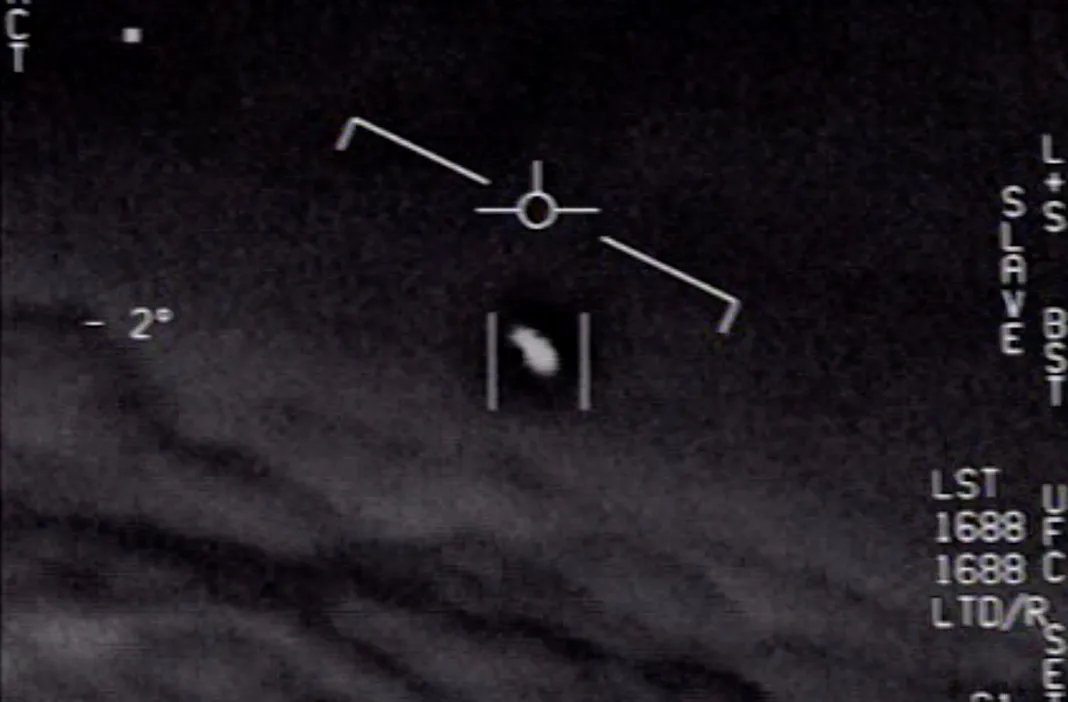
Avi Loeb to lead White House UAP advisory committee
PostLinkedIn
๐Ÿ‡จ๐Ÿ‡ณRead original on cnBeta (Full RSS)

๐Ÿ’กHigh-level government interest in UAP data analysis opens new frontiers for AI-driven pattern recognition and anomaly de

โšก 30-Second TL;DR

What Changed

Avi Loeb appointed to lead UAP Scientific Advisory Committee

Why It Matters

The formalization of UAP research suggests a shift toward data-driven, scientific analysis of anomalous sensor data, which may involve advanced AI pattern recognition.

What To Do Next

Explore open-source UAP datasets and apply computer vision models to identify potential anomalies in high-resolution sensor imagery.

Who should care:Researchers & Academics

Key Points

  • โ€ขAvi Loeb appointed to lead UAP Scientific Advisory Committee
  • โ€ขCommittee involves collaboration between White House, DoD, and FBI
  • โ€ขGoal is to provide scientific analysis for UAP management

๐Ÿง  Deep Insight

AI-generated analysis for this event.

๐Ÿ”‘ Enhanced Key Takeaways

  • โ€ขThe committee, officially titled the UAP Scientific Advisory Board (UAPSAB), is mandated to integrate data from the All-domain Anomaly Resolution Office (AARO) with civilian academic research.
  • โ€ขAvi Loeb's appointment follows his long-standing advocacy for the Galileo Project, which utilizes a network of ground-based observatories to capture high-resolution data on UAPs.
  • โ€ขThe initiative includes a new 'Open Data' mandate, requiring the declassification of specific sensor metadata to allow for peer-reviewed analysis by independent scientists.
  • โ€ขLegislative backing for this committee stems from recent amendments to the National Defense Authorization Act (NDAA) which prioritize scientific transparency over traditional intelligence secrecy.
  • โ€ขThe committee is tasked with developing a standardized 'Anomaly Detection Protocol' to distinguish between sensor artifacts, known aerospace technology, and truly anomalous phenomena.

๐Ÿ› ๏ธ Technical Deep Dive

  • The committee will leverage the Galileo Project's sensor suite, which includes high-definition infrared cameras, radio frequency spectrometers, and acoustic sensors.
  • Data processing will utilize machine learning algorithms designed to filter out known objects such as drones, birds, and satellites based on historical flight patterns and radar signatures.
  • The framework emphasizes multi-modal data fusion, requiring simultaneous correlation between radar, optical, and infrared sensor inputs to validate an anomaly's physical presence.

๐Ÿ”ฎ Future ImplicationsAI analysis grounded in cited sources

The UAPSAB will release its first public report on UAP sensor calibration by Q4 2026.
The committee's mandate includes a requirement for quarterly transparency updates to the public regarding methodology and data integrity.
Academic institutions will receive federal grants to develop specialized UAP-detection sensor arrays.
The committee's charter explicitly mentions fostering partnerships with university physics departments to expand the current sensor network.

โณ Timeline

2021-07
Avi Loeb launches the Galileo Project at Harvard University to search for extraterrestrial technological artifacts.
2022-07
The Department of Defense establishes the All-domain Anomaly Resolution Office (AARO) to centralize UAP investigations.
2023-05
Avi Loeb leads an expedition to the Pacific Ocean to recover fragments of the IM1 interstellar meteor.
2025-12
Congress passes updated legislation mandating increased scientific oversight of UAP data collection.
2026-07
Avi Loeb is officially appointed to lead the White House UAP Scientific Advisory Committee.
๐Ÿ“ฐ

Weekly AI Recap

Read this week's curated digest of top AI events โ†’

๐Ÿ‘‰Related Updates

AI-curated news aggregator. All content rights belong to original publishers.
Original source: cnBeta (Full RSS) โ†—