Autonomous Driving Battle Heats Up Pre-2026 Beijing Auto Show
💡AV giants clash at 2026 Beijing show—spot next-gen AI driving breakthroughs
⚡ 30-Second TL;DR
What Changed
Intense autonomous driving rivalry among carmakers
Why It Matters
Heightened competition could drive AV tech maturation and standards. AI practitioners may see new partnerships or open APIs from show reveals. It signals China's push in global AV leadership.
What To Do Next
Scout 2026 Beijing Auto Show exhibitors for L4/L5 AV demo APIs to benchmark.
Key Points
- •Intense autonomous driving rivalry among carmakers
- •2026 Beijing Auto Show as central battleground
- •Foreshadowing of new AV tech advancements
🧠 Deep Insight
AI-generated analysis for this event — not the original article.
🔑 Enhanced Key Takeaways
- •The 2026 Beijing Auto Show is witnessing a pivot from 'highway-only' NOA (Navigate on Autopilot) to 'door-to-door' urban autonomous driving, with major OEMs shifting focus to end-to-end neural network architectures.
- •Regulatory bodies in China have accelerated the issuance of L3 autonomous driving pilot permits in key cities like Beijing and Shanghai, directly influencing the aggressive product roadmaps showcased at the 2026 event.
- •There is a marked industry trend toward 'light-map' or 'mapless' autonomous driving solutions, reducing reliance on high-definition (HD) maps to lower operational costs and increase deployment speed across diverse geographic regions.
📊 Competitor Analysis▸ Show
| Feature | Huawei (ADS 4.0) | XPeng (XNGP) | Li Auto (AD Max) |
|---|---|---|---|
| Architecture | End-to-End Neural Net | End-to-End Large Model | Vision-Language Model |
| Map Dependency | Mapless | Mapless | Light-map |
| Target Market | Premium/Mass Market | Mass Market | Family SUV Segment |
| L3 Readiness | Certified/Pilot | Pilot | Pilot |
🛠️ Technical Deep Dive
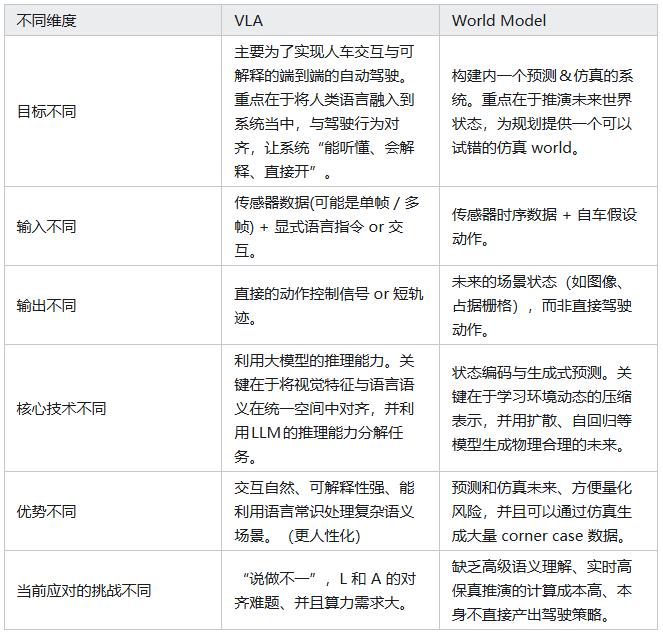
- Transition to End-to-End (E2E) architectures: Replacing modular pipelines (perception, planning, control) with a single transformer-based model that maps sensor input directly to control output.
- Integration of Large Vision-Language Models (LVLM): Utilizing multimodal models to improve scene understanding, specifically for complex traffic scenarios and non-standard road markings.
- Sensor Fusion Upgrades: Increased adoption of high-resolution 4D imaging radar combined with 8MP+ cameras to enhance object detection in adverse weather conditions.
- Compute Hardware: Widespread adoption of next-generation SoCs (e.g., NVIDIA Thor or equivalent domestic alternatives) providing 1000+ TOPS to support real-time inference of complex E2E models.
🔮 Future ImplicationsAI analysis grounded in cited sources
⏳ Timeline
Weekly AI Recap
Read this week's curated digest of top AI events →
👉Related Updates



AI-curated news aggregator. All content rights belong to original publishers.
Original source: 钛媒体 ↗
This is a summary, not the original. Read the source, or get the weekly briefing.
The weekly digest
One email a week. Unsubscribe anytime.