Automotive memory chip prices surge 180% impacting EV costs
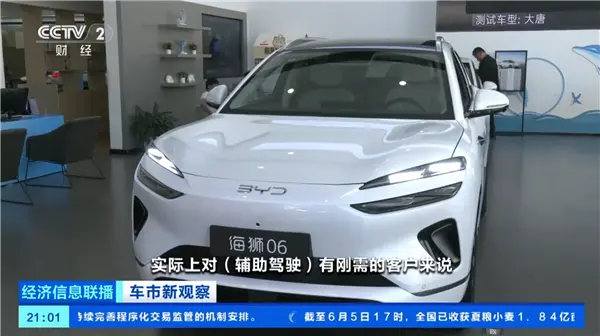
💡Rising hardware costs for AI-enabled vehicles could impact the adoption rate and development budget of smart car tech.
⚡ 30-Second TL;DR
What Changed
Automotive-grade memory chip prices increased by 180% in three months
Why It Matters
The surge in specialized hardware costs highlights the vulnerability of AI-integrated automotive systems to supply chain volatility. Developers must account for fluctuating hardware costs when pricing AI-heavy vehicle features.
What To Do Next
Review your BOM (Bill of Materials) for AI-integrated hardware projects to hedge against potential memory and semiconductor price volatility.
Key Points
- •Automotive-grade memory chip prices increased by 180% in three months
- •Rising hardware costs are driving price hikes for new energy vehicles
- •Market divergence: EVs are raising prices while fuel vehicles offer discounts
🧠 Deep Insight
Background and context from public sources — not the original article. 35 sources cited.
🔑 Enhanced Key Takeaways
- •The surge in automotive-grade memory chip prices is primarily driven by memory manufacturers redirecting production capacity towards high-bandwidth memory (HBM) for more profitable AI data centers, thereby diverting supply from the automotive sector.
- •Legacy automotive memory types such as DDR4 and LPDDR4, which are extensively used in current vehicle infotainment and Advanced Driver-Assistance Systems (ADAS), experienced significant price increases of approximately 70% year-over-year in early 2026, with some reports indicating quarter-over-quarter surges of 80-90% in Q1 2026.
- •The automotive industry's vulnerability is exacerbated by its reliance on older, less profitable 'foundational' chips, which constitute about 95% of the semiconductors used in vehicles, making it a lower priority for foundries shifting investment towards advanced AI chip production.
- •This phenomenon, termed 'memflation,' is estimated to increase the manufacturing cost of a premium smart electric car by $880 to $1,470, leading some EV manufacturers like Nio and BYD to already reflect these higher costs in vehicle or system prices.
- •A broad industry coalition, encompassing automotive, telecommunications, medical device, and retail groups, has formally alerted the U.S. administration about the severe cross-industry impact of AI-driven memory chip demand on both pricing and supply chain stability.
📊 Competitor Analysis▸ Show
| Feature/Company | Samsung Electronics | Micron Technology | SK Hynix | Kioxia Holdings Corp. | Infineon Technologies AG |
|---|---|---|---|---|---|
| 2025 Automotive Memory Market Share (S&P Global Mobility) | 40% (Leader) | 36% (No. 2) | Part of top 3 (90% DRAM production combined) | Mentioned as major company | Mentioned as major company |
| 2025 Automotive Memory Revenue (TechInsights) | Followed Micron | Leader ($8.1B) | Followed Micron and Samsung | - | - |
| Key Offerings/Strengths | LPDDR5T (10.7 Gb s⁻¹) for Hyundai Genesis GV90 (Dec 2025), advanced ECC, single-digit PPM, dedicated manufacturing lines, AEC-Q100 standards | Industry-leading portfolio for ADAS, autonomous vehicles, enriched cabins; ISO 26262 ASIL-D certification; UFS 4.1 for automotive (G9 NAND) | Part of top 3 (90% DRAM production combined) | UFS 4.0 embedded flash memory (Feb 2024) | - |
| AI Demand Prioritization | Shifting capacity to HBM for AI accelerators | Shifting capacity to HBM for AI accelerators | Shifting capacity to HBM for AI accelerators | - | - |
🛠️ Technical Deep Dive
- Types of Memory: Automotive systems utilize various memory types including Dynamic Random Access Memory (DRAM) such as LPDRAM, LPDDR4, LPDDR5, and GDDR6; Non-Volatile Memory (NVM) like NOR Flash, NAND Flash (eMMC, UFS, NVMe SSD), EEPROM, and ROM (PROM, EPROM); and Static Random Access Memory (SRAM).
- Automotive-Grade Specifications: Memory chips for automotive applications must meet stringent AEC-Q100 qualification standards, which include operating reliably across extreme temperature ranges (e.g., Grade 1: -40°C to +125°C, Grade 2: -40°C to +105°C), offering high endurance (over 100,000 program/erase cycles for NAND), ensuring data retention for 10+ years at maximum operating temperatures, and incorporating enhanced Error Correction Code (ECC), power-loss protection, ESD protection, and electromagnetic compatibility.
- Applications by Memory Type:
- DRAM: Essential for Advanced Driver-Assistance Systems (ADAS), autonomous driving platforms, infotainment systems, digital cockpits, sensor fusion, real-time perception, and functional safety.
- NAND Flash (eMMC, UFS, NVMe SSD): Used for high-performance, low-power, and high-bandwidth applications, storing firmware, calibration data, configuration settings, navigation maps, system logs, multiple software images, and data for ADAS and in-vehicle infotainment (IVI) systems.
- NOR Flash: Primarily for storing boot code and critical firmware.
- EEPROM: Stores diagnostic trouble codes (DTCs), security data, Vehicle Identification Numbers (VINs), immobilizer codes, and key programming data due to its byte-alterability and non-volatility.
- SRAM: Utilized in safety-critical systems like braking and engine management, and often integrated directly into CPUs, GPUs, and Systems-on-Chips (SoCs) for fast, temporary data access.
- Increasing Demand: Modern electric vehicles and software-defined architectures significantly increase memory requirements; an average connected car in 2026 is projected to need approximately 278 gigabytes of memory, with Level 3 or 4 autonomous vehicles potentially requiring over 300 gigabytes of DRAM alone.
- Technological Evolution: The automotive sector is transitioning to advanced memory standards like LPDDR5 and GDDR6, with UFS 4.0 expected to become a standard for automotive storage by 2025.
🔮 Future ImplicationsAI analysis grounded in cited sources
⏳ Timeline
📎 Sources (35)
Factual claims are grounded in the sources below. Forward-looking analysis is AI-generated interpretation.
- spglobal.com
- dealershipguy.com
- youtube.com
- datacenterknowledge.com
- enkiai.com
- eetimes.com
- youtube.com
- tomshardware.com
- autodealertodaymagazine.com
- utmel.com
- eletric-vehicles.com
- counterpointresearch.com
- trendforce.com
- sourceability.com
- researchnester.com
- scmp.com
- whbl.com
- indiatimes.com
- koreaherald.com
- mordorintelligence.com
- techinsights.com
- samsung.com
- micron.com
- researchinchina.com
- synopsys.com
- giantec-semi.com
- autotuner.com
- microchip.com
- atpinc.com
- lexarenterprise.com
- smartsemi.com
- chicagofed.org
- isf-muenchen.de
- medium.com
- fusionww.com
Weekly AI Recap
Read this week's curated digest of top AI events →
👉Related Updates
AI-curated news aggregator. All content rights belong to original publishers.
Original source: cnBeta (Full RSS) ↗
This is a summary, not the original. Read the source, or get the weekly briefing.
The weekly digest
One email a week. Unsubscribe anytime.