Automate LLM Chain Evaluation
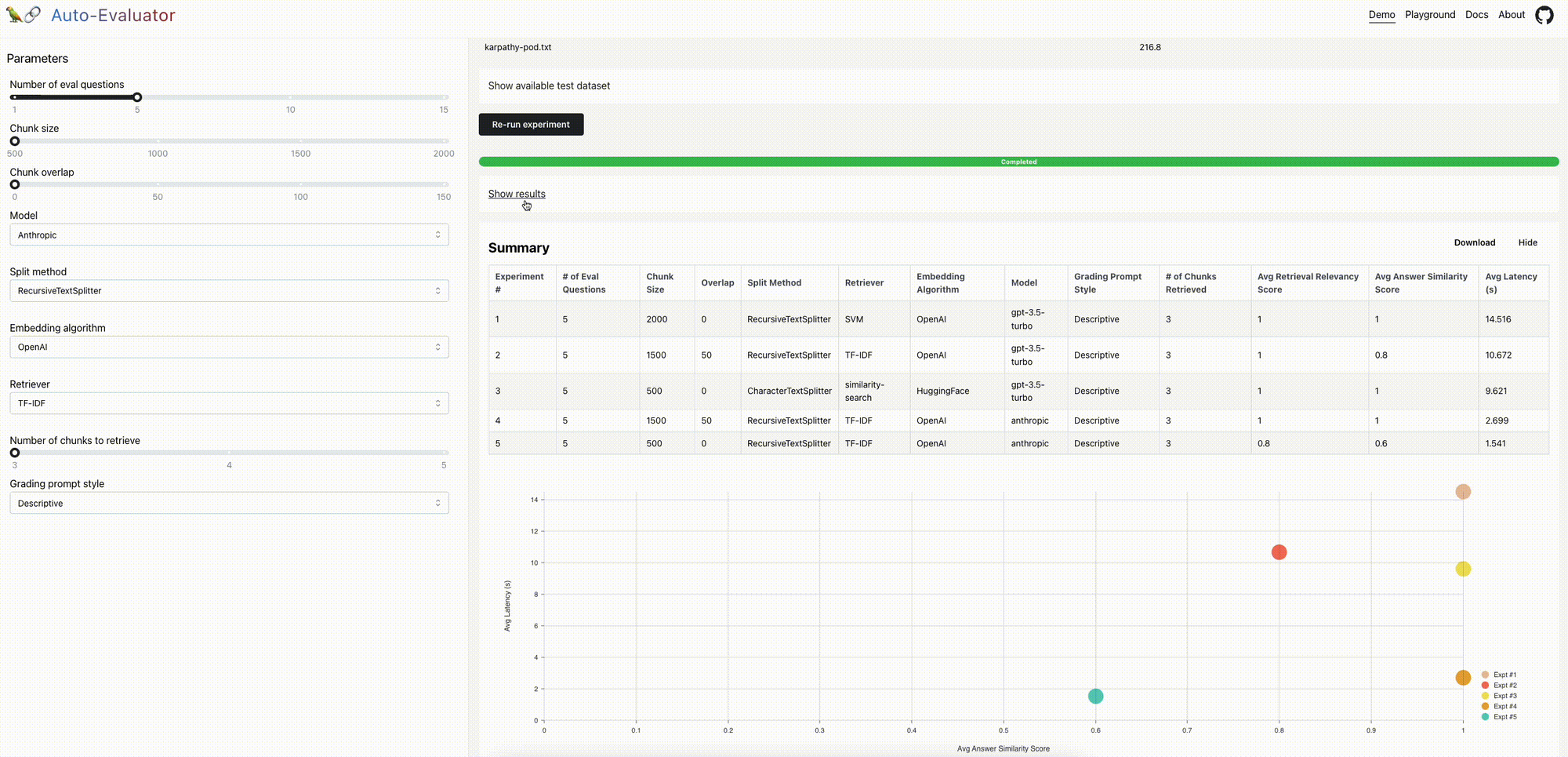
💡Turn manual LLM QA checks into repeatable test-set generation, grading, and optimization.
⚡ 30-Second TL;DR
What Changed
Generates test sets for evaluating LLM question-answer chains
Why It Matters
Automated evaluation can reduce the manual effort required to validate LLM applications. A free tool may make systematic testing more accessible to smaller teams and early-stage projects.
What To Do Next
Run your current LangChain question-answer chain through the free auto-evaluator and use its generated test set to establish a baseline score.
Key Points
- •Generates test sets for evaluating LLM question-answer chains
- •Automatically grades model answers against evaluation criteria
- •Supports performance optimization through repeatable evaluation workflows
🧠 Deep Insight
Background and context from public sources — not the original article. 9 sources cited.
🔑 Enhanced Key Takeaways
- •Evaluation has evolved into a continuous lifecycle loop where production traces are automatically converted into datasets to calibrate 'LLM-as-a-judge' systems.
- •Structured tracing of retrieval scores, chunk sources, and tool call arguments is now considered a mandatory technical prerequisite for effective automated evaluation.
- •While public benchmarks like MMLU are used for initial model selection, they are increasingly bypassed in favor of custom evaluation suites derived from proprietary production data.
- •The industry faces a significant 'evaluation gap' where 89% of organizations have implemented observability, but only 52% have adopted formal, automated evaluation processes.
- •Advanced research as of August 2026 includes 'counterfactual simulatability' pipelines, which test the quality of model explanations by predicting behavior under counterfactual prompt edits.
📊 Competitor Analysis▸ Show
| Feature | LangSmith | Ragas | Arize Phoenix | Confident AI |
|---|---|---|---|---|
| Primary Focus | Integrated Tracing/Evals | RAG-specific metrics | Open-source tracing | Evaluation-first testing |
| Pricing | Freemium/Enterprise | Open Source | Open Source/SaaS | SaaS |
| Benchmarks | Custom/Production-based | RAG-specific (Faithfulness/Relevance) | Observability-focused | LLM-as-a-judge metrics |
🛠️ Technical Deep Dive
- Implementation of LLM-as-a-judge patterns utilizes stronger models to grade outputs, often incorporating Chain-of-Thought reasoning to improve evaluation transparency.
- Integration with standard observability stacks is achieved via OpenTelemetry and native SDK support to minimize developer overhead.
- Evaluation pipelines rely on structured data capture, specifically tracking retrieval metadata and tool call arguments to isolate failure points in agentic workflows.
- Counterfactual evaluation frameworks utilize prompt perturbation to validate the robustness of model explanations.
🔮 Future ImplicationsAI analysis grounded in cited sources
⏳ Timeline
📎 Sources (9)
Factual claims are grounded in the sources below. Forward-looking analysis is AI-generated interpretation.
Weekly AI Recap
Read this week's curated digest of top AI events →
👉Related Updates


.png)
AI-curated news aggregator. All content rights belong to original publishers.
Original source: LangChain Blog ↗
This is a summary, not the original. Read the source, or get the weekly briefing.
Weekly AI briefing
One email a week. Unsubscribe anytime.