AT&T Turns to Open Models to Cut Anthropic Bills
💡AT&T’s plan shows how enterprises may cut proprietary-model bills by shifting suitable workloads to open models.
⚡ 30-Second TL;DR
What Changed
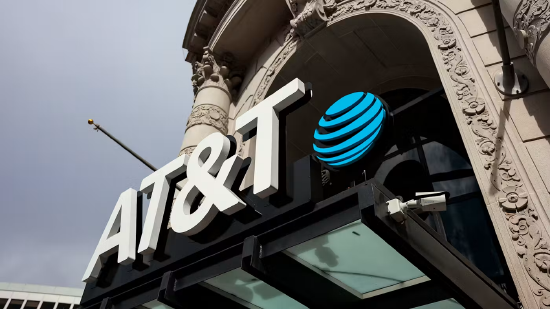
AT&T aims to prevent employee usage of Anthropic and OpenAI closed models from driving higher AI bills.
Why It Matters
AT&T’s approach could encourage large enterprises to route suitable workloads to open models instead of relying exclusively on premium proprietary APIs. This may increase competitive pressure on Anthropic and OpenAI while making model selection more cost-sensitive.
What To Do Next
Pilot NVIDIA Nemotron on one internal, non-sensitive workload and compare its quality, latency, hosting cost, and maintenance burden with your current Anthropic or OpenAI API.
Key Points
- •AT&T aims to prevent employee usage of Anthropic and OpenAI closed models from driving higher AI bills.
- •The company plans to expand deployment of open models, including NVIDIA Nemotron.
- •The cost-control strategy is expected to be implemented over the next several years.
🧠 Deep Insight
Background and context from public sources — not the original article. 10 sources cited.
🔑 Enhanced Key Takeaways
- •AT&T has implemented a proprietary 'smart routing' AI gateway that dynamically evaluates task complexity to select the most cost-effective model, mitigating the risk of a 'token apocalypse'.
- •The company currently processes 45 billion AI tokens daily, representing a massive surge from the 8 billion tokens per day recorded in 2025.
- •By shifting coding-related workloads to open-weight models, AT&T achieved a 56% reduction in costs with only a 2% degradation in output quality.
- •AT&T has developed its own 'OTel' model family, which are fine-tuned iterations of Google’s Gemma architecture specifically optimized for telecom-sector operations.
- •The company plans to increase its reliance on open-source and open-weight models from the current 40% to a target of 60–80% of total internal AI traffic.
📊 Competitor Analysis▸ Show
| Feature | AT&T (Multi-Model) | Traditional Enterprise (Single-Model) |
|---|---|---|
| Cost Strategy | Dynamic routing (Smart Gateway) | Fixed/High-cost API reliance |
| Model Mix | Hybrid (Llama, Gemma, Nemotron + Frontier) | Exclusive (OpenAI/Anthropic) |
| Efficiency | High (56% cost reduction in coding) | Low (High token spend) |
| Customization | High (OTel fine-tuned models) | Low (Off-the-shelf) |
🛠️ Technical Deep Dive
- Architecture: Implements a cache-aware AI gateway that performs real-time inference routing based on task complexity.
- Model Portfolio: Utilizes NVIDIA Nemotron, Meta Llama, and Google Gemma as the primary open-weight foundation.
- Fine-tuning: OTel 1.0 and 2.0 models are built on Google Gemma, specifically optimized for telecom-specific datasets and operational workflows.
- Infrastructure: Employs a multi-model orchestration layer to balance latency, cost, and accuracy across heterogeneous model endpoints.
🔮 Future ImplicationsAI analysis grounded in cited sources
⏳ Timeline
📎 Sources (10)
Factual claims are grounded in the sources below. Forward-looking analysis is AI-generated interpretation.
Weekly AI Recap
Read this week's curated digest of top AI events →
👉Related Updates


AI-curated news aggregator. All content rights belong to original publishers.
Original source: cnBeta (Full RSS) ↗
This is a summary, not the original. Read the source, or get the weekly briefing.
Weekly AI briefing
One email a week. Unsubscribe anytime.