ASRock-Intel Single-Channel DRAM Cuts Costs
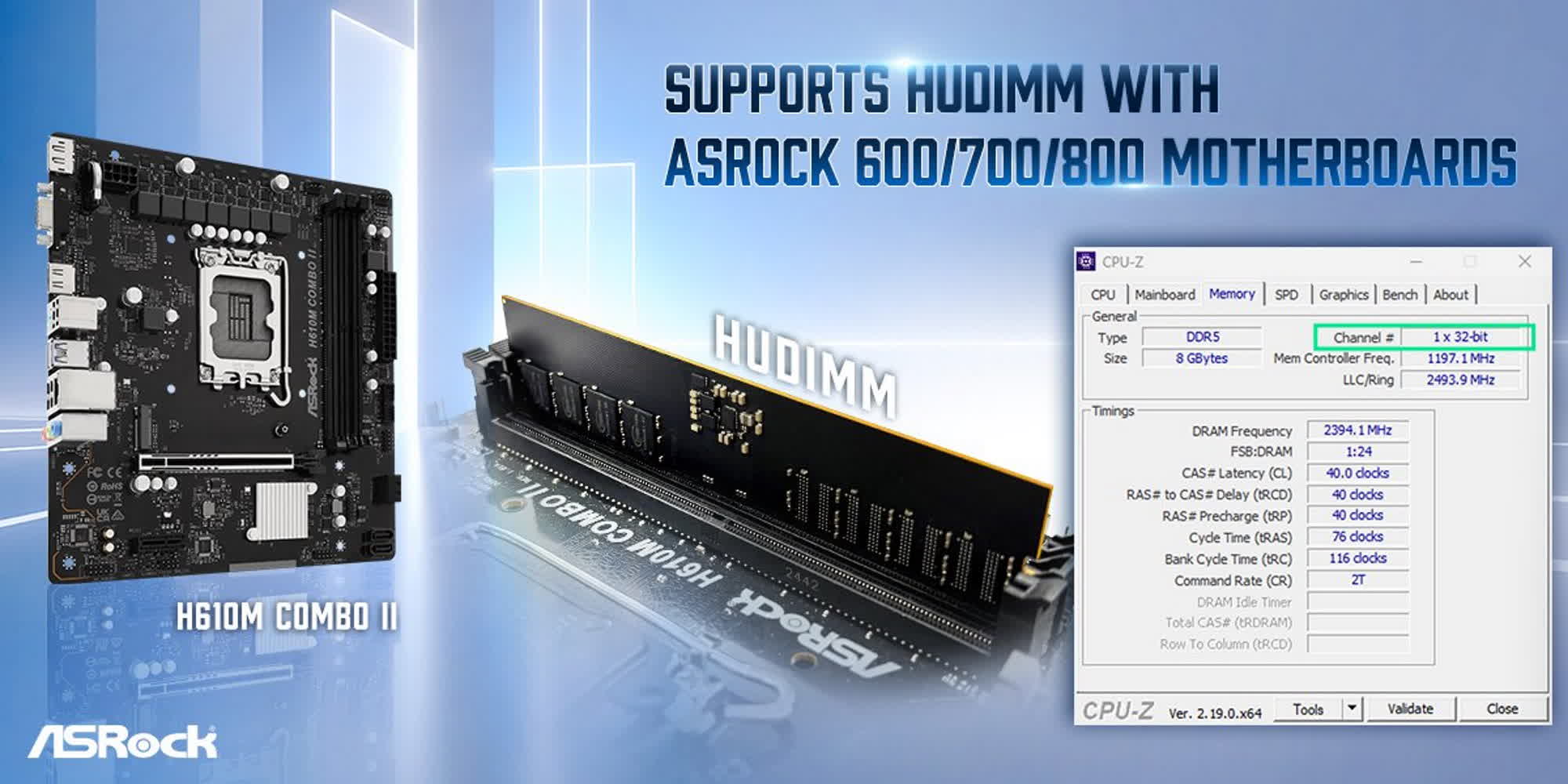
💡Cheaper RAM w/o perf loss aids budget AI rigs & local inference.
⚡ 30-Second TL;DR
What Changed
HUDIMM for desktops, HSODIMM for laptops
Why It Matters
Lowers barriers for high-RAM PC builds used in AI inference and training. Could ease hardware costs for indie AI devs. Benefits broader amid memory price surges.
What To Do Next
Test HUDIMM compatibility in your AI workstation for cost savings.
Key Points
- •HUDIMM for desktops, HSODIMM for laptops
- •Single 1x32-bit channel reduces DDR costs
- •No performance impact despite price cut
- •Partnership: ASRock, Intel, TeamGroup
🧠 Deep Insight
AI-generated analysis for this event — not the original article.
🔑 Enhanced Key Takeaways
- •The HUDIMM and HSODIMM standards utilize the CUDIMM/CSODIMM architecture foundation, leveraging the CKD (Client Clock Driver) to maintain signal integrity at higher speeds despite the reduced channel width.
- •This initiative is part of a broader industry push to transition away from traditional dual-channel 64-bit memory architectures in entry-level segments to reduce motherboard trace complexity and PCB layer counts.
- •Initial market deployment is restricted to specific Intel motherboard chipsets that support the proprietary memory controller configuration required to interface with the 32-bit single-channel modules.
🛠️ Technical Deep Dive
- •Module Architecture: Utilizes a single 32-bit sub-channel instead of the standard 64-bit channel found in traditional DDR5 DIMMs.
- •Clocking Mechanism: Integrates a Client Clock Driver (CKD) directly on the module to buffer and re-drive the clock signal, compensating for the signal degradation typically associated with non-standard channel configurations.
- •Physical Interface: HUDIMM (Hyper-Unbuffered DIMM) and HSODIMM (Hyper-Small Outline DIMM) utilize modified pin-outs that are physically incompatible with standard DDR5 slots, requiring specific ASRock-Intel ecosystem motherboards.
- •Power Management: Employs an on-module PMIC (Power Management Integrated Circuit) optimized for the lower power draw of a single 32-bit channel, reducing thermal output compared to full-width modules.
🔮 Future ImplicationsAI analysis grounded in cited sources
⏳ Timeline
Weekly AI Recap
Read this week's curated digest of top AI events →
👉Related Updates
AI-curated news aggregator. All content rights belong to original publishers.
Original source: cnBeta (Full RSS) ↗
This is a summary, not the original. Read the source, or get the weekly briefing.
The weekly digest
One email a week. Unsubscribe anytime.