ASML: Forging the Lithography King
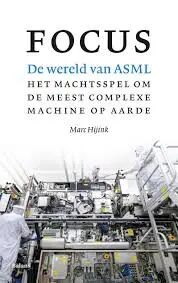
💡ASML's 100% EUV control powers AI GPUs—grasp its supply chain origins
⚡ 30-Second TL;DR
What Changed
Philips NatLab's 1983 stepper tech (PAS 2000) foundation, led by Troost.
Why It Matters
ASML's EUV monopoly (100% share) is critical for advanced AI chips but vulnerable to geopolitics. Lessons in partnerships and R&D persistence apply to AI hardware ventures.
What To Do Next
Study ASML's supplier network model for optimizing AI chip production pipelines.
Key Points
- •Philips NatLab's 1983 stepper tech (PAS 2000) foundation, led by Troost.
- •1984 ASM merger; Smit secured AMD's 25 PAS 2400 orders in 1987.
- •Non-vertical model: 90% parts outsourced, Zeiss optics key partner.
- •Government subsidies and TSMC investment fueled survival and expansion.
🧠 Deep Insight
AI-generated analysis for this event — not the original article.
🔑 Enhanced Key Takeaways
- •ASML's transition from a Philips subsidiary to an independent entity was finalized in 1995 through an IPO, which was critical for raising the capital necessary to fund the transition from I-line to DUV lithography.
- •The 'holistic lithography' strategy, introduced in the mid-2000s, shifted ASML's business model from selling standalone machines to providing integrated computational lithography, metrology, and inspection solutions to optimize yield.
- •ASML's dominance in EUV is protected by a massive intellectual property moat, including the acquisition of Cymer in 2013, which provided the essential laser-produced plasma (LPP) source technology required for high-volume EUV manufacturing.
📊 Competitor Analysis▸ Show
| Feature | ASML | Canon | Nikon |
|---|---|---|---|
| Primary Lithography Tech | EUV, DUV (ArFi/ArF/KrF) | Nanoimprint (NIL), i-line, KrF | DUV (ArFi/ArF/KrF), i-line |
| Market Segment | Leading-edge (sub-7nm) | Legacy/Mature nodes, niche | Mature nodes, specialized |
| EUV Capability | Exclusive provider | None | None |
| Strategy | Holistic Lithography | Cost-effective NIL/Legacy | Precision optics/Legacy focus |
🛠️ Technical Deep Dive
- •EUV Lithography: Utilizes 13.5nm wavelength light generated by firing high-power CO2 lasers at tin droplets, requiring a vacuum environment to prevent light absorption by air.
- •High-NA EUV: The latest generation (EXE:5000/5200 series) features a numerical aperture of 0.55, enabling higher resolution patterning for sub-2nm process nodes compared to the 0.33 NA of standard EUV systems.
- •Immersion Lithography (ArFi): Uses a fluid medium between the projection lens and the wafer to increase the effective numerical aperture, allowing for smaller feature sizes using 193nm light.
- •Computational Lithography: Employs sophisticated software algorithms to pre-compensate for optical proximity effects (OPE) and diffraction, ensuring pattern fidelity on the wafer.
🔮 Future ImplicationsAI analysis grounded in cited sources
⏳ Timeline
Weekly AI Recap
Read this week's curated digest of top AI events →
👉Related Updates



AI-curated news aggregator. All content rights belong to original publishers.
Original source: 虎嗅 ↗
This is a summary, not the original. Read the source, or get the weekly briefing.
The weekly digest
One email a week. Unsubscribe anytime.