Apple's Control Turns AI Weakness
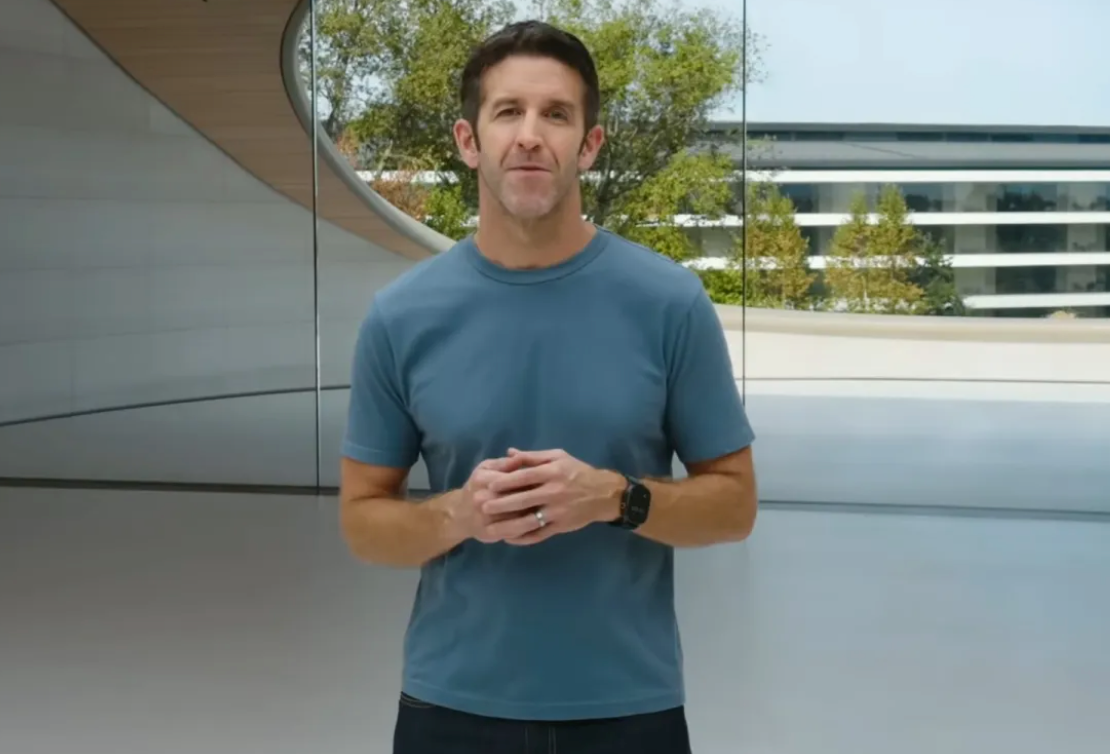
💡Apple's closed AI strategy risks obsolescence—key for stack decisions
⚡ 30-Second TL;DR
What Changed
Apple's empire built on strict ecosystem control for security and usability
Why It Matters
Apple risks lagging in AI innovation if it maintains closed systems, while open players like Google advance faster. Developers may shift to more flexible platforms for AI integration.
What To Do Next
Benchmark open-weight LLMs against Apple's on-device models for flexibility gains.
Key Points
- •Apple's empire built on strict ecosystem control for security and usability
- •AI era prioritizes openness over proprietary control
- •Custom chips, iOS, and App Store curation may limit AI competitiveness
- •Reuters cites shift from control advantage to potential shortcoming
🧠 Deep Insight
AI-generated analysis for this event — not the original article.
🔑 Enhanced Key Takeaways
- •Apple's 'Apple Intelligence' strategy relies heavily on on-device processing and Private Cloud Compute, which necessitates a closed-loop architecture that inherently limits the integration of third-party, open-source large language models compared to Android's more modular approach.
- •Industry analysts note that Apple's strict privacy-first stance creates a 'data silo' problem, making it difficult for the company to train models on the massive, diverse datasets that competitors like Google and OpenAI leverage through open web scraping and collaborative partnerships.
- •The shift toward 'Agentic AI'—where models interact across apps—is challenging Apple's sandboxed app architecture, forcing the company to re-engineer its OS-level permissions to allow AI agents to perform cross-app tasks without compromising the security model that defines the iPhone experience.
📊 Competitor Analysis▸ Show
| Feature | Apple (Apple Intelligence) | Google (Gemini) | Microsoft (Copilot) |
|---|---|---|---|
| Model Strategy | Proprietary/Hybrid (On-device + Private Cloud) | Open/Cloud-First (Gemini Pro/Flash) | Open/Cloud-First (GPT-4o/Phi) |
| Ecosystem | Closed (iOS/macOS only) | Open (Android/Web/Cross-platform) | Open (Windows/Office/Cross-platform) |
| Data Access | Highly restricted (Privacy-focused) | Broad (Integrated with Search/Workspace) | Broad (Integrated with M365/Graph) |
| Developer Access | Limited (App Intents/SiriKit) | High (API/Vertex AI/Android Studio) | High (Azure AI/GitHub Copilot) |
🛠️ Technical Deep Dive
- •Private Cloud Compute (PCC): A specialized architecture using Apple Silicon servers that ensures data is never stored or accessible to Apple, utilizing a stateless execution environment.
- •On-Device Model Architecture: Apple utilizes a combination of adapters (LoRA) and quantized models (typically 3B parameter range) optimized for the Neural Engine in A-series and M-series chips to maintain low latency.
- •Semantic Indexing: Apple's approach involves creating a local, on-device vector database of user data (emails, messages, photos) that is indexed by the OS to provide context to local LLMs without exposing raw data to the cloud.
🔮 Future ImplicationsAI analysis grounded in cited sources
⏳ Timeline
📰 Event Coverage
Weekly AI Recap
Read this week's curated digest of top AI events →
👉Related Updates
AI-curated news aggregator. All content rights belong to original publishers.
Original source: cnBeta (Full RSS) ↗
This is a summary, not the original. Read the source, or get the weekly briefing.
The weekly digest
One email a week. Unsubscribe anytime.