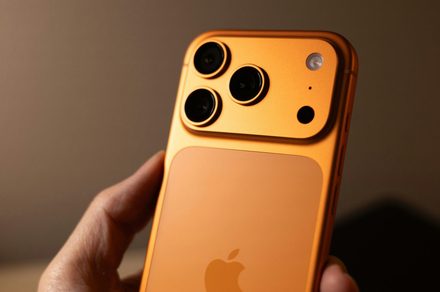
Apple testing 7-inch display for future iPhone models
💡Apple's hardware roadmap shifts impact the design constraints for all future mobile AI applications.
⚡ 30-Second TL;DR
What Changed
Testing a nearly 7-inch display panel
Why It Matters
A larger display size could significantly alter the UI/UX design requirements for future iOS applications and AI-driven interface interactions.
What To Do Next
Review your mobile UI design guidelines to ensure scalability for larger, non-standard display form factors in future hardware.
Key Points
- •Testing a nearly 7-inch display panel
- •Potential market debut scheduled for 2027
- •Technology remains unconfirmed and in experimental phase
🧠 Deep Insight
AI-generated analysis for this event — not the original article.
🔑 Enhanced Key Takeaways
- •Industry analysts suggest the move toward 7-inch displays is driven by the increasing demand for 'phablet' form factors that bridge the gap between standard smartphones and foldable devices.
- •Supply chain reports indicate that Apple is exploring advanced LTPO (Low-Temperature Polycrystalline Oxide) OLED technology to maintain battery efficiency despite the larger screen surface area.
- •The potential shift to a 7-inch panel would represent the largest display size in iPhone history, surpassing the current Pro Max models which typically hover around 6.7 to 6.9 inches.
- •Internal testing reportedly focuses on optimizing the 'Dynamic Island' interface and UI scaling to ensure usability on a larger, potentially taller aspect ratio.
- •Market observers note that this development may be a strategic response to Samsung's Galaxy S Ultra series, which has consistently pushed the boundaries of large-screen smartphone ergonomics.
📊 Competitor Analysis▸ Show
| Feature | Apple (Future 7-inch) | Samsung Galaxy S26 Ultra | Google Pixel 11 Pro |
|---|---|---|---|
| Display Size | ~7.0 inches (Est.) | 6.8 inches | 6.7-6.8 inches |
| Panel Tech | LTPO OLED | Dynamic AMOLED 2X | LTPO OLED |
| Target Market | Premium/Pro | Ultra-Premium | Premium |
🛠️ Technical Deep Dive
- Display Architecture: Likely utilizing a Tandem OLED structure to improve brightness and longevity, similar to recent iPad Pro implementations.
- Refresh Rate: Expected to maintain ProMotion technology with a variable refresh rate ranging from 1Hz to 120Hz.
- Pixel Density: Anticipated to maintain a 'Retina' standard, likely requiring a resolution increase to keep PPI (pixels per inch) consistent with smaller models.
- Thermal Management: Larger surface area may allow for improved heat dissipation, potentially enabling sustained peak performance for gaming and AI processing.
🔮 Future ImplicationsAI analysis grounded in cited sources
⏳ Timeline
Weekly AI Recap
Read this week's curated digest of top AI events →
👉Related Updates
AI-curated news aggregator. All content rights belong to original publishers.
Original source: Digital Trends ↗
This is a summary, not the original. Read the source, or get the weekly briefing.
The weekly digest
One email a week. Unsubscribe anytime.