๐Ÿ“ŠStalecollected in 9m

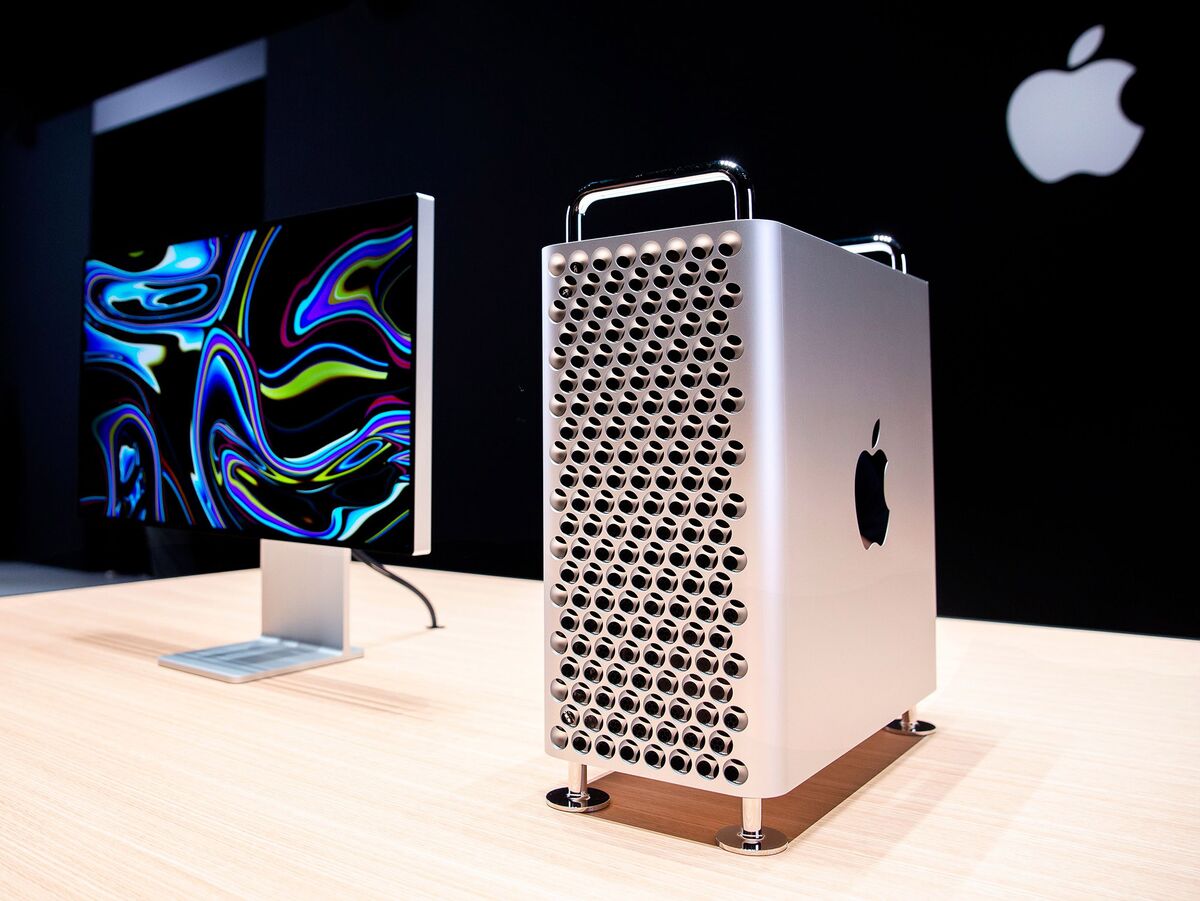
Apple Axes Mac Pro for Mac Studio
Apple Axes Mac Pro for Mac Studio
PostLinkedIn
๐Ÿ“ŠRead original on Bloomberg Technology

๐Ÿ’กApple's pro desktop pivot limits GPU expandability, reshaping hardware for AI/ML devs

โšก 30-Second TL;DR

What Changed

Apple officially discontinued the Mac Pro desktop.

Why It Matters

This discontinuation streamlines Apple's pro hardware to fixed Apple Silicon configs, limiting PCIe expandability for GPU-heavy AI training. Developers may pivot to Mac Studio for efficient on-device ML or external cloud resources. Signals deeper commitment to unified, power-efficient designs.

What To Do Next

Benchmark MLX library on Mac Studio to assess Apple Silicon for your ML inference workloads.

Who should care:Developers & AI Engineers

Key Points

  • โ€ขApple officially discontinued the Mac Pro desktop.
  • โ€ขDesigned for video editors, photographers, and advanced users.
  • โ€ขShift emphasizes the more compact Mac Studio.
  • โ€ขImpacts pro workflows requiring high-end desktop power.

๐Ÿง  Deep Insight

AI-generated analysis for this event.

๐Ÿ”‘ Enhanced Key Takeaways

  • โ€ขThe discontinuation marks the end of the modular tower form factor in Apple's lineup, which had been a staple for professional users requiring internal PCIe expansion and user-upgradeable storage.
  • โ€ขIndustry analysts note that the transition to the Mac Studio architecture effectively forces professional workflows to rely on external Thunderbolt-based expansion, shifting the bottleneck from internal bus bandwidth to external interface throughput.
  • โ€ขApple's decision aligns with the company's broader 'Apple Silicon' strategy, which prioritizes unified memory architecture and power efficiency over the traditional high-wattage, multi-GPU desktop configurations previously supported by the Mac Pro.
๐Ÿ“Š Competitor Analysisโ–ธ Show
FeatureMac Studio (M-Series)Dell Precision 7960 TowerHP Z8 Fury G5
ArchitectureARM (Unified Memory)x86 (Intel Xeon)x86 (Intel Xeon)
ExpandabilityExternal (Thunderbolt)High (Internal PCIe)High (Internal PCIe)
GPUIntegrated SoCDiscrete (NVIDIA RTX/Quadro)Discrete (NVIDIA RTX/Quadro)
Starting Price~$1,999~$2,500+~$3,000+

๐Ÿ› ๏ธ Technical Deep Dive

  • The Mac Studio utilizes the M-series Ultra/Max SoC, which integrates CPU, GPU, and Neural Engine on a single die with unified memory architecture (UMA).
  • Unlike the Mac Pro's traditional PCIe slots, the Mac Studio relies on Thunderbolt 4/5 ports for high-speed peripheral connectivity, limiting internal hardware customization.
  • Thermal management in the Mac Studio is optimized for a compact footprint, utilizing a dual-fan system and high-density heat sink, contrasting with the Mac Pro's large-chassis airflow design.

๐Ÿ”ฎ Future ImplicationsAI analysis grounded in cited sources

Apple will introduce a 'Pro' tier of the Mac Studio with increased I/O.
To retain high-end professional users, Apple must bridge the connectivity gap left by the removal of internal PCIe slots.
Third-party external PCIe expansion enclosures will see a surge in demand.
Professional workflows that previously relied on internal cards for audio processing or storage will require external alternatives to maintain functionality.

โณ Timeline

2019-12
Apple releases the redesigned, highly modular Mac Pro (2019) with Intel Xeon processors.
2022-03
Apple introduces the Mac Studio, positioning it as a compact, high-performance alternative to the Mac Pro.
2023-06
Apple releases the M2 Ultra Mac Pro, transitioning the product line to Apple Silicon but retaining the tower chassis.
2026-03
Apple officially discontinues the Mac Pro desktop line.
๐Ÿ“ฐ

Weekly AI Recap

Read this week's curated digest of top AI events โ†’

๐Ÿ‘‰Related Updates

AI-curated news aggregator. All content rights belong to original publishers.
Original source: Bloomberg Technology โ†—