Source钛媒体•Stalecollected in 17m
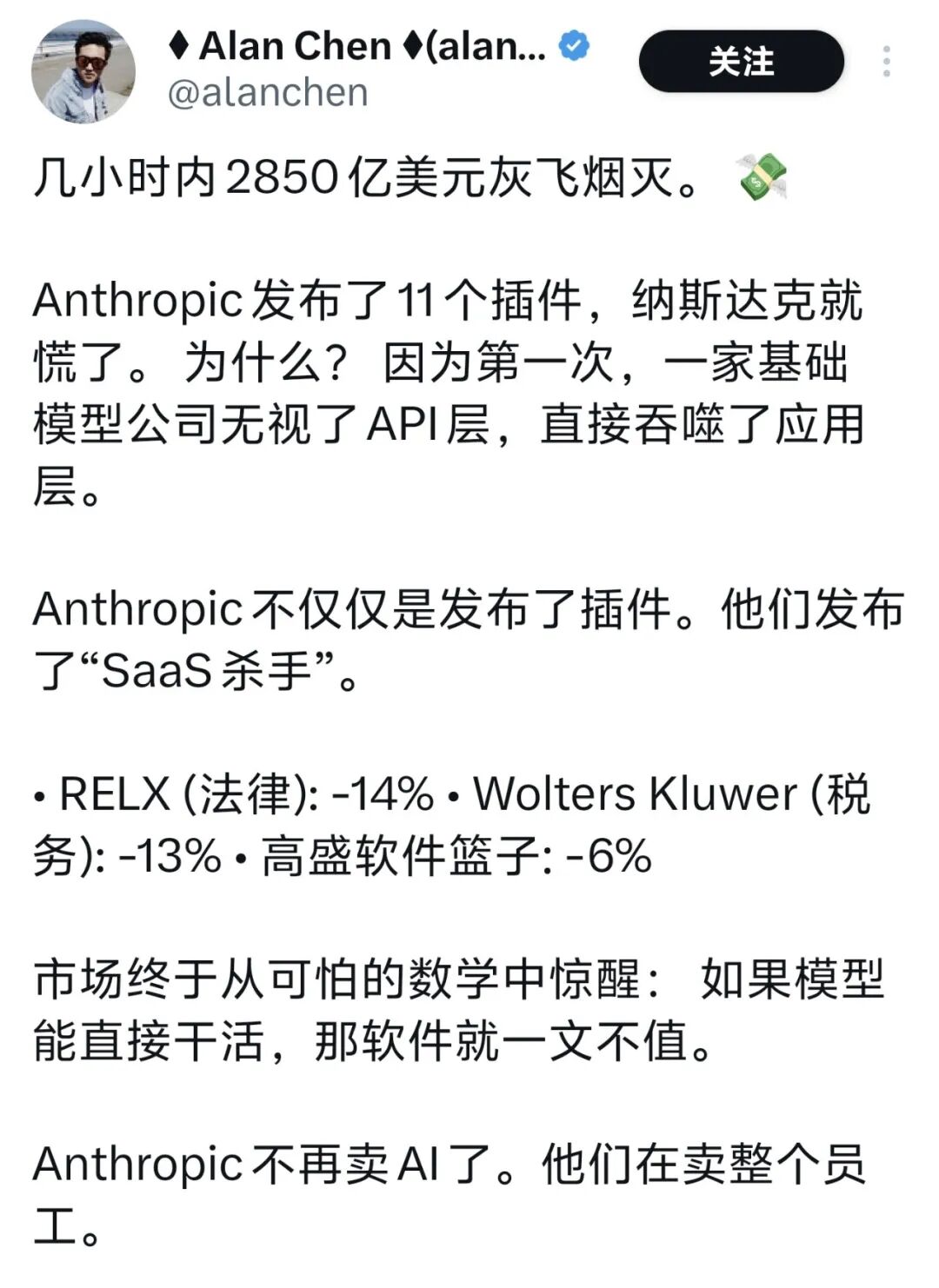
Anthropic's AI Kill Lines Threaten Software Firms
#ai-disruption#software-industry#anthropic-strategyanthropic-aianthropic
💡Anthropic redefines software survival—critical for AI-impacted devs
⚡ 30-Second TL;DR
What Changed
Anthropic setting multiple AI performance thresholds
Why It Matters
Accelerates shift from traditional software to AI-native solutions, pressuring incumbents to integrate AI or pivot.
What To Do Next
Benchmark your software against Anthropic's latest Claude models for replacement risks.
Who should care:Founders & Product Leaders
Key Points
- •Anthropic setting multiple AI performance thresholds
- •Direct challenge to traditional software companies
- •Debate on viability of non-AI software businesses
🧠 Deep Insight
AI-generated analysis for this event — not the original article.
🔑 Enhanced Key Takeaways
- •Anthropic's 'kill lines' refer to specific performance benchmarks where their models demonstrate autonomous capability to replace entire software stacks, effectively rendering traditional SaaS workflows obsolete.
- •The strategy shifts the focus from 'AI-assisted' tools to 'AI-autonomous' agents, forcing legacy software firms to pivot toward infrastructure-as-a-service or risk total market displacement.
- •Industry analysts note that this shift is driving a rapid consolidation in the enterprise software market, as companies prioritize AI-native platforms over legacy suites that lack deep agentic integration.
📊 Competitor Analysis▸ Show
| Feature | Anthropic (Agentic) | OpenAI (Operator) | Google (Gemini/Agents) |
|---|---|---|---|
| Primary Focus | Autonomous Task Execution | Multi-modal Reasoning | Ecosystem Integration |
| Pricing Model | Usage-based (Agentic) | Token-based / Enterprise | Subscription / API |
| Benchmark Focus | Software Stack Replacement | Complex Reasoning | Cross-Platform Utility |
🛠️ Technical Deep Dive
- •Architecture utilizes a 'Recursive Agentic Loop' that allows models to self-correct during multi-step software execution without human intervention.
- •Implementation relies on 'Contextual Memory Persistence,' enabling models to maintain state across long-running software sessions that span days or weeks.
- •Models are optimized for 'API-First Interaction,' allowing them to bypass traditional UI layers and interact directly with backend databases and microservices.
🔮 Future ImplicationsAI analysis grounded in cited sources
Traditional SaaS revenue models will collapse by 2028.
The shift toward autonomous agents reduces the value of seat-based licensing, forcing a transition to outcome-based or compute-based pricing.
Legacy software firms will be forced to open-source their APIs.
To remain relevant, legacy vendors must allow AI agents to integrate deeply into their systems, effectively commoditizing their proprietary interfaces.
⏳ Timeline
2023-03
Anthropic releases Claude, focusing on safety and steerability.
2024-03
Introduction of Claude 3 family, setting new industry benchmarks for reasoning.
2024-10
Anthropic launches 'Computer Use' capability, allowing models to control software interfaces directly.
2025-06
Deployment of advanced agentic frameworks enabling autonomous software stack management.
📰
Weekly AI Recap
Read this week's curated digest of top AI events →
👉Related Updates



AI-curated news aggregator. All content rights belong to original publishers.
Original source: 钛媒体 ↗
This is a summary, not the original. Read the source, or get the weekly briefing.
The weekly digest
One email a week. Unsubscribe anytime.