Anthropic's 3 AI Agent Workflow Patterns
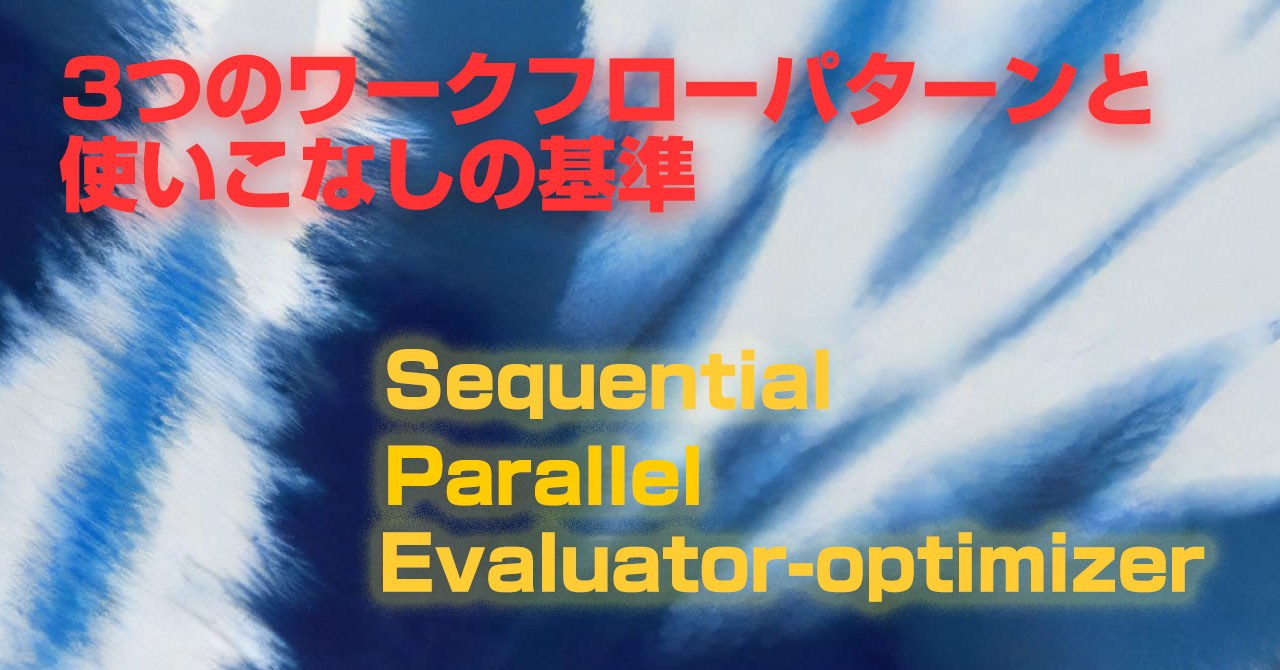
💡Master 3 Anthropic patterns to build effective multi-AI agent systems (key for scaling).
⚡ 30-Second TL;DR
What Changed
Anthropic publishes 3 workflow patterns for multi-AI agent orchestration
Why It Matters
Provides practical patterns for builders scaling AI agents, potentially boosting efficiency in complex workflows. Enables better system design beyond single-agent limits.
What To Do Next
Read Anthropic's blog post to implement the 3 workflow patterns in your agentic applications.
Key Points
- •Anthropic publishes 3 workflow patterns for multi-AI agent orchestration
- •Avoid '丸投げ' (full delegation) of problems to agents
- •Focus on mechanisms where agents excel in problem-solving
🧠 Deep Insight
Background and context from public sources — not the original article. 6 sources cited.
🔑 Enhanced Key Takeaways
- •Anthropic identifies three specific workflow patterns: prompt chaining for sequential subtasks, routing for directing inputs to specialized tasks, and evaluator-optimizer for iterative refinement with feedback loops.[4]
- •57% of organizations deploy multi-step agent workflows, with 81% planning expansion into complex use cases in 2026, highlighting widespread adoption of patterns like Anthropic's.[1]
- •Multi-agent architectures enable parallel reasoning across separate context windows, outperforming single-agent sequential processing, as demonstrated in Fountain's 50% faster screening using Claude orchestration.[3]
🛠️ Technical Deep Dive
- •Prompt chaining decomposes tasks into fixed subtasks with programmatic checks (gates) between LLM calls to ensure accuracy by simplifying each step.[4]
- •Routing workflow uses classification to direct inputs to specialized prompts or models, optimizing for distinct input categories without performance trade-offs.[4]
- •Evaluator-optimizer loop generates responses, evaluates them against criteria, and iterates with feedback, effective when LLM self-critique mirrors human refinement.[4]
- •Hierarchical multi-agent setups feature a supervisor coordinating 3-8 workers with shared state for complex, parallelizable tasks.[2]
🔮 Future ImplicationsAI analysis grounded in cited sources
⏳ Timeline
📎 Sources (6)
Factual claims are grounded in the sources below. Forward-looking analysis is AI-generated interpretation.
- arcade.dev — 5 Takeaways 2026 State of AI Agents Claude
- stack-ai.com — The 2026 Guide to Agentic Workflow Architectures
- resources.anthropic.com — 2026%20agentic%20coding%20trends%20report
- Anthropic — Building Effective Agents
- resources.anthropic.com — 2026 Agentic Coding Trends Report
- sitepoint.com — The Definitive Guide to Agentic Design Patterns in 2026
Weekly AI Recap
Read this week's curated digest of top AI events →
👉Related Updates
AI-curated news aggregator. All content rights belong to original publishers.
Original source: ITmedia AI+ (日本) ↗
This is a summary, not the original. Read the source, or get the weekly briefing.
Weekly AI briefing
One email a week. Unsubscribe anytime.