Anthropic updates Claude pricing for programmatic usage
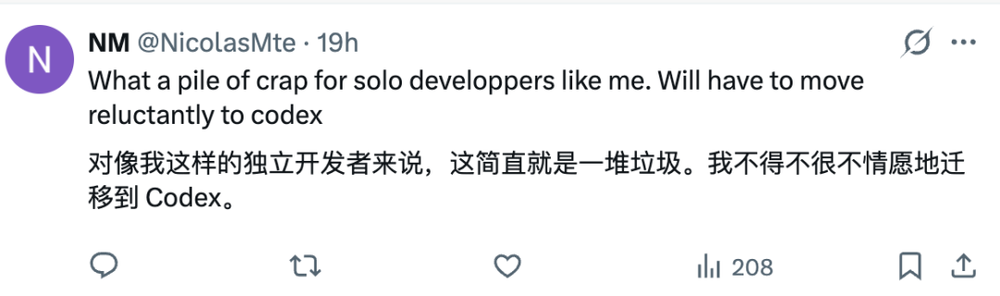
💡Critical pricing shift for Claude developers: programmatic usage is no longer included in flat-rate subscriptions.
⚡ 30-Second TL;DR
What Changed
Programmatic usage via SDKs/third-party frameworks now requires a separate monthly credit system.
Why It Matters
Developers building autonomous agents or CI/CD pipelines will face increased costs and budget uncertainty. Teams must now track token consumption more granularly to avoid service interruptions.
What To Do Next
Audit your current Claude API usage volume and migrate critical automated workflows to direct API billing to ensure predictable service continuity.
Key Points
- •Programmatic usage via SDKs/third-party frameworks now requires a separate monthly credit system.
- •Existing Claude Pro/Max subscriptions no longer cover unlimited programmatic API calls.
- •Developers must purchase additional usage packs or switch to direct API billing once credits are exhausted.
- •The change aims to manage compute capacity constraints amid high demand.
🧠 Deep Insight
Web-grounded analysis with 20 cited sources.
🔑 Enhanced Key Takeaways
- •The new credit system, effective June 15, 2026, allocates specific monthly credits ($20 for Pro, $100 for Max 5x, $200 for Max 20x) for programmatic usage, which are billed at API-style rates and do not roll over.
- •This change effectively ends a 'compute arbitrage' where developers previously leveraged subscriptions to consume hundreds or thousands of dollars worth of tokens for programmatic tasks at a significantly subsidized rate (estimated 15-30x cheaper than API pricing).
- •The policy is a reversal of an earlier April 2026 prohibition on third-party tools using subscriptions, and analysts suggest it reflects a broader industry trend towards metered pricing for AI agents, moving away from 'all-you-can-eat' models.
- •Anthropic's compute capacity constraints are a genuine and publicly acknowledged issue, with demand for models like Claude 3 growing faster than GPU infrastructure can be scaled, and new hardware investments taking 12-24 months to become available.
📊 Competitor Analysis▸ Show
| Feature/Model | Anthropic Claude Haiku 4.5 | Anthropic Claude Sonnet 4.6 | Anthropic Claude Opus 4.7 | OpenAI GPT-5.4 Nano | OpenAI GPT-5.4 Mini | OpenAI GPT-5.4 | OpenAI GPT-4.1 |
|---|---|---|---|---|---|---|---|
| Input Price (per 1M tokens) | $1.00 | $3.00 | $5.00 | $0.20 | $0.75 | $2.50 | $2.00 |
| Output Price (per 1M tokens) | $5.00 | $15.00 | $25.00 | $1.25 | $4.50 | $15.00 | $8.00 |
| Context Window | 1M tokens | 1M tokens | 1M tokens | 128K tokens | 270K tokens | 270K tokens | 128K tokens |
| Key Strengths | Speed, efficiency | Balanced, coding, agents | Complex reasoning, advanced software engineering, vision | Ultra-budget, high-volume simple tasks | Strong mini model | Coding, professional tasks | Strong all-around |
| Prompt Caching Savings | 90% | 90% | 90% | 50% (automatic) | 50% (automatic) | 50% (automatic) | 50% (automatic) |
| Batch Processing Discount | 50% | 50% | 50% | N/A | N/A | N/A | N/A |
🛠️ Technical Deep Dive
- Claude models are built upon the Transformer architecture.
- They are trained using 'Constitutional AI,' a proprietary technique developed by Anthropic to enhance ethical and legal compliance and minimize harmful outputs by applying predefined rules during both training and inference.
- The training methodology combines supervised learning with reinforcement learning from human feedback (RLHF) to refine model responses.
- Claude 3 models, including Haiku, Sonnet, and Opus, introduced multimodal capabilities, allowing them to process both text and image inputs.
- Current flagship models like Opus 4.7, Sonnet 4.6, and Haiku 4.5 feature an extended context window of up to 1 million tokens.
- Development leverages cloud computing resources from Amazon Web Services and Google Cloud Platform, utilizing frameworks such as PyTorch, JAX, and Triton.
- Some Claude models, starting from Claude 3.7 Sonnet, are hybrid reasoning models that can engage an 'extended thinking' mode to generate a step-by-step chain of thought before producing a final output.
🔮 Future ImplicationsAI analysis grounded in cited sources
⏳ Timeline
📎 Sources (20)
Factual claims are grounded in the sources below. Forward-looking analysis is AI-generated interpretation.
- Google Search Source
- Google Search Source
- Google Search Source
- Google Search Source
- Google Search Source
- Google Search Source
- Google Search Source
- Google Search Source
- Google Search Source
- Google Search Source
- Google Search Source
- Google Search Source
- Google Search Source
- Google Search Source
- Google Search Source
- Google Search Source
- Google Search Source
- Google Search Source
- Google Search Source
- Google Search Source
Weekly AI Recap
Read this week's curated digest of top AI events →
👉Related Updates


AI-curated news aggregator. All content rights belong to original publishers.
Original source: 虎嗅 ↗