Anthropic Unveils Claude Design Tool
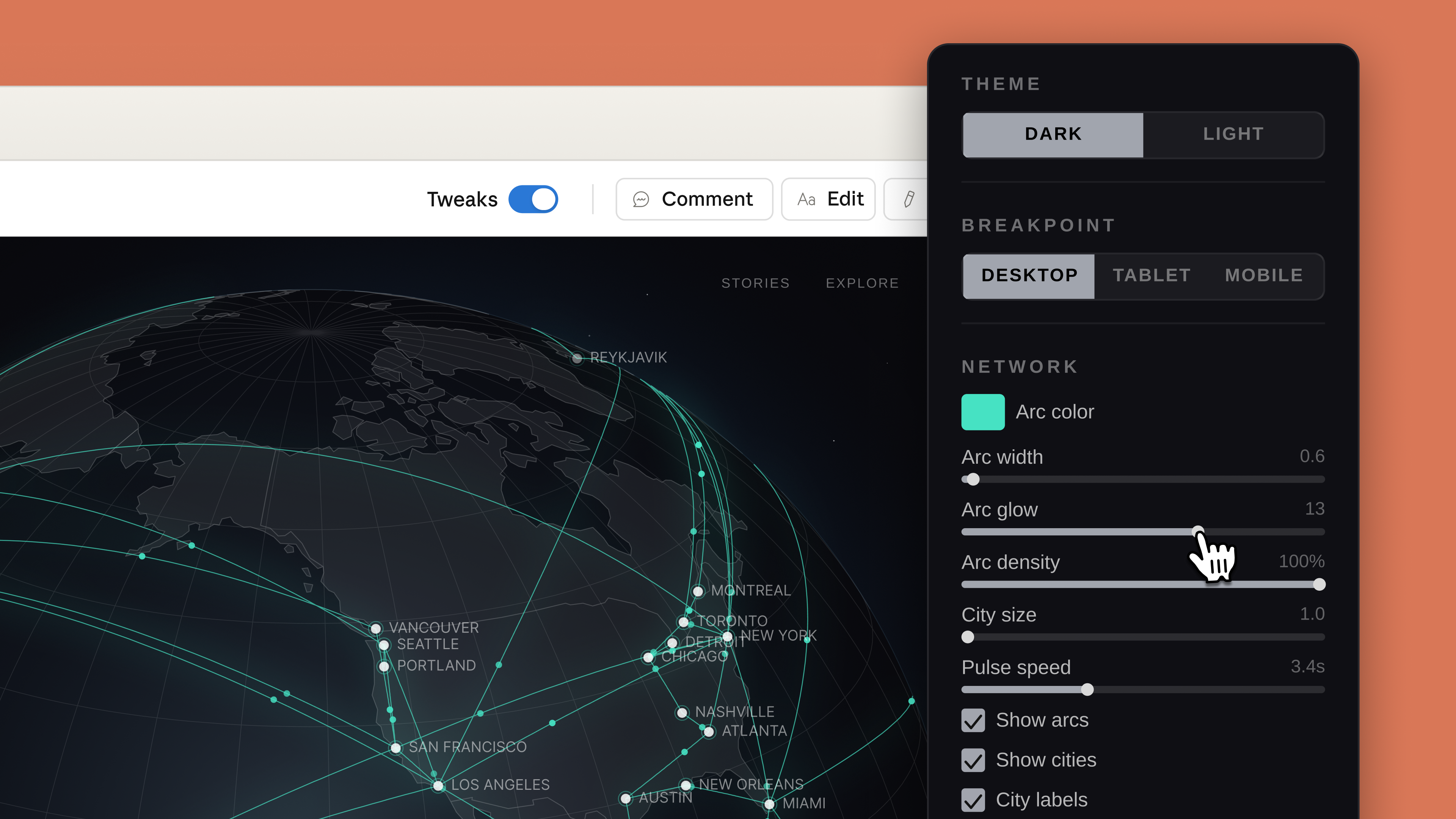
💡Anthropic's editable design AI rivals Adobe/Canva for builders.
⚡ 30-Second TL;DR
What Changed
Prompt-based generation of designs, prototypes, slides with conversational refinement
Why It Matters
Competes with Adobe and Canva AI tools, expanding Anthropic into visual design for broader creator adoption. Enables non-designers to produce visuals efficiently.
What To Do Next
Sign up for Anthropic Pro and prototype UI designs using custom sliders in Claude Design.
Key Points
- •Prompt-based generation of designs, prototypes, slides with conversational refinement
- •Custom sliders for tweaking specific elements like arc glow and density
- •Onboards organizational colors, typography from codebase and docs automatically
- •Supports image/document uploads, web capture, sharing, and Canva export
🧠 Deep Insight
AI-generated analysis for this event — not the original article.
🔑 Enhanced Key Takeaways
- •Claude Design utilizes a novel 'Visual-Semantic Alignment' layer that bridges the gap between natural language prompts and vector-based design primitives, allowing for non-destructive editing of generated assets.
- •The tool integrates with enterprise-grade design systems by parsing Figma API tokens and CSS variable files, ensuring that generated prototypes maintain strict adherence to brand guidelines.
- •Anthropic has implemented a 'Human-in-the-Loop' feedback mechanism where the Opus 4.7 model logs user-rejected design iterations to fine-tune its aesthetic preference engine for specific user personas.
📊 Competitor Analysis▸ Show
| Feature | Claude Design | Adobe Firefly/Express | Figma AI |
|---|---|---|---|
| Core Engine | Opus 4.7 Vision | Firefly Image 3 | Proprietary/OpenAI |
| Design System Sync | Native Codebase/Figma | Library-based | Native Figma |
| Pricing | Enterprise/Pro Tier | Subscription | Subscription |
| Primary Focus | Generative Prototyping | Creative Asset Gen | UI/UX Workflow |
🛠️ Technical Deep Dive
- •Model Architecture: Opus 4.7 employs a multimodal transformer architecture with a specialized 'Design-Head' decoder optimized for SVG and layout coordinate generation.
- •Context Window: Supports up to 1M tokens, allowing the model to ingest entire design system documentation and component libraries simultaneously.
- •Inference Optimization: Uses speculative decoding to accelerate the generation of complex vector paths, reducing latency for real-time slider adjustments.
- •Integration Layer: Utilizes a proprietary 'Style-Transfer-Bridge' that maps latent space representations of brand identity directly onto generated UI components.
🔮 Future ImplicationsAI analysis grounded in cited sources
⏳ Timeline
Weekly AI Recap
Read this week's curated digest of top AI events →
👉Related Updates

AI-curated news aggregator. All content rights belong to original publishers.
Original source: Engadget ↗
This is a summary, not the original. Read the source, or get the weekly briefing.
The weekly digest
One email a week. Unsubscribe anytime.