Anthropic Discovers 'J-Space' in Large Language Models
💡Anthropic's breakthrough in mapping 'reportable' thoughts in LLMs provides a new lens for AI safety and interpretability
⚡ 30-Second TL;DR
What Changed
The 'Jacobian lens' tool measures the causal impact of internal activations on final output tokens.
Why It Matters
This research bridges the gap between mechanistic interpretability and cognitive science, offering a new way to audit LLM reasoning and potential 'hidden' intentions.
What To Do Next
Review the Anthropic 'J-Space' paper to understand how to apply Jacobian-based interpretability tools to your own model auditing pipelines.
Key Points
- •The 'Jacobian lens' tool measures the causal impact of internal activations on final output tokens.
- •J-Space acts as a selective workspace for high-level information, excluding routine processing data.
- •Evidence suggests J-Space captures self-monitoring and deliberation, similar to human C1/C2 consciousness standards.
- •Unlike human brains, current LLMs lack the autonomous feedback loops required for true self-modeling.
🧠 Deep Insight
AI-generated analysis for this event — not the original article.
🔑 Enhanced Key Takeaways
- •The research utilizes 'dictionary learning' techniques to decompose model activations into interpretable features, allowing researchers to isolate the specific Jacobian components associated with output generation.
- •J-Space analysis reveals that LLMs exhibit a 'bottleneck' effect where only a fraction of internal activations are mapped to the Jacobian, suggesting a functional separation between latent knowledge and reportable information.
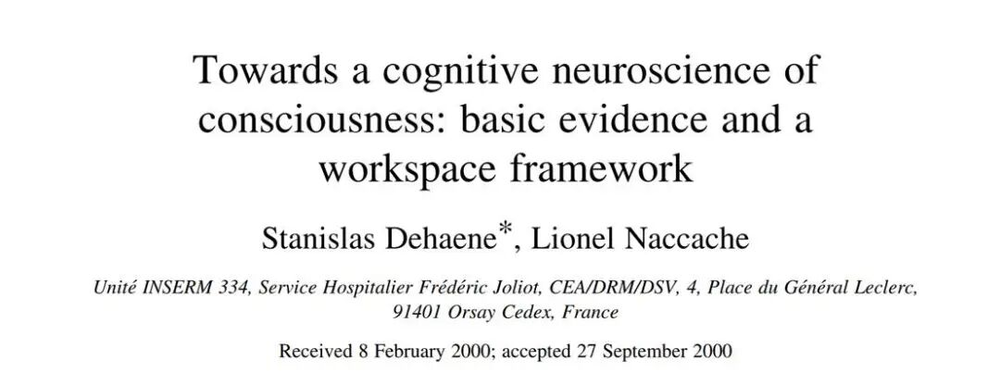
- •The study draws a direct parallel to the Global Neuronal Workspace (GNW) theory, positing that J-Space serves as the computational equivalent of a 'conscious' broadcast mechanism in biological brains.
- •Researchers found that manipulating activations within J-Space can predictably alter the model's output confidence and factual accuracy, demonstrating causal control over the model's 'deliberation' process.
- •The Jacobian lens methodology is model-agnostic, having been successfully applied to both Anthropic's Claude series and open-weights architectures to verify the universality of J-Space structures.
🛠️ Technical Deep Dive
- The Jacobian lens operates by calculating the gradient of the logit output with respect to internal hidden states, effectively identifying which neurons exert the most influence on the next-token prediction.
- It employs sparse autoencoders (SAEs) to map high-dimensional activations into a more interpretable feature space, isolating the 'J-Space' from noise.
- The mechanism relies on the chain rule of calculus applied across transformer layers to trace the causal path from early-layer feature activation to final output token probability.
- J-Space is characterized by high-sparsity activations, meaning only a small subset of features are 'active' in the Jacobian at any given time, mirroring the selective attention observed in human cognitive processing.
🔮 Future ImplicationsAI analysis grounded in cited sources
⏳ Timeline
Weekly AI Recap
Read this week's curated digest of top AI events →
👉Related Updates



AI-curated news aggregator. All content rights belong to original publishers.
Original source: 虎嗅 ↗
This is a summary, not the original. Read the source, or get the weekly briefing.
The weekly digest
One email a week. Unsubscribe anytime.