SourceArs Technica•Stalecollected in 63m
Android Automotive Expands Beyond Infotainment
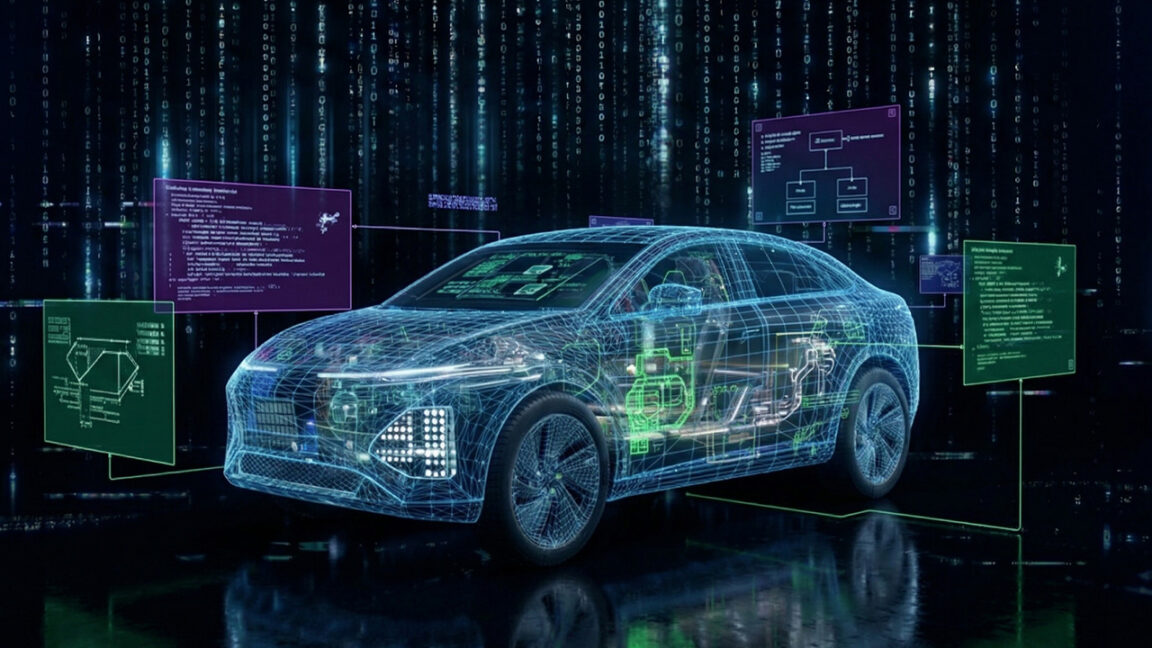
#automotive-os#vehicle-integration#google-ioandroid-automotivegoogleandroid-automotive
💡Google's car OS upgrade opens doors for AI vehicle apps and autonomy.
⚡ 30-Second TL;DR
What Changed
New version of Android Automotive released
Why It Matters
This could accelerate AI-driven vehicle features from Google ecosystem partners.
What To Do Next
Test Android Automotive SDK for deploying on-device AI models in cars.
Who should care:Developers & AI Engineers
Key Points
- •New version of Android Automotive released
- •Moves beyond infotainment limitations
- •Enables broader car system integration
🧠 Deep Insight
AI-generated analysis for this event — not the original article.
🔑 Enhanced Key Takeaways
- •The update introduces 'Android Vehicle Hardware Abstraction Layer (VHAL) 3.0', which allows direct, low-latency control over critical vehicle functions like powertrain management, battery thermal regulation, and advanced driver-assistance systems (ADAS).
- •Google has shifted from a containerized infotainment model to a 'Domain Controller' architecture, enabling Android Automotive to run on the same high-performance compute units that manage safety-critical vehicle operations.
- •The new framework includes enhanced 'Safety-Critical Partitioning' capabilities, allowing automakers to run non-safety infotainment apps alongside safety-certified vehicle control software on the same SoC without risk of interference.
📊 Competitor Analysis▸ Show
| Feature | Android Automotive (New) | QNX (BlackBerry) | Automotive Grade Linux (AGL) |
|---|---|---|---|
| Architecture | Domain Controller/Integrated | Microkernel/Safety-Certified | Open Source/Modular |
| Ecosystem | Google Play/Cloud Services | Proprietary/Partner-based | Community/Vendor-based |
| Safety Focus | Partitioned/Hybrid | Native Safety-Certified | Varies by implementation |
🛠️ Technical Deep Dive
- •Implementation of a Type-1 Hypervisor layer to isolate Android OS from the Real-Time Operating System (RTOS) managing vehicle dynamics.
- •Expansion of the Vehicle Property Service to include standardized APIs for electric vehicle (EV) battery management systems (BMS) and charging infrastructure communication.
- •Integration of 'Android Virtualization Framework' (AVF) to allow multiple guest operating systems to run concurrently on vehicle SoCs.
- •Support for high-bandwidth automotive Ethernet (10BASE-T1S) for real-time communication between Android-managed services and vehicle ECUs.
🔮 Future ImplicationsAI analysis grounded in cited sources
Automakers will reduce hardware costs by consolidating infotainment and vehicle control ECUs.
The shift to a domain controller architecture allows manufacturers to eliminate redundant hardware by running both infotainment and vehicle management on a single high-performance SoC.
Google will gain unprecedented access to real-time vehicle telemetry data.
Deeper integration into powertrain and battery systems provides Google with granular data on vehicle performance and usage patterns that were previously siloed from the infotainment system.
⏳ Timeline
2017-05
Google announces Android Automotive OS at Google I/O.
2020-09
Polestar 2 launches as the first vehicle with fully integrated Android Automotive.
2022-05
Google introduces Android Automotive 13 with expanded support for third-party navigation and parking apps.
2024-01
Google announces 'Google built-in' expansion to include more vehicle-specific controls for climate and seating.
📰
Weekly AI Recap
Read this week's curated digest of top AI events →
👉Related Updates
AI-curated news aggregator. All content rights belong to original publishers.
Original source: Ars Technica ↗
This is a summary, not the original. Read the source, or get the weekly briefing.
The weekly digest
One email a week. Unsubscribe anytime.