📱Engadget•Stalecollected in 20m
Android Auto 2026 Makeover Integrates Gemini AI
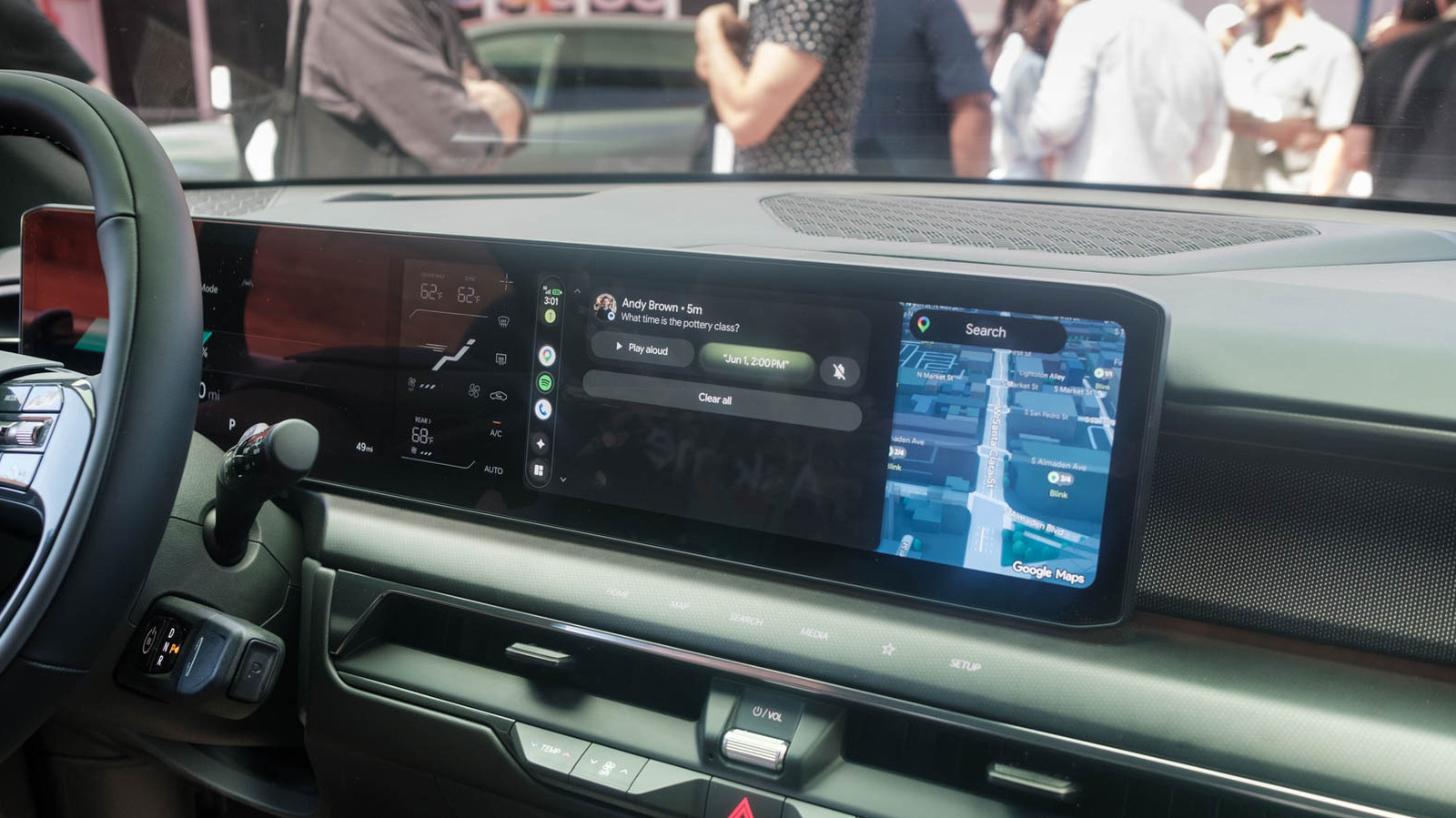
💡See how Google is embedding Gemini as a proactive agent in the automotive OS ecosystem.
⚡ 30-Second TL;DR
What Changed
Deep integration of Gemini AI into the automotive interface
Why It Matters
This signals a shift toward agentic AI in automotive environments, moving beyond simple voice commands to proactive assistance.
What To Do Next
Review the latest Google Automotive Services (GAS) documentation to prepare for Gemini-based agent integration.
Who should care:Developers & AI Engineers
Key Points
- •Deep integration of Gemini AI into the automotive interface
- •Focus on practical, context-aware user interactions
- •Significant UI/UX overhaul scheduled for 2026
🧠 Deep Insight
Web-grounded analysis with 15 cited sources.
🔑 Enhanced Key Takeaways
- •The 2026 Android Auto overhaul introduces a new visual design based on Google's Material 3 Expressive system, featuring customizable widgets and edge-to-edge Google Maps tailored for various screen shapes.
- •The update brings significant entertainment upgrades, including Full HD video playback for apps like YouTube when the vehicle is parked, which transitions to audio-only mode when driving, and support for immersive spatial sound using Dolby Atmos in compatible cars and apps.
- •Gemini AI integration will enable advanced contextual assistance, such as the 'Magic Cue' system that can understand text messages asking for an address and offer to send a reply with the correct information from personal data, or verbally initiate food orders through services like DoorDash.
- •For vehicles with 'Google built-in' (Android Automotive OS), Gemini will offer deeper integration, allowing users to control specific car functions via voice, such as adjusting a sunroof or asking for descriptions of objects seen through the car's front-facing cameras.
- •Gemini in Android Auto is designed for natural, free-flowing conversations, enabling users to perform complex tasks like finding places, managing messages, creating playlists, brainstorming ideas, and accessing information from emails or calendars hands-free.
🛠️ Technical Deep Dive
- Android Auto functions as a mobile app that mirrors smartphone features onto a car's infotainment head unit, distinct from Android Automotive OS which is a full operating system running directly on vehicle hardware.
- The underlying architecture for Android Automotive OS includes an Application Framework, Android Automotive system services with Binder IPC, a Hardware Abstraction Layer (HAL), and the Linux Kernel.
- Android Automotive OS utilizes the Android Open Source Project (AOSP) as its foundation, with OEM and third-party applications residing in the
/productpartition, AOSP components in the/systempartition, and the Board Support Package (BSP) in the/vendorpartition. - Communication between Android devices and accessories, including car head units, often relies on the Android Open Accessory (AOA) protocol, available in versions AOAv1 and AOAv2.
- The 2026 UI/UX overhaul for Android Auto incorporates the Material 3 Expressive design system, bringing expressive fonts, smooth animations, and customizable elements from Android phones to the car display.
- Gemini's functionality within Android Auto leverages the Gemini app installed on the connected smartphone, with 'Gemini Intelligence' on the phone enabling context understanding and proactive task completion within the car interface.
- An architectural shift in Android 14, particularly relevant for projection systems like CarPlay, introduces
CarProjectionManagerandTaskViewto provide OEMs with greater control over how projected interfaces are displayed, allowing for multi-display support and integration within the car's native UI.
🔮 Future ImplicationsAI analysis grounded in cited sources
Enhanced driver safety through AI-powered contextual assistance will become a standard expectation.
Gemini's ability to proactively handle complex, multi-step tasks hands-free, such as drafting message replies with relevant information or initiating food orders, significantly reduces the need for manual interaction and potential driver distraction.
In-car infotainment systems will offer unprecedented levels of personalization and adaptability.
The new Material 3 Expressive UI, customizable widgets, and Gemini's context-aware capabilities will allow the car's interface to dynamically adjust to individual driver preferences, driving conditions, and diverse screen configurations.
AI assistants will gain deeper control and access to vehicle-specific functions and data.
For cars with Google built-in, Gemini's integration will extend beyond smartphone mirroring to include direct voice control over vehicle hardware (e.g., sunroof) and access to car-specific information, transforming the car into a more intelligent and responsive entity.
⏳ Timeline
2014-06
Android Auto revealed at Google I/O.
2015-03
Android Auto released to the public.
2019-07
Android Auto received its first major UI rework, introducing an app drawer.
2022-05
Google announced a user interface redesign for Android Auto, codenamed CoolWalk.
2025-11
Gemini AI began rolling out globally to Android Auto users, offering a more conversational assistant experience.
2026-05
Google I/O 2026 (The Android Show: I/O Edition) announced major Android Auto updates for 2026, including deeper Gemini integration, new UI, video apps, and Dolby Atmos support.
📎 Sources (15)
Factual claims are grounded in the sources below. Forward-looking analysis is AI-generated interpretation.
📰
Weekly AI Recap
Read this week's curated digest of top AI events →
👉Related Updates


AI-curated news aggregator. All content rights belong to original publishers.
Original source: Engadget ↗