AMD Zen 3-5 X3D: 64% Gaming Gap
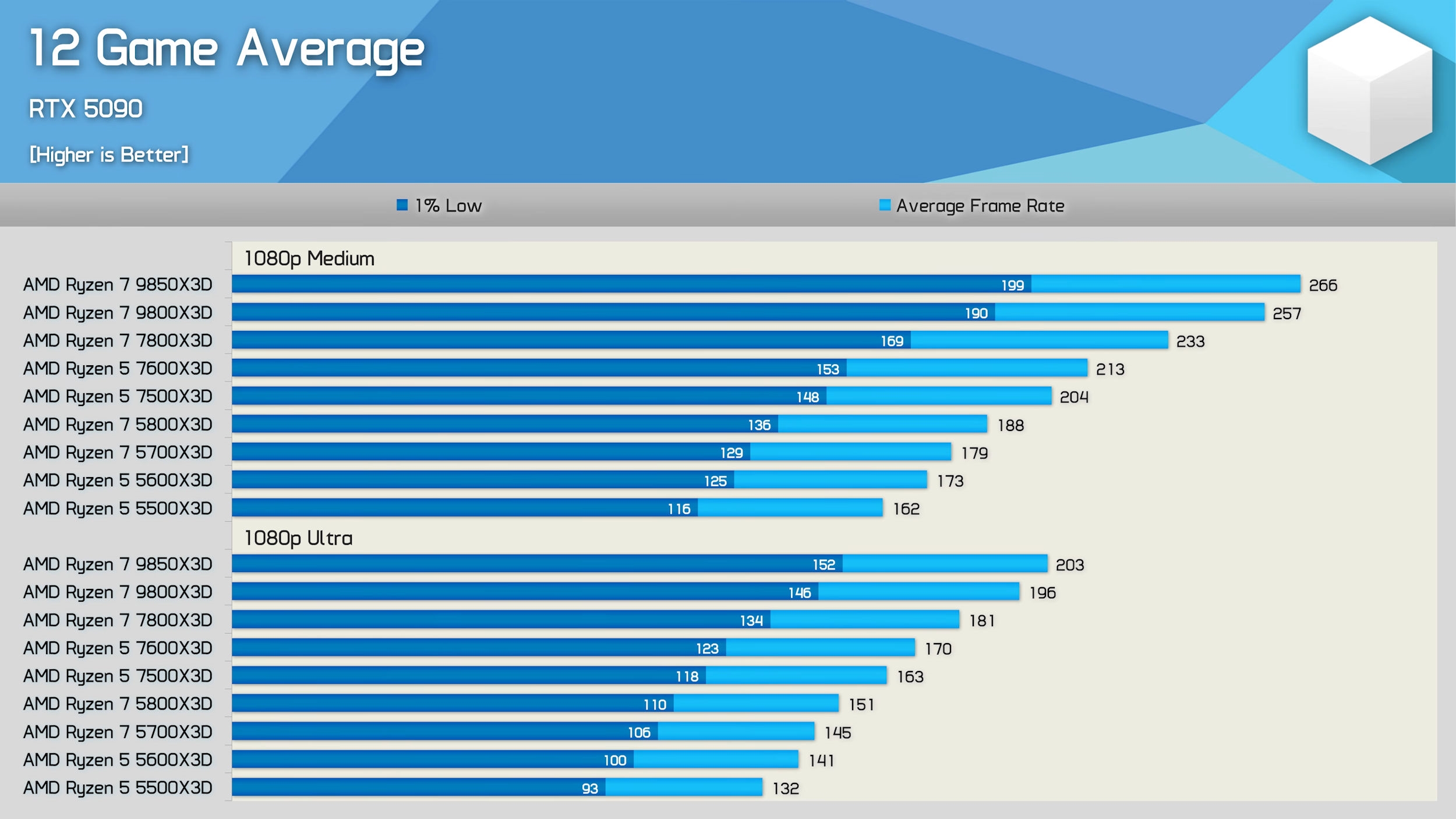
💡Zen 5 X3D crushes predecessors by 64% in games; cache boosts for AI inference too
⚡ 30-Second TL;DR
What Changed
RTX 5090 GPU at 1080p for CPU-focused gaming tests
Why It Matters
Demonstrates AMD's X3D cache tech evolution, beneficial for cache-intensive AI inference on desktops. Highlights value of newer Zen 5 for performance-sensitive compute tasks.
What To Do Next
Benchmark Zen 5 X3D CPUs for your local LLM inference to assess 3D V-Cache gains.
Key Points
- •RTX 5090 GPU at 1080p for CPU-focused gaming tests
- •Covers Ryzen 5/7 X3D from Zen 3, Zen 4, Zen 5
- •12 games tested with average FPS metrics
- •Generational performance gap reaches 64%
🧠 Deep Insight
AI-generated analysis for this event — not the original article.
🔑 Enhanced Key Takeaways
- •The 64% performance delta is primarily attributed to the massive L3 cache scaling and IPC improvements combined with the removal of memory latency bottlenecks in the Zen 5 architecture compared to the aging Zen 3 platform.
- •Hardware Unboxed's testing methodology specifically highlights that the RTX 5090 at 1080p eliminates GPU-bound scenarios, effectively creating a 'synthetic' CPU-bottlenecked environment to isolate the architectural gains of the 3D V-Cache iterations.
- •The data indicates that while Zen 4 to Zen 5 X3D gains are incremental in some titles, the cumulative leap from Zen 3 (e.g., 5800X3D) to Zen 5 (e.g., 9800X3D/9950X3D) represents a generational inflection point for high-refresh-rate gaming stability.
📊 Competitor Analysis▸ Show
| Feature | AMD Ryzen 7 9800X3D (Zen 5) | Intel Core Ultra 9 285K (Arrow Lake) |
|---|---|---|
| Architecture | Zen 5 + 3D V-Cache | Lion Cove / Skymont (Hybrid) |
| Gaming Performance | Superior (Cache-optimized) | Competitive (High clock speeds) |
| Power Efficiency | High (Lower TDP) | Moderate (High peak power) |
| Platform | AM5 (Long-term support) | LGA 1851 (New platform) |
🛠️ Technical Deep Dive
- •Zen 3 X3D (5800X3D): Introduced 3D V-Cache technology, stacking 64MB of SRAM on top of the CCD, totaling 96MB L3 cache.
- •Zen 4 X3D: Transitioned to TSMC 5nm process, introduced DDR5 memory support, and refined the 3D V-Cache thermal management to allow higher boost clocks compared to Zen 3.
- •Zen 5 X3D: Utilizes a 4nm process node with improved branch prediction and wider execution pipelines, further reducing the latency penalty associated with the 3D V-Cache stack.
- •The RTX 5090 usage in testing ensures that the CPU is the sole limiting factor, exposing the '1% low' frame time improvements that define the perceived smoothness of X3D processors.
🔮 Future ImplicationsAI analysis grounded in cited sources
⏳ Timeline
Weekly AI Recap
Read this week's curated digest of top AI events →
👉Related Updates
AI-curated news aggregator. All content rights belong to original publishers.
Original source: cnBeta (Full RSS) ↗
This is a summary, not the original. Read the source, or get the weekly briefing.
The weekly digest
One email a week. Unsubscribe anytime.