AMD Data Center Revenue Doubles as Gaming Slumps
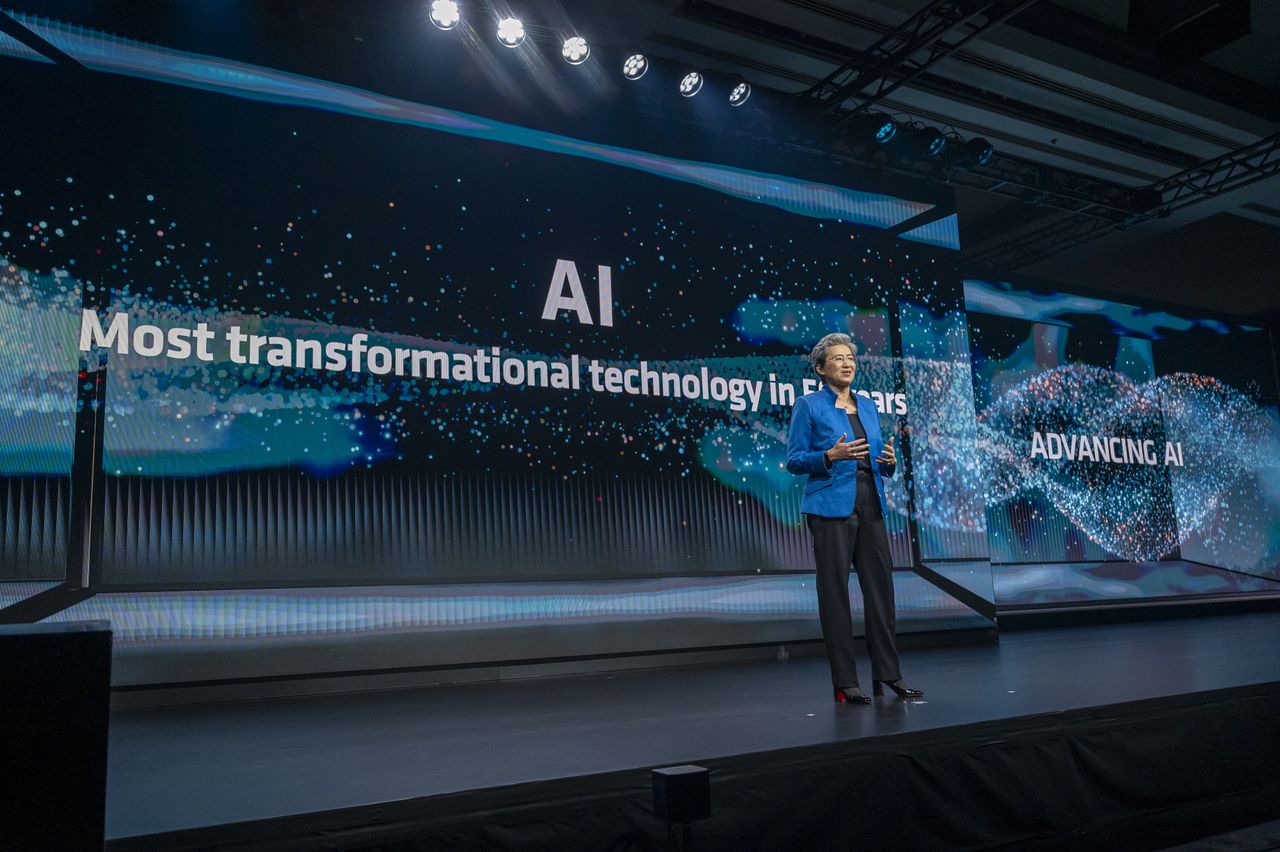
AMD's data center surge signals where accelerator supply and investment are heading.
30-Second TL;DR
What Changed
AMD's data center revenue doubled year over year in Q2 2026.
Why It Matters
The results reinforce the shift of AMD's growth toward data center and AI infrastructure rather than consumer gaming. AI builders may face continued competition for accelerator capacity and potentially less favorable consumer GPU economics.
What To Do Next
Recalculate your next two quarters of inference capacity and compare AMD accelerator availability against your current GPU procurement plan.
Key Points
- •AMD's data center revenue doubled year over year in Q2 2026.
- •Gaming revenue plunged 31% amid weaker consumer demand.
- •Lisa Su said pricing pressure is weighing on consumers but remained optimistic about the client market.
Deep Insight
AI-generated analysis for this event — not the original article.
Enhanced Key Takeaways
- •AMD's data center growth is primarily driven by the massive adoption of Instinct MI325X and MI350 series accelerators among hyperscale cloud providers.
- •The 31% decline in gaming revenue is attributed to the cyclical nature of console lifecycles, specifically the aging hardware of current-generation PlayStation and Xbox consoles.
- •AMD's client segment revenue saw a 9% year-over-year increase, bolstered by the strong performance of Ryzen AI 300 series processors in the laptop market.
- •Operating expenses rose significantly due to increased R&D investment in next-generation CDNA 4 architecture and software ecosystem development for ROCm.
- •The company announced a strategic shift to prioritize AI-centric silicon over traditional discrete gaming GPUs to maximize margins in a constrained consumer spending environment.
Competitor Analysis
- AMD (Instinct/Ryzen AI)
- MI350 (High HBM3e)
- NVIDIA (Blackwell/GeForce)
- Blackwell B200 (High TCO)
- Intel (Gaudi/Core Ultra)
- Gaudi 3 (Cost-efficient)
- AMD (Instinct/Ryzen AI)
- RDNA 3.5 (Value-focused)
- NVIDIA (Blackwell/GeForce)
- RTX 50-series (Performance)
- Intel (Gaudi/Core Ultra)
- Arc Battlemage (Entry/Mid)
- AMD (Instinct/Ryzen AI)
- Ryzen AI (XDNA 2)
- NVIDIA (Blackwell/GeForce)
- N/A (RTX AI)
- Intel (Gaudi/Core Ultra)
- Core Ultra (NPU integration)
| Feature/Metric | AMD (Instinct/Ryzen AI) | NVIDIA (Blackwell/GeForce) | Intel (Gaudi/Core Ultra) |
|---|---|---|---|
| Data Center AI | MI350 (High HBM3e) | Blackwell B200 (High TCO) | Gaudi 3 (Cost-efficient) |
| Gaming GPU | RDNA 3.5 (Value-focused) | RTX 50-series (Performance) | Arc Battlemage (Entry/Mid) |
| AI PC NPU | Ryzen AI (XDNA 2) | N/A (RTX AI) | Core Ultra (NPU integration) |
Technical Deep Dive
- Instinct MI350 series utilizes 3nm process technology and supports FP4/FP6 precision formats to accelerate LLM inference.
- Ryzen AI 300 series integrates XDNA 2 architecture, delivering up to 50 TOPS of NPU performance for local AI workloads.
- ROCm 6.2 software stack has been optimized to improve multi-GPU scaling efficiency by 15% for large-scale training clusters.
- CDNA 4 architecture focuses on unified memory management to reduce latency between CPU and GPU compute nodes.
Future ImplicationsAI analysis grounded in cited sources
Timeline
- 2023-12AMD launches Instinct MI300X, marking a major entry into the generative AI accelerator market.
- 2024-06AMD introduces Ryzen AI 300 series processors with integrated NPU for Copilot+ PC compliance.
- 2025-01AMD announces the expansion of the Instinct roadmap to include annual cadence updates.
- 2026-02AMD reports record annual revenue driven by data center segment growth.
- 2026-08AMD reports Q2 2026 earnings with data center revenue doubling year-over-year.
Weekly AI Recap
Read this week's curated digest of top AI events →
AI-curated news aggregator. All content rights belong to original publishers.
Original source: Tom's Hardware ↗
This is a summary, not the original. Read the source, or get the weekly briefing.
The weekly digest
One email a week. Unsubscribe anytime.