🇨🇳cnBeta (Full RSS)•Freshcollected in 8h
Amazon Leo Satellite Network Expands to South Africa
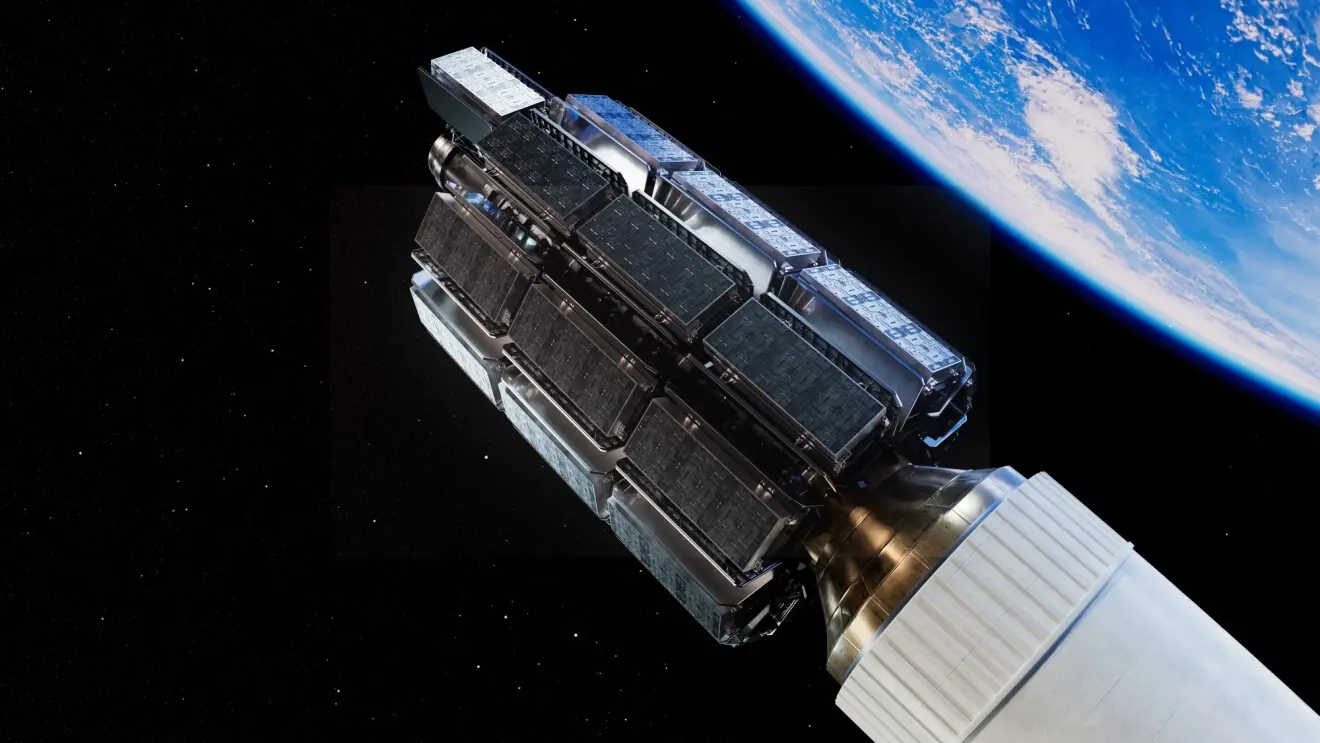
💡Amazon's satellite expansion challenges Starlink, impacting global infrastructure for remote AI deployment.
⚡ 30-Second TL;DR
What Changed
Amazon Leo partners with Herotel to expand satellite coverage in South Africa.
Why It Matters
This expansion intensifies the competition for global satellite internet dominance, potentially lowering costs for edge computing and remote AI data collection in Africa.
What To Do Next
Monitor Amazon Leo's API documentation for potential edge-computing integration opportunities in remote regions.
Who should care:Enterprise & Security Teams
Key Points
- •Amazon Leo partners with Herotel to expand satellite coverage in South Africa.
- •Targeting underserved regions where fiber and fixed wireless are economically unfeasible.
- •Strategic move to compete with SpaceX Starlink in the African satellite internet market.
🧠 Deep Insight
AI-generated analysis for this event.
🔑 Enhanced Key Takeaways
- •The partnership utilizes Amazon's Project Kuiper low Earth orbit (LEO) satellite constellation, which began mass production of its satellite units in 2024.
- •Herotel is integrating Amazon's ground station infrastructure with its existing local distribution networks to reduce latency for end-users in rural South Africa.
- •Regulatory approval for Project Kuiper in South Africa was fast-tracked under the country's recent telecommunications policy reforms aimed at increasing broadband penetration.
- •The service deployment includes the use of Amazon's proprietary 'Oryx' phased-array antenna, designed specifically for high-throughput, low-cost consumer terminals.
- •This expansion is part of a broader Amazon commitment to invest over $100 million in African digital infrastructure by 2027 to support cloud and connectivity services.
📊 Competitor Analysis▸ Show
| Feature | Amazon Project Kuiper | SpaceX Starlink | Eutelsat OneWeb |
|---|---|---|---|
| Target Market | Enterprise/Consumer/Gov | Consumer/Maritime/Aviation | Enterprise/Gov/Telco Backhaul |
| Latency | 20-40ms | 25-50ms | 30-70ms |
| Terminal Cost | Competitive (Subsidized) | Variable (High entry) | High (Enterprise focus) |
| Network Integration | AWS Cloud Native | Independent | Telco Partner-Centric |
🛠️ Technical Deep Dive
- Satellite Constellation: Utilizes a multi-layered LEO architecture operating in the Ka-band frequency spectrum.
- Terminal Technology: Employs the Oryx antenna, a compact, lightweight phased-array design that achieves high gain with lower power consumption than previous generation satellite dishes.
- Inter-Satellite Links: Features optical laser terminals for inter-satellite communication, allowing data to bypass ground stations in remote areas.
- Ground Infrastructure: Leverages AWS-managed ground stations to provide seamless integration with cloud services, enabling edge computing capabilities directly at the network gateway.
🔮 Future ImplicationsAI analysis grounded in cited sources
Amazon will capture 15% of the South African rural satellite market by 2028.
The integration with Herotel's established customer base provides a significant distribution advantage over competitors relying on direct-to-consumer models.
Project Kuiper will trigger a price war in the African satellite broadband sector.
Amazon's ability to subsidize hardware costs through AWS ecosystem revenue puts immense pressure on Starlink's hardware-margin-dependent pricing model.
⏳ Timeline
2019-04
Amazon officially announces Project Kuiper to provide global broadband.
2023-10
Amazon successfully launches the first two prototype satellites, KuiperSat-1 and KuiperSat-2.
2024-05
Amazon opens a dedicated satellite manufacturing facility in Kirkland, Washington.
2025-11
Amazon begins commercial pilot testing of Project Kuiper in select African markets.
2026-07
Amazon formalizes the strategic partnership with Herotel for South African expansion.
📰
Weekly AI Recap
Read this week's curated digest of top AI events →
👉Related Updates
AI-curated news aggregator. All content rights belong to original publishers.
Original source: cnBeta (Full RSS) ↗