Aluminum Price Surge Impacts EV Manufacturing Costs
💡Understand how raw material supply constraints are reshaping the economics of smart electric vehicle manufacturing.
⚡ 30-Second TL;DR
What Changed
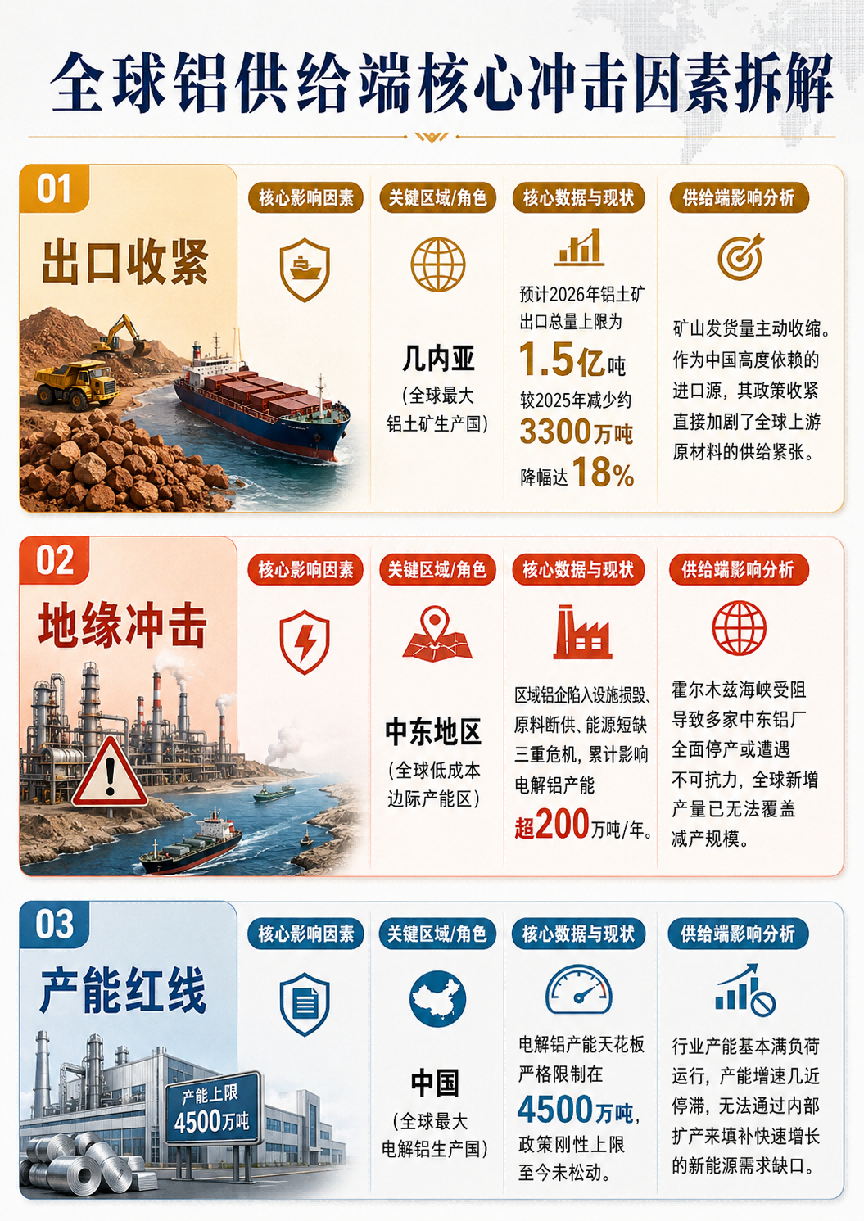
Domestic electrolytic aluminum capacity is capped at 45 million tons.
Why It Matters
The rising cost of aluminum forces manufacturers to accelerate lightweighting technology adoption, potentially impacting vehicle repairability and insurance costs.
What To Do Next
Analyze supply chain exposure to aluminum-intensive components in your hardware/robotics projects to hedge against price volatility.
Key Points
- •Domestic electrolytic aluminum capacity is capped at 45 million tons.
- •EVs require significantly more aluminum (200kg+) than traditional vehicles.
- •Geopolitical tensions and export restrictions from Guinea are driving global supply shortages.
🧠 Deep Insight
AI-generated analysis for this event — not the original article.
🔑 Enhanced Key Takeaways
- •The Chinese government's 'Dual Control' policy on energy consumption has effectively prevented the expansion of high-energy-consuming aluminum smelting, creating a permanent supply ceiling.
- •Bauxite mining disruptions in Guinea, which accounts for over 50% of China's bauxite imports, have led to a significant increase in spot prices for alumina, the primary precursor to aluminum.
- •Automakers are increasingly adopting 'integrated die-casting' (gigacasting) technology, which, while reducing assembly costs, requires higher-purity aluminum alloys, further straining supply chains.
- •The LME (London Metal Exchange) and SHFE (Shanghai Futures Exchange) have seen increased volatility due to speculative trading linked to green energy transition metal indices.
- •Secondary aluminum (recycled) production is becoming a strategic priority for Chinese EV makers to hedge against primary aluminum price volatility and meet carbon footprint reduction targets.
🛠️ Technical Deep Dive
- Aluminum alloys used in EV chassis and battery enclosures typically require high-strength 6xxx series (Al-Mg-Si) or 7xxx series (Al-Zn-Mg) alloys to balance weight reduction with crash safety.
- Integrated die-casting processes utilize large-tonnage machines (6,000T to 12,000T) that demand specific aluminum melt fluidity and low impurity levels to prevent structural defects in large-scale parts.
- Battery cooling plates often employ 3xxx series aluminum due to its superior thermal conductivity and corrosion resistance compared to structural alloys.
🔮 Future ImplicationsAI analysis grounded in cited sources
⏳ Timeline
Weekly AI Recap
Read this week's curated digest of top AI events →
👉Related Updates


AI-curated news aggregator. All content rights belong to original publishers.
Original source: 虎嗅 ↗
This is a summary, not the original. Read the source, or get the weekly briefing.
Weekly AI briefing
One email a week. Unsubscribe anytime.