AlphaGo's impact on Go and human players a decade later
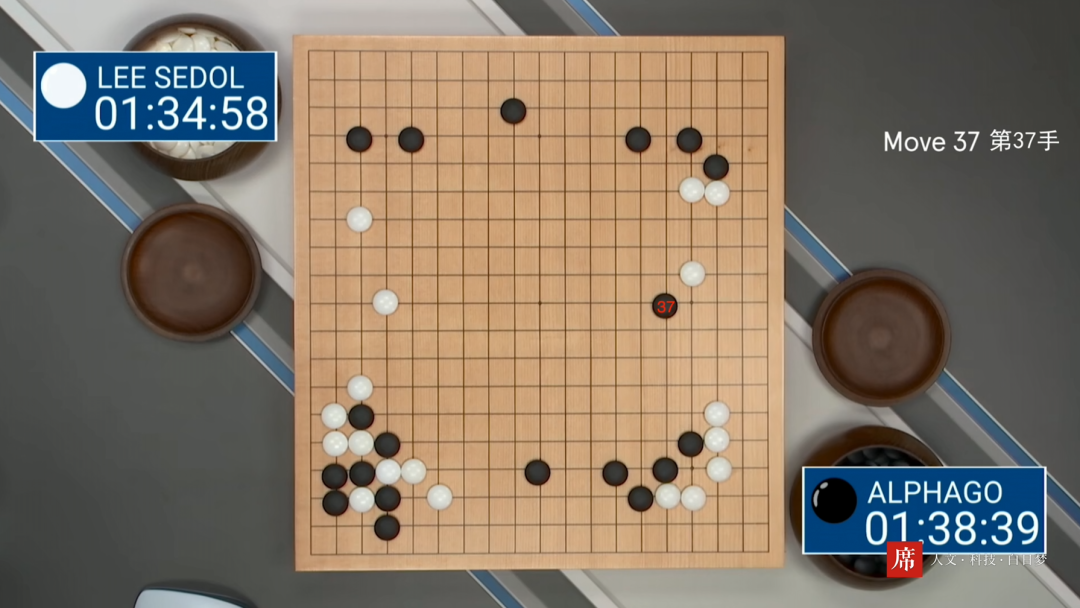
Understand how AI shifts expert knowledge from intuition to data-driven precision in complex domains.
30-Second TL;DR
What Changed
AlphaGo's 'Move 37' challenged centuries of established Go theory.
Why It Matters
AlphaGo not only conquered a complex game but fundamentally altered the 'epistemic culture' of professional Go, setting a precedent for AI-human collaboration in creative fields.
What To Do Next
Study how AI-driven data analysis can augment domain-specific expertise in your own field.
Key Points
- •AlphaGo's 'Move 37' challenged centuries of established Go theory.
- •The game's language shifted from qualitative descriptions to quantitative, precise analysis.
- •AI has forced a re-evaluation of human intuition versus machine-calculated strategy.
Deep Insight
AI-generated analysis for this event — not the original article.
Enhanced Key Takeaways
- •AlphaGo's successor, AlphaZero, demonstrated that the system could achieve superhuman performance in Go, Chess, and Shogi using a generalized reinforcement learning algorithm without human-provided training data.
- •The 'AlphaGo effect' led to a massive surge in the popularity of Go in China and South Korea, with AI-based training tools like Katago and Leela Zero becoming standard equipment for professional players.
- •Professional Go players have adopted 'AI-style' opening patterns, such as the 3-3 point invasion, which were previously considered suboptimal or 'bad' by traditional theory.
- •The integration of AI analysis has significantly shortened the time required for young players to reach professional levels, as they can now instantly verify the accuracy of their moves against machine-calculated win probabilities.
- •AlphaGo's architecture pioneered the use of Deep Residual Networks (ResNets) combined with Monte Carlo Tree Search (MCTS), a hybrid approach that has since influenced broader developments in reinforcement learning for complex decision-making tasks.
Competitor Analysis
- AlphaGo (DeepMind)
- Proprietary/Closed
- Leela Zero
- Open Source
- Katago
- Open Source
- AlphaGo (DeepMind)
- Supervised + RL
- Leela Zero
- Self-Play (Distributed)
- Katago
- Self-Play + Policy/Value Head
- AlphaGo (DeepMind)
- Research Only
- Leela Zero
- Publicly Available
- Katago
- Publicly Available
- AlphaGo (DeepMind)
- Historical Benchmark
- Leela Zero
- Research/Community Play
- Katago
- Professional Training
| Feature | AlphaGo (DeepMind) | Leela Zero | Katago |
|---|---|---|---|
| Architecture | Proprietary/Closed | Open Source | Open Source |
| Training Method | Supervised + RL | Self-Play (Distributed) | Self-Play + Policy/Value Head |
| Accessibility | Research Only | Publicly Available | Publicly Available |
| Primary Use | Historical Benchmark | Research/Community Play | Professional Training |
Technical Deep Dive
- AlphaGo utilized a Policy Network to predict the next move and a Value Network to estimate the winner of the game from a given position.
- The system employed Monte Carlo Tree Search (MCTS) to look ahead, using the neural networks to prune the search space and evaluate leaf nodes.
- AlphaGo Zero and later iterations removed the need for human game databases, relying entirely on reinforcement learning through self-play.
- The models were trained using massive parallelization on Google's Tensor Processing Units (TPUs), allowing for rapid iteration of policy and value updates.
Future ImplicationsAI analysis grounded in cited sources
Timeline
- 2015-10AlphaGo defeats Fan Hui, the European Go champion, marking the first time an AI beat a professional player.
- 2016-03AlphaGo defeats Lee Sedol 4-1 in a historic five-game match in Seoul.
- 2017-05AlphaGo defeats Ke Jie, the world's number one ranked player, in the Future of Go Summit.
- 2017-10DeepMind publishes the AlphaGo Zero paper, demonstrating superior performance without human data.
- 2017-12DeepMind announces the retirement of AlphaGo from competitive play.
Weekly AI Recap
Read this week's curated digest of top AI events →
AI-curated news aggregator. All content rights belong to original publishers.
Original source: 虎嗅 ↗
This is a summary, not the original. Read the source, or get the weekly briefing.
The weekly digest
One email a week. Unsubscribe anytime.