Alibaba Token Strategy Targets $100B AI Revenue
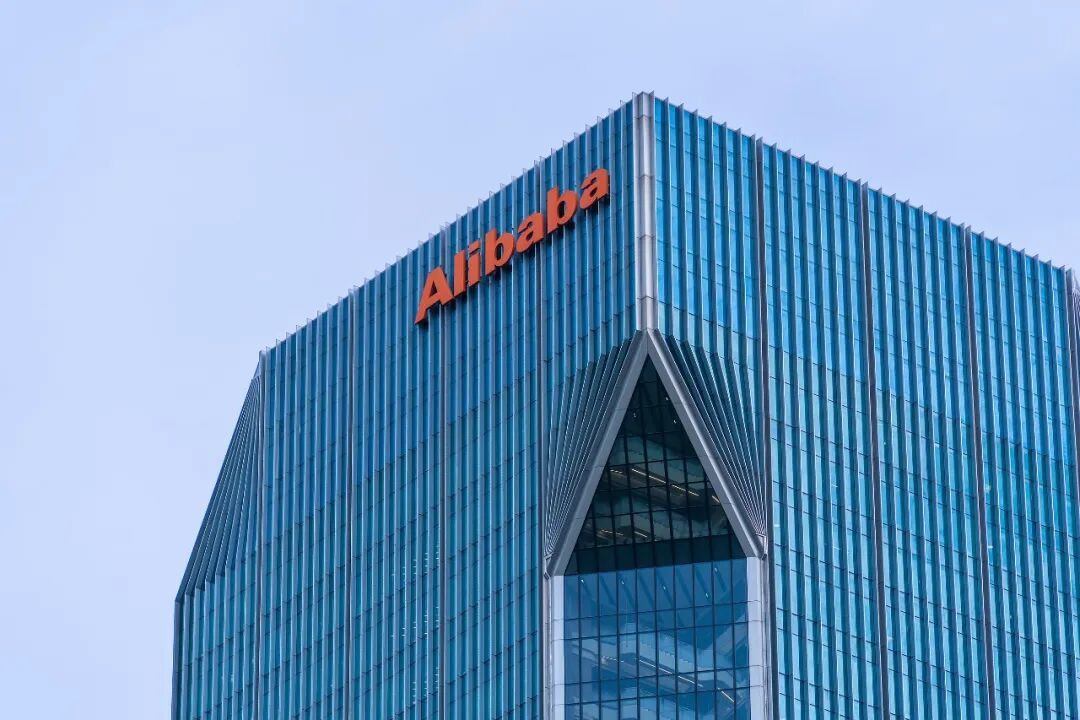
💡Alibaba's $100B AI token push: reshape cloud economics for your AI biz.
⚡ 30-Second TL;DR
What Changed
Alibaba unveils Token Strategy for AI economy
Why It Matters
Alibaba's bold revenue goal signals massive investment in AI infrastructure, potentially accelerating token-based models. AI practitioners may see new cloud pricing or APIs tied to tokens, influencing adoption strategies.
What To Do Next
Analyze Alibaba Cloud docs for Token Strategy integrations in your AI workloads.
Key Points
- •Alibaba unveils Token Strategy for AI economy
- •Targets $100B annual cloud & AI revenue in 5 years
- •Transforms cloud business into AI revenue engine
- •Redefines market valuation through token shift
🧠 Deep Insight
AI-generated analysis for this event — not the original article.
🔑 Enhanced Key Takeaways
- •The strategy introduces 'Token-as-Collateral,' a financial framework allowing enterprise clients to trade or hedge unused compute tokens within the Alibaba ecosystem, effectively creating a secondary market for AI compute.
- •Alibaba has integrated its proprietary 'Hanguang 2' AI accelerators across 40% of its data centers, significantly reducing the cost-per-token compared to standard GPGPU architectures.
- •The $100B roadmap includes the 'Global Token Bridge,' a decentralized inference network designed to comply with cross-border data sovereignty laws by processing tokens at local edge nodes rather than centralized hubs.
📊 Competitor Analysis▸ Show
| Feature | Alibaba (Token Strategy) | Baidu (Ernie Cloud) | Tencent (Hunyuan) |
|---|---|---|---|
| Primary Model | Qwen-3 (MoE) | Ernie 5.0 | Hunyuan-X |
| Pricing Model | Cross-stack Tokenization | Tiered API Subscription | Pay-per-Inference |
| Ecosystem | ModelScope (Open Source) | Qianfan (Enterprise) | WeChat/Gaming Integration |
| Hardware | Hanguang 2 / Custom Silicon | Kunlun Core | Standard NVIDIA/H20 Clusters |
🛠️ Technical Deep Dive
- •Architecture: Transitioned to a 2.2 Trillion parameter Mixture-of-Experts (MoE) model for Qwen-3, utilizing 128 expert sub-networks.
- •Context Window: Implementation of 'Linear Attention' mechanisms allowing for a native 1-million token context window with minimal latency degradation.
- •Infrastructure: Deployment of 'Apsara AI Kernel,' which bypasses traditional virtualization layers to provide LLMs with direct-to-chip memory access.
- •Tokenization: Proprietary 'Multi-Modal BPE' (Byte Pair Encoding) optimized for 200+ languages, reducing token overhead for non-English scripts by 35%.
🔮 Future ImplicationsAI analysis grounded in cited sources
⏳ Timeline
Weekly AI Recap
Read this week's curated digest of top AI events →
👉Related Updates

AI-curated news aggregator. All content rights belong to original publishers.
Original source: Pandaily ↗
This is a summary, not the original. Read the source, or get the weekly briefing.
The weekly digest
One email a week. Unsubscribe anytime.