Alibaba May Charge Large Qwen Users
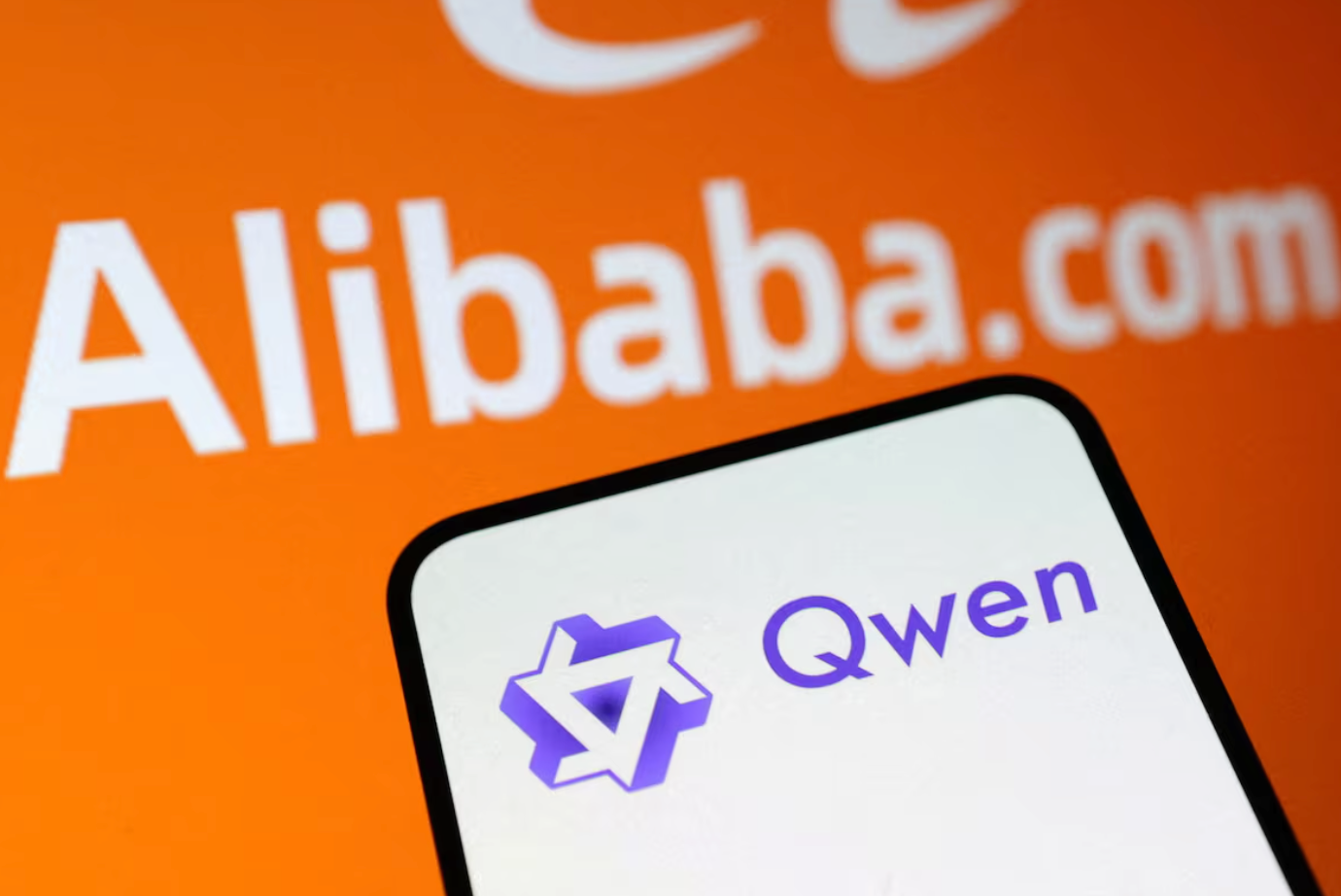
A potential revenue-sharing clause could reshape the economics of deploying open-source Qwen models at scale.
30-Second TL;DR
What Changed
Alibaba is reportedly considering a revenue-sharing requirement for large Qwen users.
Why It Matters
If implemented, the policy could change how enterprises assess the total cost and legal risk of deploying open-source models. It may also pressure other model providers to clarify whether their open-source offerings include commercial revenue obligations.
What To Do Next
Before adopting the next Qwen release commercially, review its license for revenue-sharing, usage thresholds, and redistribution obligations.
Key Points
- •Alibaba is reportedly considering a revenue-sharing requirement for large Qwen users.
- •The proposed terms would apply to the next version of Alibaba's open-source AI model.
- •The report is based on two people familiar with Alibaba's plans.
- •The move would follow a business model similar to the revenue-sharing approach associated with Kimi K3.
Deep Insight
AI-generated analysis for this event — not the original article.
Enhanced Key Takeaways
- •Alibaba's potential revenue-sharing model is reportedly targeting companies with over 100 million monthly active users, aiming to monetize its massive investment in Qwen development.
- •This strategy reflects a broader shift in the Chinese AI ecosystem where major tech firms are moving away from purely 'open-source' models toward 'open-weights' or 'commercial-source' licenses to ensure sustainable profitability.
- •The proposed policy is expected to include exemptions for smaller developers, startups, and academic institutions to maintain the Qwen ecosystem's growth and community adoption.
- •Industry analysts suggest this move is a response to the high inference costs associated with running large-scale models like Qwen-Max and Qwen-Plus, which have seen rapid adoption in enterprise sectors.
- •Alibaba is reportedly evaluating a tiered licensing structure that would differentiate between free research use and commercial applications that generate significant revenue.
Competitor Analysis
- Alibaba Qwen
- Proposed Revenue-Share
- Meta Llama
- Open Weights (Permissive)
- Mistral AI
- Proprietary/Apache 2.0
- Alibaba Qwen
- Cloud API & Revenue Share
- Meta Llama
- Ecosystem/Hardware Support
- Mistral AI
- Managed Services/Enterprise
- Alibaba Qwen
- Open Weights
- Meta Llama
- Open Weights
- Mistral AI
- Mixed
- Alibaba Qwen
- Enterprise/Global
- Meta Llama
- Research/Developer
- Mistral AI
- European/Enterprise
| Feature | Alibaba Qwen | Meta Llama | Mistral AI |
|---|---|---|---|
| Licensing | Proposed Revenue-Share | Open Weights (Permissive) | Proprietary/Apache 2.0 |
| Primary Monetization | Cloud API & Revenue Share | Ecosystem/Hardware Support | Managed Services/Enterprise |
| Open Source Status | Open Weights | Open Weights | Mixed |
| Target Market | Enterprise/Global | Research/Developer | European/Enterprise |
Technical Deep Dive
- Qwen models utilize a Transformer-based architecture with advanced Mixture-of-Experts (MoE) configurations in larger variants to optimize inference efficiency.
- The models are trained on a massive, multilingual corpus with a heavy emphasis on high-quality code and mathematical reasoning datasets.
- Implementation of FlashAttention-2 and custom kernel optimizations allows Qwen to maintain high throughput on NVIDIA H100/A100 clusters.
- The architecture supports long-context windows (up to 1M+ tokens) through advanced positional encoding techniques like RoPE (Rotary Positional Embeddings).
Future ImplicationsAI analysis grounded in cited sources
Timeline
- 2023-08Alibaba releases Qwen-7B, marking its entry into the open-source LLM space.
- 2024-04Launch of Qwen1.5, significantly expanding the model family and performance benchmarks.
- 2024-06Alibaba releases Qwen2, achieving state-of-the-art performance on various open-source leaderboards.
- 2025-09Introduction of Qwen-Max, Alibaba's most powerful proprietary-grade model available via API.
Weekly AI Recap
Read this week's curated digest of top AI events →
Related Updates

AI-curated news aggregator. All content rights belong to original publishers.
Original source: cnBeta (Full RSS) ↗
This is a summary, not the original. Read the source, or get the weekly briefing.
The weekly digest
One email a week. Unsubscribe anytime.